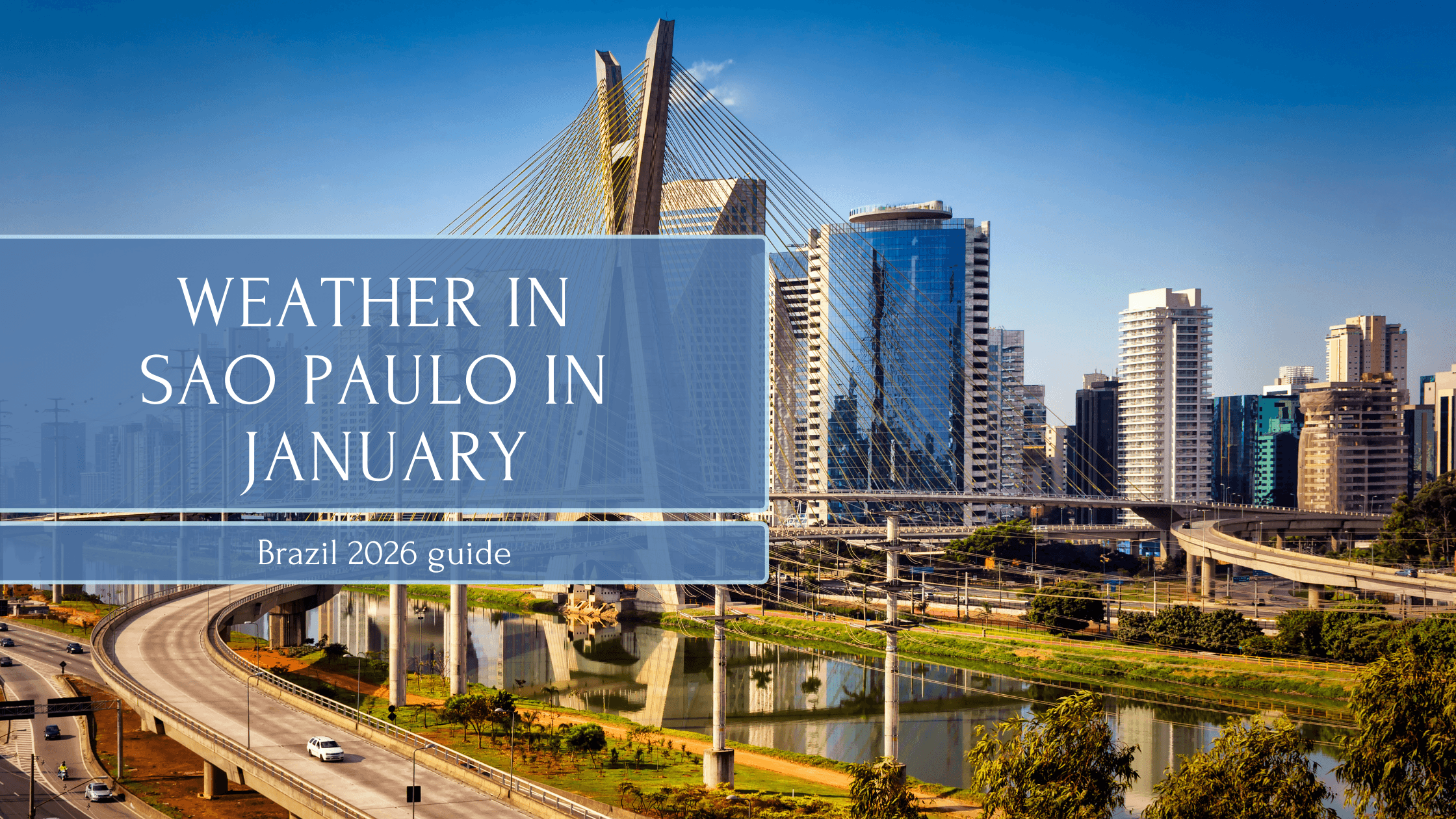
Weather in São Paulo, Brazil in January
Weather in São Paulo, Brazil in January
São Paulo in January is hot, humid, and wet — and that’s not a reason to avoid it, but it is something to plan around. This is the heart of summer in one of the largest cities in Brazil, and the weather in São Paulo is as intense as the city itself. Afternoon downpours are routine, mornings are warm before they turn sweltering, and the air rarely feels dry.
January weather suits travelers who don’t mind working around the rain and want to experience São Paulo at full energy — Carnival warm-up events, buzzing nightlife, and packed cultural venues. Families with school-age children often travel this month due to holidays. If you’re sensitive to heat and humidity, or prefer blue-sky sightseeing all day, this month will test your patience. For those also weighing other cities in the region, it’s worth noting that where to stay in Medellin offers a very different climate experience — spring-like year-round — if São Paulo’s summer intensity gives you pause.
Quick Weather Snapshot
- Average high temperature: 28°C / 82°F
- Average low temperature: 19–21°C (66–70°F)
- Rainfall level: Heavy
- Humidity level: High (70–85% relative humidity)
- Season: Rainy season (Southern Hemisphere summer)
- Crowd level: High (Brazilian school holidays, domestic tourism peak)
- Overall comfort rating: 5/10 for heat-sensitive travelers; 7/10 for those who adapt well
Guide to the Weather in Sao Paulo in January
January in São Paulo is a hot month — oppressive by midday. Mornings start warm and manageable — around 22°C / 75°F by 8am — but humidity builds fast and afternoons regularly hit 30°C with a heat index that pushes it higher. The sky is rarely clear for long. Cloud cover builds through the morning and by early afternoon, thunderstorms are common and sometimes violent.
Evenings cool slightly to the low 20s, which is genuinely pleasant for outdoor dining and walking. The city’s street life — particularly in neighborhoods like Vila Madalena and Pinheiros — is most comfortable after 7pm. Sightseeing on foot during midday is uncomfortable and, on some days, inadvisable without shade and water.
Understanding what to expect from the weather São Paulo during January helps you build a realistic itinerary. Before your trip to Sao Paulo, know that weather conditions fluctuate between clear and stormy within a single day — the weather is usually settled before noon and unsettled by mid-afternoon. Plan around that rhythm and you’ll be fine.
Average Temperature in January: High Temperatures and Low Temperature
Temperature in January runs between daytime highs of 28°C and nighttime lows of 19–21°C. The average high temperature of 28°C / 82°F makes it the hottest month of the year. Occasional heatwaves push temperatures to 33°C. Nights cool to around 23°C before dropping further toward dawn — enough relief to sleep comfortably with airflow.
The sun in January is intense — UV index regularly reaches 11 (extreme), and unprotected sun exposure leads to burns within 20–30 minutes. Temperatures are relatively similar in February, though January typically sees heavier precipitation. December is slightly drier. The temperature range alone isn’t extreme, but combined with high humidity, the perceived heat is significantly higher than the thermometer suggests.
Weather data from Brazil’s National Institute of Meteorology (INMET) confirms January as one of São Paulo’s hottest and wettest months on record. Located in the Southern Hemisphere, São Paulo’s summer falls December to February — temperatures rise sharply and stay elevated through this window.
Precipitation and Average Rainfall in São Paulo in January
January is São Paulo’s wettest month. Average rainfall sits at 230–260mm across roughly 15–18 rainy days. Most precipitation falls as intense afternoon or early evening thunderstorms — not all-day drizzle. Storms can arrive suddenly, last 30–90 minutes, and bring lightning and strong winds.
Outdoor plans in the late afternoon are frequently disrupted. Flooding in low-lying neighborhoods is a real risk during heavy events. Morning activities (before noon) are significantly less likely to be rained out. Climate-Data.org’s São Paulo profile provides historical average daily and monthly figures from weather stations for reference.
Humidity in São Paulo in January
Relative humidity in January typically ranges from 70% to 85%, spiking after rain. Combined with high temperatures, the heat index can make it feel 5–8°C hotter than actual air temperature. Physical activity outdoors — walking tours, hiking, extended time at open markets — becomes tiring quickly.
Travelers accustomed to tropical climates will adapt. Those arriving from dry or temperate regions, older travelers, or young children may find extended outdoor exposure genuinely draining. Air-conditioned spaces (museums, shopping centers, restaurants) become practical necessities rather than optional comforts.
Is São Paulo Busy in January? High Season and Tourism Levels
January is peak season for domestic travel in Brazil. Brazilian school summer holidays run through January and February, so families compete for hotel rooms, restaurant tables, and museum tickets. This is high season in the city — not for international beach tourism, but for domestic movement across cities in Brazil.
International tourism is more moderate — São Paulo isn’t a primary beach destination for foreign visitors the way Rio de Janeiro is — but domestic demand still drives prices up. Hotel rates are elevated compared to the shoulder months of March to May. Popular restaurants in Itaim Bibi and Jardins may require reservations. Pre-Carnival events begin appearing in late January, adding to the city’s already intense energy.
Best Things to Do on a Trip to São Paulo in January
- Visit MASP (São Paulo Museum of Art) — one of Latin America’s finest collections, fully air-conditioned, and a refuge from afternoon heat
- Explore the Pinacoteca do Estado — another world-class museum with manageable crowds on weekday mornings
- Walk Vila Madalena’s street art corridor — best done early morning before heat builds; the neighborhood’s murals are exceptional
- Ibirapuera Park at dawn — the city’s central green space is genuinely beautiful before 9am; locals jog and picnic in early morning cool
- Mercado Municipal (Mercadão) — indoor food market with some of the best sandwiches and produce in the city; a rain-proof option
- São Paulo’s restaurant scene — the city has arguably the best dining in South America; January evenings are ideal for long dinners
- Day trip to Campos do Jordão — a mountain resort town 180km away, significantly cooler than the city; a practical escape during a heatwave
- Pre-Carnival samba rehearsals — blocos (street samba groups) begin rehearsals in January; free, cultural, and authentic
Events & Festivals in January
- Virada Cultural Paulista — timing varies year to year; check the São Paulo city government’s cultural calendar for January scheduling
- Pre-Carnival blocos rehearsals — informal but widespread; neighborhoods like Barra Funda and Consolação host sessions
- São Paulo Fashion Week — typically held in late January or early February; check SPFW’s official site for current dates
- New Year’s aftermath events — the first weeks of January see lingering festival energy from Réveillon celebrations
No major city-wide public holidays fall in January outside New Year’s Day (January 1st), when most businesses and attractions are closed.
What to Pack for São Paulo in January
- Clothing: Lightweight, breathable fabrics (linen, moisture-wicking synthetics); shorts and t-shirts for daytime; a light layer for air-conditioned restaurants and museums
- Footwear: Comfortable walking shoes that can get wet; sandals for evenings; avoid suede or non-waterproof shoes
- Sun protection: SPF 50+ sunscreen, UV-protective sunglasses, a wide-brim hat or cap
- Rain gear: A compact travel umbrella is essential; a lightweight packable rain jacket for storms
- Hydration: A refillable water bottle — staying hydrated in this humidity is critical
- Insect repellent: Dengue fever is endemic in São Paulo; repellent with DEET is recommended, especially after rain
Seasonal Travel Tips for January
- Plan outdoor activities before noon — the window between 7am and 11:30am is your best bet for comfortable sightseeing
- Build in afternoon flexibility — assume 2–4pm will be rain or extreme heat; schedule museums, galleries, or cafes for this slot
- Carry an umbrella everywhere — storms can appear within 30 minutes with little warning
- Book restaurants in advance — the city is busy; same-day reservations at popular spots are unreliable
- Use the metro — São Paulo’s metro system is efficient, air-conditioned, and far faster than taxis during afternoon traffic
- Avoid prolonged sun exposure between 10am–4pm — UV is extreme; shade, hats, and sunscreen are non-negotiable
- Monitor local weather apps — São Paulo’s storm behavior is hyperlocal; apps like ClimaTempo provide hourly city-specific forecasts
Weather Hazards in São Paulo in January
São Paulo’s January storms are not minor inconveniences — they are a genuine planning factor. Intense thunderstorms can produce flash flooding, particularly in the city’s lower-lying eastern zones and areas near the Tietê River. The city’s drainage infrastructure is frequently overwhelmed during peak events.
Lightning is a real risk during outdoor activity in the afternoon. Travelers should avoid being in open parks, rooftop venues, or exposed areas during active storms. The São Paulo State Government’s Civil Defense (Defesa Civil) issues weather alerts and flood warnings in real time — worth bookmarking. Dengue fever risk is elevated in the rainy season; mosquito bite prevention is a genuine health consideration, not just comfort.
Key Takeaways
- January is São Paulo’s hottest month — hot and humid conditions persist from December to February
- Mornings (before noon) are the best window for outdoor sightseeing and walking
- Average daily precipitation is high; afternoon thunderstorms are near-daily — always carry an umbrella
- High humidity makes the heat feel significantly more intense than thermometer readings suggest
- January is high season domestically; book accommodation and restaurants early
- São Paulo in January isn’t a beach trip — if you want coast, Rio de Janeiro or the shore along the coast is within reach
- The city’s indoor cultural offerings (MASP, Pinacoteca, Mercadão) make visiting São Paulo worthwhile regardless of weather
FAQs
Is January a good time to visit São Paulo?
Sao Paulo in January is vibrant and culturally rich, but afternoon thunderstorms are near-daily and humidity is high. The best time to visit for dry, mild weather is the shoulder season from March to May — but if you want full city energy, January delivers. Those planning a vacation in Brazil who want to visit Sao Paulo for its culture and nightlife will find January rewarding; those planning a trip to Brazil who need the best times for comfortable outdoor exploration should look to autumn.
How hot does São Paulo get in January?
The average high temperature reaches 28°C / 82°F, with occasional spikes to 33°C. With humidity factored in, the heat index can feel 5–8 degrees higher. Nights cool to around 23°C, which is comfortable for outdoor dining.
Does it rain a lot in São Paulo in January?
Yes. January is the rainiest month of the year, with average rainfall of 230–260mm and around 15–18 rainy days. Most precipitation falls as heavy afternoon or evening thunderstorms. Paulo weather in January is defined by this daily storm cycle — plan mornings for outdoor activities.
What should I wear in São Paulo in January?
Light, breathable clothing — shorts, t-shirts, and linen — for daytime. Temperatures are relatively warm even at night, so heavy layers aren’t needed outdoors. Pack a compact rain jacket, a light sweater for air-conditioned spaces, and waterproof or quick-dry footwear.
How does São Paulo compare to Rio de Janeiro in January?
Both cities are hot and humid in January — São Paulo’s average temperature in January sits around 28°C / 82°F while Rio runs slightly hotter along the coast. The sea temperature in Rio reaches around 26°C, making beach visits more appealing there; this month in São Paulo is better suited to urban culture than the shore. Rio de Janeiro attracts bigger beach crowds and draws more international visitors, while São Paulo offers more diverse culinary and cultural depth.