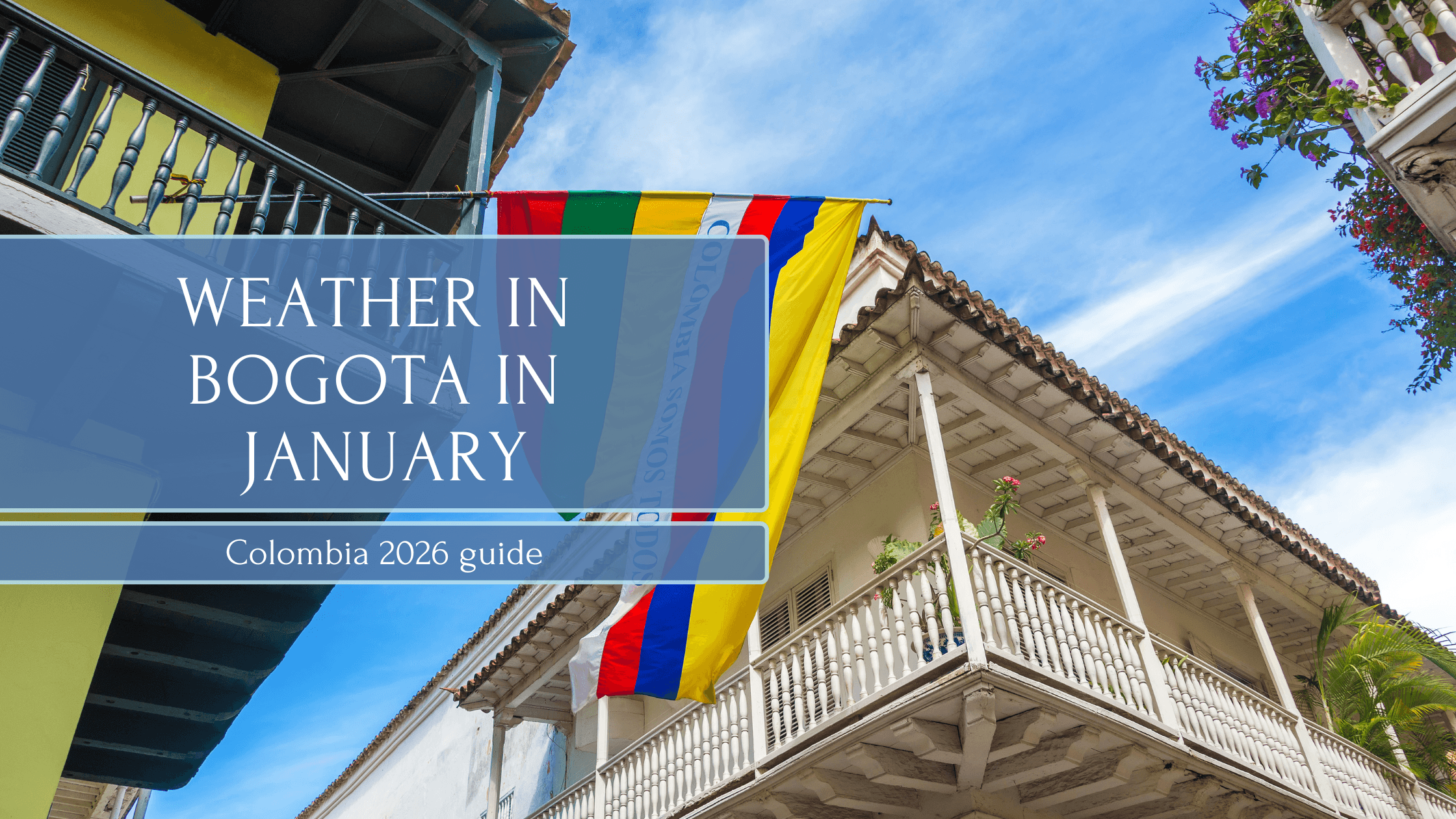
Weather in Bogotá, Colombia in January
Weather in Bogotá, Colombia in January
January is one of the better months to visit Bogotá. The city sits at 2,600 meters (8,530 ft) above sea level in the Andes, which keeps the average temperature cool year-round — and January falls within one of the city’s two drier seasons. You’ll still get rain, but it’s less relentless than April or October. If you’re figuring out where to stay in Bogotá, knowing the January weather will help you choose neighborhoods with easy access to both indoor and outdoor options.
This month works well for first-timers, couples, and city-focused travelers who don’t mind layering up. It’s less ideal for those who want long sunny days or who are highly rain-averse — Bogotá doesn’t really offer that at any time of year.
Quick Weather Snapshot
- Average high: 19–21°C (66–70°F)
- Average low: 10–12°C (50–54°F)
- Rainfall: Moderate — around 87–115mm; lower than April–May and October–November peaks
- Rainy days: ~23 days with some precipitation during the month
- Humidity: ~81–87% average relative humidity
- Season: Transitional dry — part of Bogotá’s first short dry season, which runs from December to February
- Crowd level: Moderate-to-high; high season carries over from December
- Overall comfort rating: 6.5/10 — pleasant days, cool nights, pack for both
What Bogotá Is Like in January
Bogotá in January has a spring-like feel — cool, occasionally bright, and prone to fast-moving clouds. Mornings often start clear, with temperatures in the low-to-mid teens. By early afternoon, clouds tend to build, and short rain showers arrive — rarely violent, usually brief. Sunny days do happen, but don’t count on them lasting all day.
Evenings cool quickly. Once the sun goes down, temperatures drop toward 10–12°C (50–54°F), which can feel sharp if you’re used to tropical Colombia. The city is walkable and generally comfortable during the day. Street-level sightseeing in neighborhoods like La Candelaria and Usaquén is very doable — just build some flexibility into your schedule.
Colombia in January: How Bogotá Compares to Other Cities
Colombia’s topography means weather in January varies dramatically by region. Bogotá sits at high altitude in the Andes — cool and humid. Cities like Bogotá contrast sharply with coastal destinations.
Cartagena, on the Caribbean coast, sits at near sea level and is hot and humid in January, with average highs around 31°C (88°F). It’s the driest month of the year there — one of the most popular destinations for beach travel in Colombia in January. Medellín, at around 1,500m, offers mild 27°C (81°F) days. Cali runs warmer, with highs near 30°C (86°F). The coffee region — around Manizales and the surrounding hills — sits at mid-altitude and sees 23°C (73°F) averages with more rainfall. Villavicencio, in the Llanos lowlands east of Bogotá, is hot, wet, and humid in January.
For those planning to see the best of the country in one trip, January works well across most popular destinations — just pack for altitude in Bogotá and heat on the Caribbean coast.
Temperatures in Bogotá in January
Daytime highs sit between 19°C and 21°C (66–70°F) — cool enough that you’ll never feel hot, warm enough that a light layer is all you need in direct sun. The average temperature in Bogotá in January is one of the city’s warmer monthly averages, according to Weather Atlas. Weather in Bogota, Colombia in November typically experiences similar daytime temperatures, with averages hovering around 19°C to 21°C. Rainfall tends to increase during this month, so it’s advisable to carry an umbrella or a waterproof jacket. Despite the occasional shower, the city’s charm remains, offering plenty of opportunities for exploration and cultural activities.
The low temperature is a different story. Lows of 10–12°C (50–54°F) are typical, and on cold nights, readings can dip to 14°C (57°F) or below in open areas — and lower in elevated parts of the city. At altitude, the equatorial sun is strong during clear spells, so sun protection matters even when it doesn’t feel warm. Temperatures vary little compared to February; January is slightly cooler than March–April when the wet season returns in full.
Rainfall in Bogotá in January
January sits within Bogotá’s first dry window, but “dry” is relative. You can expect precipitation on roughly two-thirds of days, typically as short afternoon or early evening showers. Monthly accumulation runs around 87–115mm — significantly less than the 227mm+ of peak rainy months.
Rainfall is rarely a full-day disruption. A typical pattern: clear mornings, cloud buildup by midday, a 30–60 minute shower, then clearing. This is among the driest stretches of the year for Bogotá. That said, weather data from weather stations across the Sabana de Bogotá shows that totals fluctuate year to year — La Niña years can push January totals noticeably higher. Keep a rain jacket accessible regardless.
Humidity in Bogotá in January
Average relative humidity runs between 81% and 87% throughout January, according to climate-data.org. Given that temperatures are cool, this humid air doesn’t translate to the oppressive heat you’d feel on the Caribbean coast. Most visitors find it comfortable.
The combination of high humidity and cooler air can feel damp and chilly in shaded areas or after rain. Travelers who are sensitive to cold and moisture may find early days tiring as they acclimatize. Give yourself 24–48 hours before attempting strenuous activity.
Is January the Best Time to Visit Colombia and Bogotá?
January is legitimately one of the better months for Bogotá — and for Colombia broadly. It’s high season in many parts of the country, with good weather across the Caribbean coast, and one of the driest months of the year in the capital.
If Bogotá is your only stop, January is a solid choice — but not the absolute best time to visit. February is slightly less crowded and shares the same dry-season conditions. If you’re asking about the best time to visit Colombia overall, January–February and July–August are the two windows that work across the most regions simultaneously.
Bogotá’s tourism agency reported over 160,000 international visitors in January 2025 — a 9.9% increase year-over-year, per the city’s official tourism institute. The post-New Year period drives elevated domestic travel too.
Popular attractions will see queues. Hotels and restaurants in Zona Rosa and Usaquén book up quickly, particularly in the first two weeks following January 1. Prices reflect the demand. Book ahead.
Best Things to Do in Bogotá in January
- Explore La Candelaria — Bogotá’s historic core is best before crowds and clouds build. The Gold Museum (Museo del Oro) is fully sheltered for rainy afternoons.
- Walk or cycle Ciclovía — Every Sunday, major roads close to cars. January’s clearer morning windows make this city-wide cycling tradition a highlight.
- Visit Monserrate — The cable car or funicular offers panoramic city views. Go early; afternoon clouds often obscure the vista. Check hourly forecasts before going.
- Explore Usaquén — The Sunday flea market and restaurant strip are excellent for a half-day, with mostly covered options if rain hits.
- Tour the street art in La Macarena — A guided walk takes 2–3 hours and is low-impact even on overcast days.
- Visit the Botero Museum — Free, indoor, and one of South America’s best art collections. A reliable backup when afternoon showers arrive.
- Day trip to Zipaquirá or Guatavita — January’s relatively drier conditions make this a reasonable window. Weather data suggests morning departures give the best chance of clear skies.
- Try the restaurant scene in Zona G — Bogotá’s gastronomic district is excellent year-round, but January evenings are comfortable enough for walking between spots.
Events & Festivals in January
January is not Bogotá’s main festival month.
- New Year’s celebrations carry into early January, with neighborhood events and concerts through the first week.
- Día de Reyes (Three Kings’ Day, January 6) is observed across Colombia, with family gatherings and some local street activity — not a major public spectacle in Bogotá.
- Feria de Manizales takes place in the coffee region during the first two weeks of January. It’s a major regional event worth the detour if you’re combining cities.
- Corferias exhibition center occasionally hosts trade fairs and public expos — check visitbogota.co for the current calendar.
There are no marquee events in Bogotá itself in January that would significantly affect crowds or pricing.
What to Pack for Bogotá in January
Clothing:
- Light layers for daytime (t-shirts, long sleeves, a light fleece or sweater)
- A mid-weight jacket or insulated layer for evenings
- At least one warmer layer (e.g., a packable down jacket) for cold nights
Footwear:
- Comfortable walking shoes with grip — cobblestones in La Candelaria get slippery when wet
- Waterproof or water-resistant footwear recommended
Sun & rain protection:
- Compact packable rain jacket or poncho (essential)
- Sunscreen SPF 30+ — UV exposure at 2,600m is significant even on cloudy days
- Sunglasses
Seasonal Travel Tips for January
- Plan outdoor sightseeing for mornings. Checking hourly temperature and rain forecasts the night before helps optimize your day. The pattern is consistent enough that mornings are almost always your safest window.
- Acclimatize before pushing hard. Bogotá sits at 2,600m. Take it easy on arrival — headaches and shortness of breath are common. Avoid alcohol and heavy meals your first night.
- Locals layer constantly. Follow suit. A jacket at 10am is not excessive.
- Book weekends in advance. Demand peaks on weekends in January, especially in Usaquén and Zona Rosa.
- Use ride apps. InDriver or Cabify are safe and metered. Don’t hail taxis off the street at night.
- Watch wind speed at Monserrate. The summit can be significantly colder and windier than the city below — dress accordingly before the cable car ride.
Weather Hazards in Bogotá in January
- Altitude sickness (soroche): The most common hazard for new arrivals. Symptoms include headache, fatigue, and nausea. Rest, hydrate, avoid alcohol for 24 hours. Severe symptoms warrant medical attention.
- Cold nights: The low temperature can drop toward 5–7°C on cold nights in elevated or open parts of the city. Under-packing for cold is a common mistake.
- Slippery streets: Rain on cobblestones in La Candelaria creates real slip hazards.
- UV exposure: Despite the cool feel, UV radiation at altitude is meaningfully higher than at sea level. Cloudy days don’t fully protect you.
- Flash flooding (minor risk): Heavy localized showers can cause brief street flooding in low-lying areas — less common in January than during peak wet season.
Key Takeaways
- January is one of Bogotá’s better months to visit — the dry season runs from December to February, with lower precipitation than the April–May and October–November peaks.
- Expect an average temperature of around 19–21°C (66–70°F) by day and 10–12°C (50–54°F) at night. Pack layers.
- Rain is still likely most days, typically as brief afternoon showers — around 87–115mm for the month.
- It’s high season in Bogotá and across Colombia in January. Book accommodation and restaurants ahead.
- Mornings are your best window for outdoor sightseeing and city walks.
- Altitude affects most first-time visitors. Plan a slow first day.
- If you’re also visiting Cartagena or the coffee region, January works well across all of them — just pack differently for each.
FAQs
Is January a good time to visit Bogotá?
Yes — January falls within Bogotá’s first dry season, which runs from December to February. Rainfall is lower than during peak wet months, and the average temperature stays comfortable for walking and sightseeing. It’s high season, so book ahead.
How much does it rain in Bogotá in January?
Expect precipitation on roughly two-thirds of days, but mostly as short afternoon showers. Monthly rainfall totals around 87–115mm — among the driest months of the year for Bogotá. Weather data from local weather stations shows year-to-year variation, so a rain jacket is always worth packing.
What is the average temperature in Bogotá in January?
Daytime highs average 19–21°C (66–70°F). The low temperature at night drops to 10–12°C (50–54°F), occasionally lower. The city never gets hot — altitude keeps it cool year-round — but it can feel sharply cold after dark.
How does Bogotá weather in January compare to Cartagena?
Very differently. Cartagena on the Caribbean coast averages highs of 31°C (88°F) in January and is hot and humid with little rain — one of its driest and most popular months. Bogotá is cool, cloudy, and humid at altitude. If you’re doing both, pack for two completely different climates.
What is the best time to visit Colombia?
January–February and July–August are generally the most reliable windows across the country. January works well for both Bogotá (dry season) and the Caribbean coast (Cartagena’s driest stretch). The coffee region and Cali are also accessible this time of year, making Colombia in January a practical multi-destination itinerary.
Climate data sourced from Weather Atlas, climate-data.org, and Climates to Travel. Some satellite-derived weather data references NASA MERRA-2 reanalysis, used by major climate aggregators for station-sparse regions. Tourism figures from the Instituto Distrital de Turismo de Bogotá.