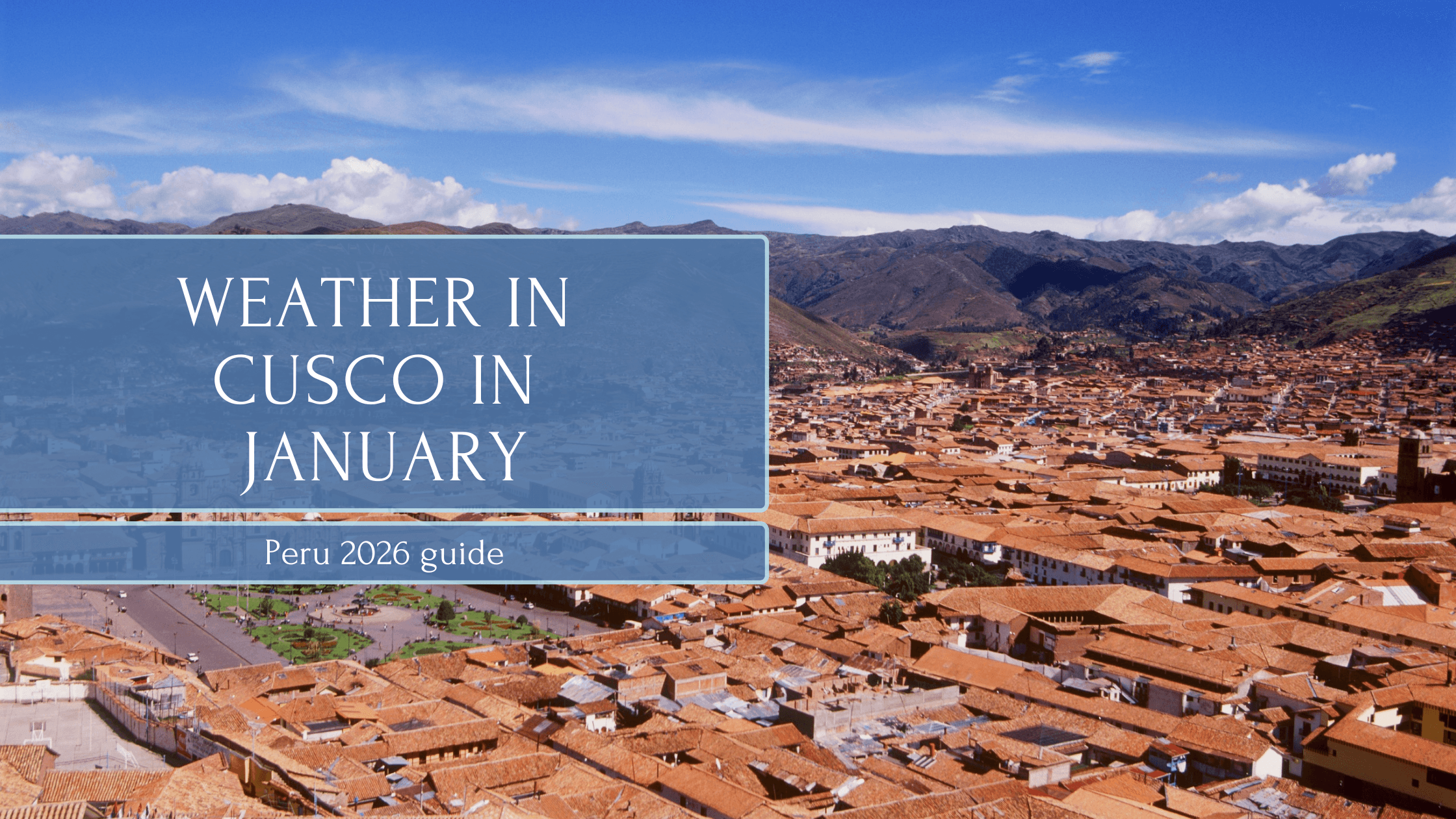
Weather in Cusco, Peru in January
Weather in Cusco, Peru in January: Rainy Season Guide
January in Cusco is wet, green, and surprisingly rewarding — if you know what you’re getting into. The rainy season is at its peak, which means lush Andean highlands, dramatic cloudy skies, and fewer tourists in Cusco than during the June–August dry season. Prices drop, queues shrink, and the city of Cusco takes on a quieter, more local feel. If you’re planning where to base yourself, this guide on where to stay in Cusco covers the best neighborhoods for wet-season travel.
This is the rainiest month of the year in the Cusco region, and that shapes everything. It suits budget travelers, flexible itinerary planners, and photographers who love moody light. It’s harder to recommend to trekkers expecting ideal weather conditions or anyone with a rigid schedule. Cusco during January rewards the adaptable.
Quick Cusco Weather Snapshot: January
- Average high: 18–19°C / up to 20°C on clear days (64–66°F)
- Average low: 5–7°C (41–45°F); nighttime temperatures can drop to near freezing at elevation
- Rainfall level: Heavy — January is the rainiest month of the rainy season in Cusco
- Humidity level: Moderate to high (~75–80%); humid weather is the norm
- Season: Peak wet season (November to April)
- Crowd level: Low to moderate
- Overall comfort rating: 5/10 for trekkers; 7/10 for city explorers
What January in Cusco Actually Feels Like
Cusco weather in January follows a dependable daily pattern. Mornings open with blue skies and crisp Andean air. Clouds build through midday. By early afternoon, rain will fall — often hard — and continue into the evening. This isn’t occasional drizzle. It’s precipitation that can last several hours.
The historic center holds up well. Plaza de Armas, San Blas, and the main sites around Cusco stay walkable even in rain. But cobblestones get slick, unpaved trails turn muddy, and exploring the city after 2 PM means getting wet. Temperature changes throughout the day are sharp — 14°C swings between morning and evening are common. Layers are essential.
Average Temperature in Cusco in January
The average temperature in January sits around 18–19°C during the day, occasionally nudging 20°C on sunnier mornings. Nights are a different matter. Nighttime temperatures can drop to 5–7°C in the city — lower in villages and trails around Cusco at higher elevations.
The temperature in January is slightly warmer and more humid than February and March, but not dramatically so. This is the heart of the wet season. Sun exposure is real when clouds part — UV intensity at 3,400m (11,200 ft) is deceptively strong. Don’t skip sunscreen on cloudy days.
Rainfall and Precipitation in January
January is the rainiest month in Cusco’s rainy season cycle. Average monthly precipitation hits 150–165mm, most of it falling in the afternoon or evening. Morning showers happen but aren’t the norm.
Rain typically arrives as heavy downpours — not prolonged drizzle. That means a 2–3 hour burst can disrupt an afternoon completely, then ease off by evening. Plan outdoor activity in the morning window and treat the afternoon or evening as your indoor buffer. Floods and landslides can periodically close roads between Cusco and outlying sites; always check conditions before heading to the Sacred Valley.
Humidity in Cusco in January
Humid weather defines January and February across the Andes. In Cusco, humidity runs 70–80%, which — at altitude — feels different than tropical humidity. It’s not suffocating, but it is persistent.
The humid conditions make cold nights feel colder and can slow altitude acclimatization. Travelers arriving from Lima or other coastal cities often notice the combination of wet season air and reduced oxygen hits harder than expected. Build in a rest day after arrival.
Is Cusco Busy in January? (Tourism Levels)
January is low season for tourists in Cusco. The New Year’s Day surge clears out by the second week, and international traffic doesn’t pick back up until June. You’ll move through Sacsayhuamán, Qorikancha, and most sites without the crowds that define peak months.
That said, Peruvian domestic travel remains active through mid-January due to school holidays. Hotels near the historic center and buses to Machu Picchu can fill on long weekends. Prices are typically 20–35% lower than peak. It’s a popular time among budget-conscious travelers for good reason.
Best Time to Visit Cusco: Is January Right for You?
January is not the best time to visit Cusco if your priority is trekking, reliable weather, or multi-day hiking. The Inca Trail is open — it closes in February — but conditions are wet and challenging. Most other trails around Cusco are slippery and prone to disruption.
It is a strong month to visit Cusco if you’re flexible, focused on cultural sightseeing, or trying to avoid peak-season prices. The best time to visit Machu Picchu for lighter crowds while it’s still accessible before the February trail closure is late January. Morning visits reward early risers with cleaner light and less rain risk.
The dry season (May–October, with June–August as peak) offers the most stable weather forecast for outdoor activity. But if January fits your schedule, it’s workable — you just need the right approach.
Best Things to Do in Cusco in January
- Visit Machu Picchu — one of the top places to visit year-round; morning entry before 10 AM avoids rain and crowds; this is a strong time to visit Machu Picchu before the February trail closure
- Explore the San Pedro Market — covered, vibrant, and ideal for a rainy afternoon; a local staple and a great time to explore Cusco’s food culture
- Tour Qorikancha and the Cathedral — the historic center’s two best indoor sites; historically rich and weather-proof
- Day trip to the Sacred Valley — towns like Ollantaytambo, Pisac, and Moray are manageable if you leave by 7–8 AM
- Hike to Sacsayhuamán — accessible from the city center; go before noon
- Explore Cusco’s culinary scene — food tours and local restaurants don’t close for rain
- Visit the Inca Museum or Chocolate Museum — strong rainy-day backup options in the historic center
- Hike Choquequirao — for serious trekkers; far less crowded than the Inca Trail, though conditions are demanding
Events & Festivals in January
- Bajada de Reyes (January 6) — Three Kings Day; small processions and community gatherings, especially in villages around Cusco
- New Year’s Day hangover period — the first week sees lingering holiday energy and some domestic tourism
- Carnival preparations — late January marks an informal build-up to February’s Carnival; some neighborhoods begin early
- No large international events are scheduled in January; it’s a culturally quiet month compared to June (Inti Raymi)
What to Pack for Cusco in January
Clothing:
- Moisture-wicking base layers
- Mid-layer fleece or thermal for evenings
- Waterproof raincoat — essential for adverse weather conditions
- A lightweight poncho — locals wear them; practical for sudden downpours
- Quick-dry hiking trousers
- Warm hat and gloves for nights
Footwear:
- Waterproof trail shoes or hiking boots
- Sandals or slip-ons for indoors
Sun & rain protection:
- SPF 50+ sunscreen — altitude UV is strong even on cloudy days
- A second poncho or packable umbrella as backup
- Waterproof cover for your daypack
Health:
- Altitude medication (consult your doctor; see CDC altitude sickness guidance)
- Electrolyte tablets
- Lip balm with SPF
Seasonal Travel Tips for Visiting During This Month
- Morning is your window — most rain falls in the afternoon; schedule outdoor plans before noon
- Book Machu Picchu in advance — even in low season, timed entry slots sell out; use the official Ministerio de Cultura portal
- Carry cash — power and connectivity dips during storms knock out card readers in smaller towns around Cusco
- Acclimatize first — arrive a day early in Qosqo (the Quechua name for Cusco) before any physical activity
- Check the weather forecast daily — especially before Sacred Valley day trips; road closures happen fast after heavy rain
- Layer aggressively — temperature changes between 8 AM and 8 PM can exceed 12–14°C
Weather Hazards in Cusco in January
Landslides are the most serious risk. The rail corridor between Cusco and Aguas Calientes is vulnerable after sustained precipitation and can close with little notice — sometimes for 24–48 hours. Build flexibility into Machu Picchu plans.
Altitude sickness is season-independent but compounded by humid weather. At 3,400m in the andean highlands, symptoms — headache, fatigue, nausea — are common in the first 24–48 hours. Arriving from sea level cities like Lima makes this transition sharper.
Cold nights catch visitors off guard. Near 5°C evenings combined with damp air feel colder than the number suggests. Verify that your accommodation has heating.
Flash flooding is possible in low-lying cobblestone streets after heavy rainfall, though the historic center handles it reasonably well. Avoid exploring the city on foot during peak afternoon downpours.
Key Takeaways
- January is a month of the rainy season in Cusco — plan around afternoon precipitation, not despite it
- Average daily highs reach 18–20°C; nighttime temperatures can drop to 5–7°C — pack for both
- Low season means fewer tourists in Cusco and prices 20–35% below dry season peak
- The morning window (before noon) is your most reliable time to explore Cusco and surrounding sites
- Machu Picchu is open and less crowded — book early and go in the morning
- A raincoat and poncho are non-negotiable for adverse weather conditions
- January suits flexible, budget-conscious travelers — not those depending on consistently ideal weather conditions
FAQs
Is January a good month to visit Cusco?
It can be, depending on your travel style. Cusco during January offers lower prices, lighter tourist traffic, and a more local atmosphere. The trade-off is daily afternoon rain and muddy trails. Travelers who plan mornings for outdoor activity and afternoons for indoor sightseeing tend to have a good visit to Cusco.
What is the weather like in Cusco in January?
Cusco weather in January means warm, partly cloudy mornings, heavy afternoon rain, and cold evenings. Average daily highs sit around 18–20°C; lows drop near 14°C in milder moments and as low as 5°C overnight. Humidity is elevated and precipitation is frequent — this is the peak wet season, which runs November to April.
Is visiting during this month worth it for Machu Picchu?
Yes. It’s one of the better times for a visit to Machu Picchu if crowds are a concern — January sees significantly fewer visitors than the dry season. The site is open, and morning visits typically avoid the worst of the afternoon rain. Book tickets well in advance regardless.
What should I wear in Cusco in January?
Layers are the core strategy. A waterproof raincoat or poncho, moisture-wicking base layers, and a warm mid-layer cover most weather conditions. Evenings require a hat and gloves. Choose quick-dry fabrics over cotton throughout — items take longer to dry in humid weather.
How does January compare to the dry season in Cusco?
The dry season (roughly May–October) brings consistent blue skies, stable hiking conditions, and peak tourist crowds. January is the inverse: heavy precipitation, green landscapes, lower prices, and far fewer visitors. Cusco is one of those destinations where low season has genuine advantages — as long as you’re not counting on a hike-heavy itinerary.