Weather in Cusco, Peru in July
Weather in Cusco, Peru in July
July is one of the best times to visit Cusco — and one of the coldest. The city sits at roughly 3,400 meters (11,200 ft) above sea level in the Peruvian Andes, and in July, the dry season is in full effect. Days are clear, sunny, and cool. Nights get very cold. If you’re planning a trip to Cusco around the weather in Cusco in July, you’ll find ideal weather conditions for hiking and trekking — but you’ll need to pack layers, and you’ll be sharing the city with a lot of other travelers.
Visiting Cusco in July works well for first-timers, hikers, Machu Picchu-bound visitors, and anyone who prioritizes blue skies over budget. It’s less ideal for those who want to avoid the crowds or are sensitive to cold, since July sits squarely in high tourist season with matching prices. Before you book, browse where to stay in Cusco to find accommodation that fits your style.
Quick Weather Snapshot
- Average high: 19°C / 66°F
- Average low: 0–2°C / 32–36°F (can dip below freezing on cold nights)
- Rainfall level: Very low — approximately 4–15mm total for the month
- Humidity level: Low to moderate (~47% average)
- Season: Peak dry season (Cusco dry season)
- Crowd level: High — peak tourist season
- Overall comfort rating: 7/10 — excellent daytime weather, very cold at night
What Cusco Is Like in July
July in Cusco means sunny days, dry weather, and consistently blue skies. The air is thin and crisp, and the sun — intense at this altitude — warms things up considerably by mid-morning. You can spend the day exploring the city comfortably in a light jacket or fleece, though a hat and sunscreen are non-negotiable.
By late afternoon, the temperature begins to drop fast. Once the sun sets, you’ll want a proper warm layer — bring a jacket you don’t mind keeping on all evening. Mornings before 8am can be genuinely cold. Plan outdoor activities for mid-morning through early afternoon when weather conditions are at their best.
Temperatures in Cusco in July
Temperatures during the day average around 19°C (66°F), though the intense Andean sun can make it feel warmer in direct light. Overnight lows regularly fall to 0–2°C (32–36°F), and nights can get very cold — records show lows reaching -5°C. July is the coldest month of the year in Cusco; june and july sit back to back as the two coldest months. UV levels stay high (index of 10), so sun protection is essential throughout the entire year but especially at this altitude.
Rainfall in Cusco in July
July marks the middle of the dry season in Cusco — and it shows. Historical climate data shows total monthly precipitation averaging just 4–15mm, spread across roughly 2–6 days. When rain does occur, it’s typically a brief shower — not a sustained downpour. Occasional afternoon hailstorms can occur, a quirk of the high Andes, but they pass quickly and rarely disrupt plans. Weather changes in July tend to be brief and manageable. You can realistically plan full outdoor days without worrying about disruptions.
Humidity in Cusco in July
Humidity averages around 47% in July — noticeably lower than during the rainy season (January and February), when it climbs past 75%. The cusco rainy season brings heavy, sustained rain from December through March; July is the opposite. The dry air makes cold temperatures feel more bearable, but it also contributes to faster dehydration at altitude. Drink more water than you think you need, especially in the first few days as your body acclimates.
Is Cusco Busy in July? (Peak Tourist Season)
Yes — July is high tourist season in Cusco. The cusco dry season runs from may to september, and tourists from North America and Europe arrive in large numbers during their summer holidays. The number of visitors peaks in July, hotels and tours book up weeks in advance, and prices for lodging reflect that demand.
The Inti Raymi festival falls on June 24, just before July, so its tourism surge often extends into early July. Peru’s independence day falls on July 28–29 (Fiestas Patrias), which brings a wave of domestic travelers into the city. If you want to avoid the crowds, consider april and may — still dry weather at the beginning of the dry season, with far fewer visitors.
Best Things to Do in Cusco in July
The dry weather makes July ideal for hiking and outdoor activities around Cusco. Options include:
- Hike the Inca Trail or Salkantay Trail — ideal weather conditions, clear mountain views, and firm trail conditions; permits must be booked well in advance
- Visit Machu Picchu — sites such as Machu Picchu are best experienced in the dry season; book entry tickets and transport early
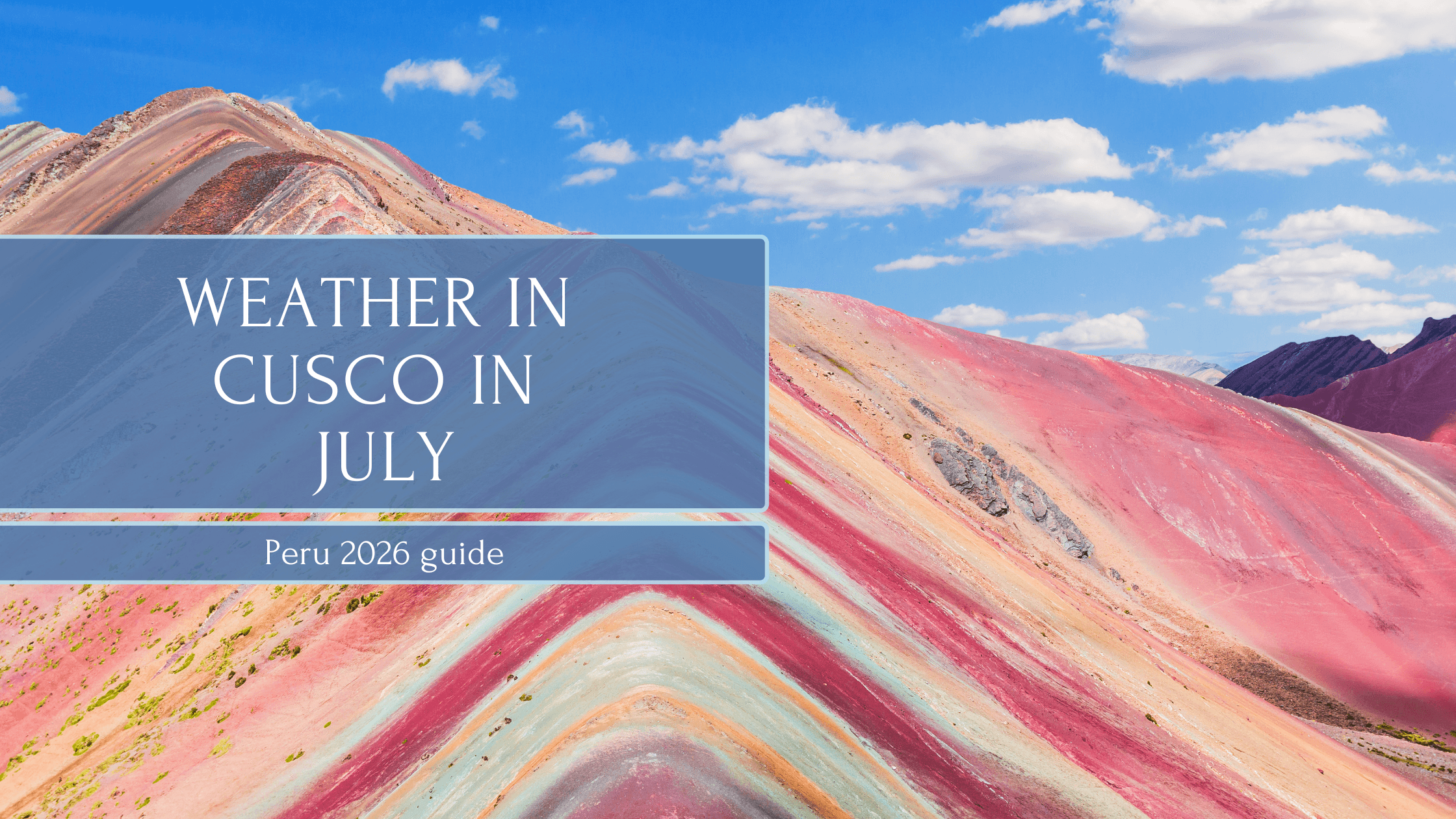
- Hike Rainbow Mountain (Vinicunca) — a full-day excursion that rewards clear-day visitors; go early before clouds build
- Hike to Ausangate — the high-altitude Ausangate circuit is ideal for hiking in July; bring a warm sleeping bag for overnight stages
- Explore Cusco and the Sacred Valley — day trips to Pisac, Ollantaytambo, and Moray in sunny conditions are excellent
- Walk the historic city of Cusco — Cusco’s plazas, churches, and Inca stonework are best explored on a sunny, dry morning
- Visit archaeological sites — Sacsayhuamán, Qenqo, and other archaeological sites around Cusco are accessible and uncrowded by late morning
- Museo Inka or Qorikancha — solid indoor options for rest days or late arrivals still acclimatizing
Events & Festivals in July
Fiestas Patrias (July 28–29) — Peru’s independence day celebrations include military parades, fireworks, and public gatherings across the city. Prices spike and domestic visitors flood in. Book accommodation early if your visit overlaps with these dates.
Inti Raymi (June 24) — technically falls in late June, but elevated crowds persist into early July. If you’re arriving in late June and staying into July, you’ll catch the overlap.
What to Pack for Cusco in July
- Thermal base layers (top and bottom) — essential for cold nights and early mornings
- Warm mid-layer — fleece or light down jacket; bring a jacket for every evening outing
- Windproof or waterproof outer shell — for hailstorms and wind at altitude
- Light daytime layers — a long-sleeve shirt is often enough by 10am
- Sturdy hiking shoes — waterproof trail shoes with grip for hikes and cobblestones
- Warm socks and gloves — especially if planning to hike overnight
- Wide-brim hat — sun protection at high altitude is non-negotiable
- High-SPF sunscreen — UV index of 10 in July; altitude amplifies sun exposure
- Sunglasses — polarized lenses recommended
- Lip balm and moisturizer — dry Andean air causes chapping quickly
- Reusable water bottle — hydration is critical for acclimatization
- Warm sleeping bag — essential for overnight hikes like Ausangate or Salkantay
- Altitude medication (consult your doctor) — acetazolamide is commonly used for prevention
Seasonal Travel Tips for July
- Start activities mid-morning — mornings are coldest; wait until 9–10am before heading out to hike or explore
- Book permits and tickets early — a trip to Cusco in july requires advance planning; Inca Trail permits sell out 6+ months ahead, and Machu Picchu tickets fill fast
- Allow 2–3 days for acclimatization — don’t attempt to hike on your first day; altitude sickness is real at 3,400m; consider arriving via Lima first to adjust gradually
- Carry layers you can add or remove — temperature swings of 15–20°C between morning and midday are common
- Drink coca tea — widely available locally and traditionally used to ease altitude symptoms
- Plan your trip to cusco around Fiestas Patrias — if you want fewer crowds, arrive before July 26 or after August 1
- Check the official Peru tourism portal — for current Machu Picchu booking policies and entry requirements before you travel
Weather Hazards in Cusco in July
Altitude sickness is the primary risk. The city of Cusco sits at 3,400m, and the weather conditions here affect the body differently than at sea level. Symptoms including headache, nausea, and fatigue are common in the first 24–48 hours. The World Health Organization’s guidance on altitude illness covers prevention and treatment clearly.
Freezing nights are a genuine hazard for travelers who underpack. It gets cold at night throughout the entire year in Cusco, but July is the worst month. Temperatures can reach -5°C. Hypothermia is a real concern on overnight hikes without proper gear.
Occasional hailstorms can appear in the afternoon without warning. They pass quickly but can be disorienting on exposed hike routes around Cusco and the surrounding area.
High UV radiation is consistently underestimated. Thin atmosphere at altitude means sunburn happens faster — even on cool, partly cloudy days.
Key Takeaways
- July is the middle of the dry season in Cusco — expect very little rain, sunny days, and consistently blue skies
- Temperatures are comfortable during the day (~19°C) but cold at night, regularly dropping to 0°C or below
- July is high tourist season; book accommodation, Machu Picchu tickets, and hiking permits well in advance
- Altitude sickness is the most significant health risk — plan 2–3 days of acclimatization before any strenuous hike
- UV exposure is high despite the cold; sunscreen and a hat are essential throughout the entire year at this altitude
- Peru’s independence day (July 28–29) adds domestic crowds and higher prices at the end of the month
- July is an ideal time for first-time visitors who prioritize dry weather and outdoor hiking over budget savings
FAQs
Is July a good time to visit Cusco?
Yes — july is the perfect time to visit Cusco if you prioritize dry weather and hiking. The cusco dry season delivers clear skies, minimal rain, and ideal weather conditions for visiting sites such as Machu Picchu and trekking major routes. The trade-off is peak crowds and higher prices, so plan your trip to cusco early and book everything well in advance.
How cold does Cusco get in July at night?
Overnight lows in Cusco in July regularly fall to 0–2°C (32–36°F), and the coldest nights can dip to -5°C (23°F). It gets very cold after sunset, especially in the city and surrounding areas at elevation. Packing thermal layers and a warm jacket is essential, and anyone hiking overnight should carry a warm sleeping bag.
Does it rain in Cusco in July?
Rarely. July sits in the middle of the cusco dry season, with total rainfall averaging just 4–15mm for the month. The rainy season in Cusco runs from approximately December through March — the opposite of July’s weather conditions. Brief afternoon hailstorms can occur, but sustained rain is uncommon throughout the entire month.
Is Cusco crowded in July?
Yes. July is peak tourist season, and the number of visitors is higher in this month than at almost any other time of the year. Cusco and Machu Picchu both see heavy traffic, accommodation fills up, and prices for lodging climb. If you want a more pleasant climate with fewer crowds, april and may offer a good balance — the beginning of the dry season with far less competition for permits and beds.
What should I wear in Cusco in July?
Plan for layering. Mornings and evenings require thermal base layers and a warm jacket. By midday, you may be down to a long-sleeve shirt. Bring a jacket for every outing regardless of how warm the forecast looks — weather changes fast in the Andes. Sturdy, waterproof walking shoes with grip are recommended for Cusco’s cobblestone streets and hike terrain around the city and surrounding valleys.