Weather in Lima, Peru in January
Weather in Lima, Peru in January
January in Lima is warm, overcast, and humid — but rarely the beach weather travelers expect. The city sits in a coastal desert, and the weather in Lima in January reflects that paradox: summer temperatures without summer sunshine. Most days are blanketed by garúa, a low marine fog that keeps skies gray even as temperatures climb into the mid-20s°C. Summer in Lima is defined less by sunshine than by warmth, humidity, and haze.
This month works well for travelers who prioritize sightseeing, food, and culture over lying on the beach to relax on the beach. Families, couples, and solo tourists exploring Miraflores, Barranco, and the broader Lima landscape will find January comfortable enough to walk and explore — just don’t count on blue skies. If you’re deciding where to stay in Lima before your trip, January’s warm nights and walkable neighborhoods make coastal districts especially convenient.
Quick Weather Snapshot
- Average high temperature: 26–28°C (79–82°F)
- Average low temperature: 19–21°C (66–70°F)
- Precipitation: Under 2mm for the month — Lima is one of the driest capitals on Earth
- Average relative humidity: 75–85%
- Season: Summer (Southern Hemisphere)
- Sky conditions: Mostly overcast with cloud cover; brief sunny skies in the afternoon
- Crowd level: Moderate to high (Peruvian school holidays)
- Overall comfort rating: 6.5/10 — warm and walkable, but sticky and gray
What Is Lima's Weather Like in January?
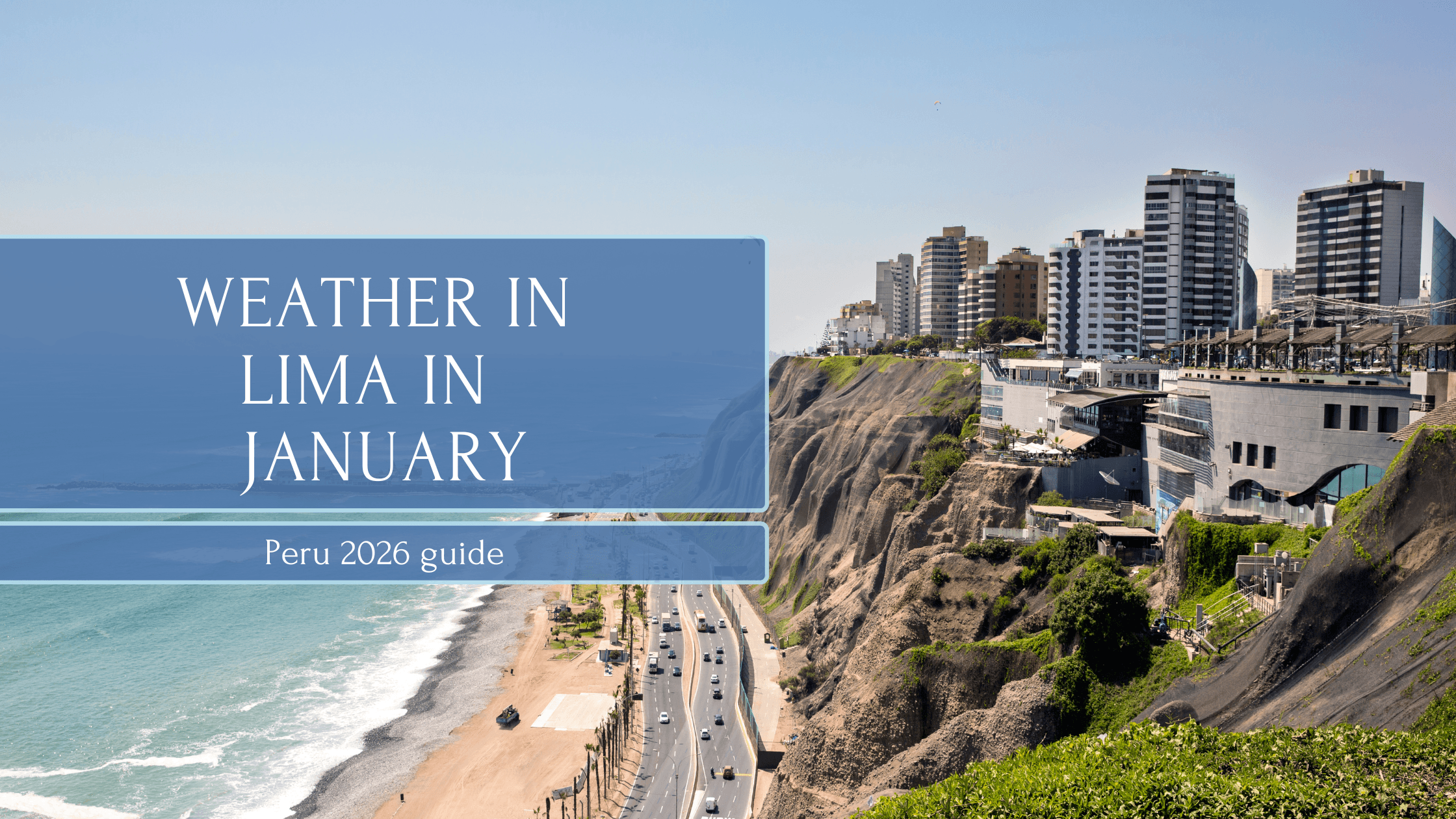
January is Lima’s summer, and the city leans into it. Outdoor cafés fill up, the Malecón promenade in Miraflores stays busy into the evening, and the Pacific coast hums with local beach-goers headed south to Punta Hermosa or Asia.
That said, the infamous garúa — Lima’s marine fog layer — persists for much of the month, keeping cloud cover thick through most mornings. By mid-afternoon, the cloud layer often thins slightly and temperatures peak. Evenings are warm and pleasant, making Barranco and Miraflores particularly enjoyable for walking after dark. Wind speed along the Malecón picks up in the evenings, which provides welcome relief from the humidity.
Average High and Low Temperatures in Lima in January
Daytime highs hover between 26°C and 28°C — around 80 degrees Fahrenheit — occasionally nudging 30°C during heat surges. The average high temperature for the month sits at approximately 27°C (81°F). The average low temperature at night rarely drops below 19°C, so no jacket is needed after dark. The sun, when it appears, carries real intensity; UV exposure at sea level can be surprisingly strong even through thin cloud cover.
January is one of the warmest months in Lima. Compared to February and March — Lima’s hottest stretch — it’s slightly milder. Compared to December, it’s warmer and more humid. The average temperature in Lima throughout the month stays consistently in the low-to-mid 20s°C, which makes sightseeing manageable with the right preparation. The weather in Lima by month varies significantly, with each month offering a unique experience. From April to June, temperatures begin to cool as the city transitions into the winter season, bringing with it a more humid climate. Understanding the weather in Lima by month can help visitors plan their activities accordingly, ensuring a more enjoyable trip.
Precipitation and Rainfall in Lima in January
Lima receives almost no rain in January. According to SENAMHI, Peru’s national meteorology service, Lima averages under 2mm of precipitation for the entire month — making it far from the rainiest month on the calendar. Rainfall is not a travel concern here.
What Lima does get is humidity and mist. The garúa fog can leave surfaces damp and the air heavy, but it does not disrupt plans. Outdoor activities, tours, and day trips along the coast of Peru proceed normally year round. Pack accordingly — not for rain, but for warmth and moisture. For a current forecast for Lima before your departure, SENAMHI provides regularly updated hourly and daily outlooks.
Cloud Cover and Sunny Skies in Lima in January
Lima’s relationship with sunshine is complicated. The city sits directly beneath the South Pacific High, a persistent high-pressure system that traps marine air along the coast. The result: cloud cover dominates from morning into early afternoon for most of January, even as temperatures stay warm below.
Don’t expect sunny skies until mid-to-late afternoon, and even then they’re not guaranteed. This is normal Lima summer behavior — not an anomaly. The average daily sunshine sits around 5–6 hours, with most daylight appearing after 2pm. Sunrise is around 6:15am in January, and daylight extends to roughly 6:45pm, giving you long evenings for exploring.
Average Relative Humidity in Lima in January
Humidity is the primary comfort challenge in January. The average relative humidity sits between 75% and 85%, making the heat feel stickier than the thermometer suggests. The heat index can push perceived temperatures several degrees above actual readings.
For most travelers, this is manageable with light, breathable clothing. Those with respiratory sensitivities or low heat tolerance may find extended outdoor time tiring, especially between 11am and 2pm. The sea breeze along the Malecón provides consistent relief, and wind speed increases noticeably in the evenings.
Is January in Lima a Good Time to Visit Peru?
January is a solid month to visit Peru — particularly for the Lima leg of a trip. The city’s food scene, museums, and coastal neighborhoods operate at full capacity. For those combining Lima with highland destinations, context matters.
January and February fall squarely in the wet season in the Andes. The Inca Trail is closed for maintenance throughout February, but most of January remains open with some muddy sections. If you plan to visit Cusco, hike the Inca Trail, or explore the Sacred Valley, January is one of the rainier options — conditions can be lush and dramatic, but expect a lot of rain at altitude. Cities like Arequipa and Trujillo, by contrast, are drier and more accessible in January. Iquitos in the Amazon basin sees its own wet season pattern — lush but humid. June to September is generally considered the best time to visit Peru’s highlands and classic Inca heritage sites with dry, reliable weather. December to March is Lima’s summer window — warm and mostly dry along the coast, wet inland.
This creates a useful division: if your vacation is Lima-focused, January works well. If it’s highland or Inca Trail-focused, June to September is a better window.
Peak Tourist Season and Lodging in Lima in January
January sits within Lima’s peak tourist season. Peruvian school summer holidays run from late December through February, which means local tourism — especially residents heading to coastal areas south of the city — is at its highest. International tourist traffic remains strong, driven by travelers combining Lima with Cusco and Machu Picchu.
Expect higher lodging rates, particularly in Miraflores and San Isidro. Book accommodation and restaurant reservations for high-demand spots (Central, Maido, Kjolle) well in advance. The low season for Lima pricing falls roughly April through October, when highland weather is better but Lima itself cools down and skies turn grayer.
Best Things to Do in Lima in January
- Explore Miraflores and Barranco on foot — warm evenings are ideal for walking the cliffside Malecón or wandering Barranco’s street art district
- Visit the Larco Museum — air-conditioned and one of South America’s finest pre-Columbian collections, with significant Inca artifacts; a smart midday option
- Eat your way through Lima — January is peak ceviche season; hit Mercado Surquillo or a trusted cevichería in Miraflores
- Take a day trip to Pachacámac — the pre-Inca archaeological site south of Lima is best visited in the morning before high temperatures peak
- Surfing at Miraflores — January swells attract beginner and intermediate surfers to Playa La Pampilla and Costa Verde; one of Lima’s most accessible ways to relax on the beach
- Visit Huaca Pucllana — the illuminated evening tours of this ancient Inca-era pyramid are particularly atmospheric in summer
- Day trip to Lunahuaná — roughly 2 hours south; a small river town popular for rafting and local wine tasting along the coast of Peru
- Paragliding over the Malecón — warm summer thermals make January one of the better months for tandem paragliding flights with views of the Lima coastline
Events & Festivals in January
- New Year’s continuation (January 1 through first week): Lima’s beaches and outdoor spaces remain lively following the New Year’s Eve celebrations; January 1 is a public holiday
- Fiestas Patrias preparation: Not in January itself (those fall in late July), but Lima’s arts and cultural calendar picks up with gallery openings and music events
- Lima Restaurant Week (Mistura pre-season events): Some Lima restaurants launch special tasting menus in January ahead of the broader festival season — worth checking individual venues
No major national public holidays fall mid-month in Peru. The city operates on a normal schedule throughout the year, with January 1 being the main exception.
What to Pack for Lima in January
Clothing:
- Lightweight, breathable tops (linen or moisture-wicking fabrics)
- Light trousers or shorts
- A light layer for air-conditioned restaurants and museums — interiors can be surprisingly cold
- Comfortable walking shoes for uneven cobblestone streets in Barranco
Footwear:
- Supportive walking sandals or breathable sneakers
- Flip-flops if visiting coastal areas or beach zones south of the city
Sun and weather protection:
- SPF 50+ sunscreen — Lima’s coastal UV is strong even on overcast days
- Sunglasses
- Small daypack for water and a light layer
Other:
- Insect repellent is not needed in Lima but is essential if continuing to the Amazon or jungle regions
- A reusable water bottle — staying hydrated in the humidity matters
Seasonal Travel Tips for January
- Go out in the morning or evening. Midday heat and humidity (11am–2pm) is the most uncomfortable window; save indoor activities for this slot
- Don’t expect sunny skies. Lima’s summer fog is consistent — it defines the city’s climate in summer, not a sign of bad weather
- Book upscale restaurants 2–4 weeks ahead. Lima’s top dining destinations fill quickly in January; last-minute reservations are difficult
- Budget extra time for beach road traffic. On weekends, the Panamericana Sur heading toward Lima’s southern beaches sees significant congestion
- Bring cash for markets. Mercado Surquillo and street food vendors rarely accept cards; ATMs in Miraflores are plentiful but busy
- Plan highland trips carefully. If you plan to visit Cusco or hike the Inca Trail as part of your trip, note that January brings wet conditions in the Andes — conditions differ drastically from mild temperatures along the coast
Weather Hazards in Lima in January
Lima in January poses minimal weather hazards. There are no hurricanes, significant storms, or cold winter month conditions to contend with.
The primary concerns are:
- High temperatures combined with humidity can cause dehydration and heat exhaustion if visitors are not accustomed to tropical conditions — drink water consistently
- UV exposure through cloud cover — sunburn is possible even on overcast days; use sunscreen regardless of sky conditions
- Coastal fog making driving hazardous at night on the Panamericana Sur heading to beach communities south of Lima
- El Niño years can bring anomalously heavy rains and flooding to coastal areas, though Lima proper is rarely severely impacted — check the forecast for Lima and SENAMHI updates if traveling during a declared El Niño event
For travelers continuing to highland destinations, note that January is peak wet season in the Andes. Conditions in Cusco, Arequipa, and the Sacred Valley differ dramatically from those along the coast. Review Peru’s official tourism informationbefore planning inland excursions.
Key Takeaways
- The weather in Lima in January is warm, humid, and mostly overcast — with virtually zero rainfall
- The average temperature sits in the low-to-mid 20s°C; average highs of 26–28°C with lows around 19–21°C
- Humidity (average relative humidity 75–85%) is the main comfort factor, not heat or rain
- January is peak tourist season in Lima due to Peruvian school holidays — book lodging early
- Evenings in Miraflores and Barranco are the most comfortable time to be outdoors
- UV exposure is significant even through cloud cover — sunscreen is non-negotiable
- If you plan to visit Cusco or hike the Inca Trail, January’s wet season conditions at altitude require separate preparation
FAQs
Is January the best time to visit Lima, Peru?
January is a good time to visit Peru if your trip is Lima-focused — the city is warm, dry, and lively. It’s not the best time to visit Peru’s highlands or hike the Inca Trail, as January and February fall within the Andean wet season. For a well-rounded Peru trip combining coast and mountains, June to September offers more reliable conditions throughout the country.
What is the January weather like in Lima?
Lima in January is warm and humid, with daytime highs around 26–28°C and overnight lows of 19–21°C. Precipitation is extremely rare — under 2mm for the month — but the city’s marine fog layer (garúa) creates a hazy, overcast atmosphere for most of the day, with occasional afternoon sunny skies. The average daily sunshine runs around 5–6 hours.
Does it rain in Lima in January?
Almost never. Lima is one of the driest capital cities on Earth, and January is no exception. According to SENAMHI, average monthly precipitation is under 2mm. The humidity and fog can make surfaces feel damp, but actual rainfall is not a travel concern. The rainiest month in Lima is typically June, when the garúa intensifies — but even then, true rain is rare.
How hot does it get in Lima in January?
Most days peak between 26°C and 28°C (around 80 degrees Fahrenheit), with occasional highs reaching 30°C during heat surges. Combined with 75–85% average relative humidity, conditions can feel hotter than the thermometer reads. Mornings and evenings are more comfortable than midday.
What is the January average temperature in Lima compared to the rest of Peru?
Lima’s January average temperature of around 22–24°C is typical for the coast of Peru in summer. Inland, temperatures throughout the year vary dramatically by altitude — Cusco averages around 12–14°C in January with significant rainfall, while Iquitos in the Amazon sits around 28–30°C with high humidity. Arequipa, at 2,300m elevation, sees mild temperatures of 14–18°C with some afternoon rain. Lima’s coastal climate is far more stable than the rest of Peru’s varied landscape.