Where to Stay in Cochabamba, Bolivia (2026 Guide)
Where to Stay in Cochabamba, Bolivia (2026 Guide)
Cochabamba is one of Bolivia’s most underrated cities. It sits in a fertile valley between La Paz and Santa Cruz, offering genuine local culture, reasonable prices, and warm hospitality. The city of Cochabamba has earned the nickname “City of Eternal Spring” for its mild year-round climate. It’s also a practical hub for things to do in Cochabamba and exploring the surrounding region, with access to Tunari National Park, colonial towns, and mountain trails.
Choosing where to stay in Cochabamba matters, though. The city has distinct neighborhoods, and your location shapes your entire experience. A few blocks in the wrong direction can mean the difference between a walkable, safe base and an inconvenient one. This guide cuts through the confusion on the best hotels in Cochabamba and places to stay across different neighborhoods.
What to Expect in This Post
This guide to where to stay is built for quick scanning and real-world decisions. Here’s what you’ll get:
- Real neighborhood breakdowns with safety, walkability, and vibe details
- Which accommodation options work best for different travelers
- Practical guidance on hotels and guesthouses versus apartments
- Honest context on where to avoid when choosing where to stay in Cochabamba
- Straight answers to common questions about Bolivia and Cochabamba hotels
Where to Stay in Cochabamba: Quick Overview
- Centro (Downtown) — Commercial and historic heart. Busy, noisy, walkable. Best for transit and budget hotel options.
- La Recoleta — Colonial charm on a hilltop. Quieter, safer, fewer tourists. One of the best places for authentic Bolivian culture.
- Avenida Ballivián — Modern, commercial, with many restaurants and shops. Less character but convenient accommodation and attractions.
- Tupuraya — Residential and upscale near universities. Quieter, good food scene emerging, hostel and boutique options.
- Barrio Lindo / La Maica — Local neighborhoods. More adventurous, less tourist infrastructure.
Centro (Downtown) — Popular Attractions and Budget Hotels
Best for: Transit connections, backpacker crowds, those prioritizing budget accommodation.
Centro is where Cochabamba’s bones are. You’ll find colonial architecture, Plaza 14 de Septiembre (the main plaza), markets, and most local businesses. It’s dense and noisy during the day—the bustle of a real working city. Popular attractions like La Cancha market showcase traditional Bolivian commerce at its busiest.
Safety is mixed. Centro itself isn’t particularly dangerous, but petty theft happens, especially in crowded markets and on busy calle streets. Walkability is good during business hours. After dark, stick to main streets. This area is mostly budget hotels, hostels in Cochabamba, and hostel-style stays—not high-end accommodation.
If you’re in Centro, you’re paying for location and access to things to do in Cochabamba, not comfort. It works if you’re catching early buses to La Paz or Santa Cruz, or confident navigating Bolivian downtowns. It’s not ideal for families or those seeking peace.
La Recoleta — Best Hotels and Colonial Architecture
Best for: Couples, solo travelers, anyone wanting authentic Bolivian culture without chaos.
La Recoleta sits on a hillside overlooking the city and is Cochabamba’s best neighborhood overall. Restored colonial architecture, the Museo de la Recoleta convent, valley views, and a genuine residential feel define this area. The neighborhood is steep—expect to hike or take a taxi uphill—but it’s worth the effort for the hotel boutique and guesthouse options.
Safety is excellent here. Locals walk at all hours, and tourist crime is nearly nonexistent. Walkability is good within the neighborhood; reaching Centro requires effort (15-minute walk downhill, longer back up). The vibe is quiet and bohemian—genuinely Bolivian without tourist traps.
Popular hotels and guesthouses here occupy converted colonial homes with courtyards and local artwork. If you want to experience Cochabamba authentically, La Recoleta is where to stay in Cochabamba. Families with older kids will appreciate the safety and walkability. This offers one of the best hotels in Cochabamba for character and location combined.
Avenida Ballivián — Modern Convenience and Midrange Hotels
Best for: Families, those seeking modern amenities, travelers wanting convenience over character.
Avenida Ballivián runs north-south and is the city’s main commercial spine. You’ll find decent restaurants, supermarkets, and mid-range hotels in Cochabamba concentrated here. It’s clean, orderly, and functional. The neighborhood lacks strong Bolivian character—it could be any mid-sized city—but that’s partly the point. Many restaurants and a cable car connection to higher elevations are nearby.
Safety is solid. This is where Cochabamba’s wealthier residents live and shop, so there’s visible police presence and good street lighting. Walkability is very good; Ballivián itself is pedestrian-friendly, and you can reach most services on foot. The vibe is business-casual and modern.
Hotel in Cochabamba options here tend to be mid-range chains or boutique properties catering to business travelers. You’ll find reliable internet, hot water, and staff that speak some English. For straightforward accommodation in Cochabamba, this is a safe bet if you want comfort without mystery.
Tupuraya — Hostels and Emerging Food Culture
Best for: Solo travelers, longer stays, those exploring beyond tourist circuits.
Tupuraya is where Cochabamba’s universities are located, attracting younger crowds, cafés, bookstores, and a progressive vibe. Trendy restaurants and small hotels are opening—this is where things to do in Cochabamba expand beyond the usual tourist attractions. Many backpacker students base themselves here for Spanish immersion and Bolivian culture.
Safety is good, and the neighborhood has daytime energy without Centro’s chaos. Walkability is decent, though more spread out than La Recoleta. You’ll need taxis or minibuses to reach other neighborhoods, but local transport is cheap. Hotel boutique and hostel options are budget and mid-range.
This is the best place to stay in Cochabamba if you want to mix with young locals and international travelers. It’s ideal for stays of 2+ weeks or anyone studying Spanish. Tunari National Park hikes and other day trip attractions are accessible from here.
Barrio Lindo and La Maica — Local Immersion and Affordable Places to Stay
Best for: Adventurous travelers, those seeking deep Bolivian culture, long-term residents.
These neighborhoods northwest of Centro are primarily residential. You won’t find many tourists, formal hotels, or English speakers. This is Cochabamba as friendly locals know it—families, open-air markets, and daily life. Traditional Bolivian bakery goods and spicy sauce dishes are staples.
Safety is fine, but you should be more cautious than in La Recoleta or Avenida Ballivián. Petty theft happens, and police visibility is less obvious. Walkability is decent, but you need local knowledge. Transport links exist but are less obvious to newcomers.
Accommodation here is mostly through Airbnb or by renting from locals directly. Prices are cheaper than tourist neighborhoods. It’s best for travelers who speak Spanish, have local connections, or have high tolerance for ambiguity. Residencial options offer basic, affordable places to stay in Cochabamba.
Best Neighborhoods for First-Time Visitors to Bolivia's City of Cochabamba
- La Recoleta — Safest and most walkable. Best balance of local Bolivian vibe and tourist convenience. Worth the uphill trek.
- Avenida Ballivián — If you want modern, low-friction experience. Reliable amenities, many restaurants, shorter acclimation.
Both neighborhoods have ATMs, restaurants within walking distance, and taxi ranks. Centro is tempting for its cheapness, but first-timers will feel more comfortable elsewhere.
Best Areas for Nightlife, Food, and Families
For Food: La Recoleta has the best selection of local restaurants. Avenida Ballivián has consistent options and international choices. Centro has the cheapest street food and traditional Bolivian cuisine, but less quality control.
For Nightlife: Cochabamba is not a party destination. Bars and clubs exist mostly on Avenida Ballivián and scattered in Centro, frequented by locals. If nightlife is priority, La Paz is better. La Recoleta has cozy wine bars and cafés staying open late.
For Families: Avenida Ballivián is most practical—fewer stairs, more amenities, safer streets for children. La Recoleta works for families with older kids. Centro is too chaotic for young children. Tunari National Park offers day trip options for active families.
Hotel vs. Apartment: What's Better for Places to Stay in Cochabamba?
Hotels are simpler for 1–3 nights. Staff can arrange tours, offer local advice, and handle logistics. Apartments make sense for 2+ weeks when you want a kitchen and more space. Cochabamba accommodation options range widely.
Apartments in Cochabamba are cheap—often $300–$500 monthly on Airbnb—found mainly in La Recoleta, Tupuraya, and Avenida Ballivián. Hotel in Cochabamba prices range from $25/night (budget) to $100+ (mid-range). Casa rentals and villa options are also available. Booking.com and Airbnb have solid inventories for hotels and guesthouses in Cochabamba.
Where NOT to Stay in Cochabamba
Avoid neighborhoods south and east of Centro, particularly near old industrial areas. They lack tourist infrastructure, have poor walkability, and offer no advantages over neighborhoods listed above. Areas near the bus terminal (south of Centro) are transit hubs—useful for catching buses to La Paz, Santa Cruz, Sucre, Trinidad, or Uyuni—but noisy and impractical for sleeping.
The far periphery of the city is fine for locals but impractical for visitors without your own transportation.
Popular Attractions and Things to Do in Cochabamba
Cristo de la Concordia — Statue with city views, 20 minutes from center. Popular attraction rivaling similar monuments across Bolivia.
Palacio Portales — Grand mansion showcasing early 20th-century Bolivian wealth and architecture.
Tunari National Park — Tunari Peak offers hiking through high altitude cloud forests. Tunari mountain trails are among the best day trip options from Cochabamba.
Toro Toro National Park — Limestone formations and dinosaur footprints, 90 minutes away. One of Bolivia’s most unique attractions.
La Cancha Market — One of the open-air markets in South America. An authentic attraction where locals shop daily.
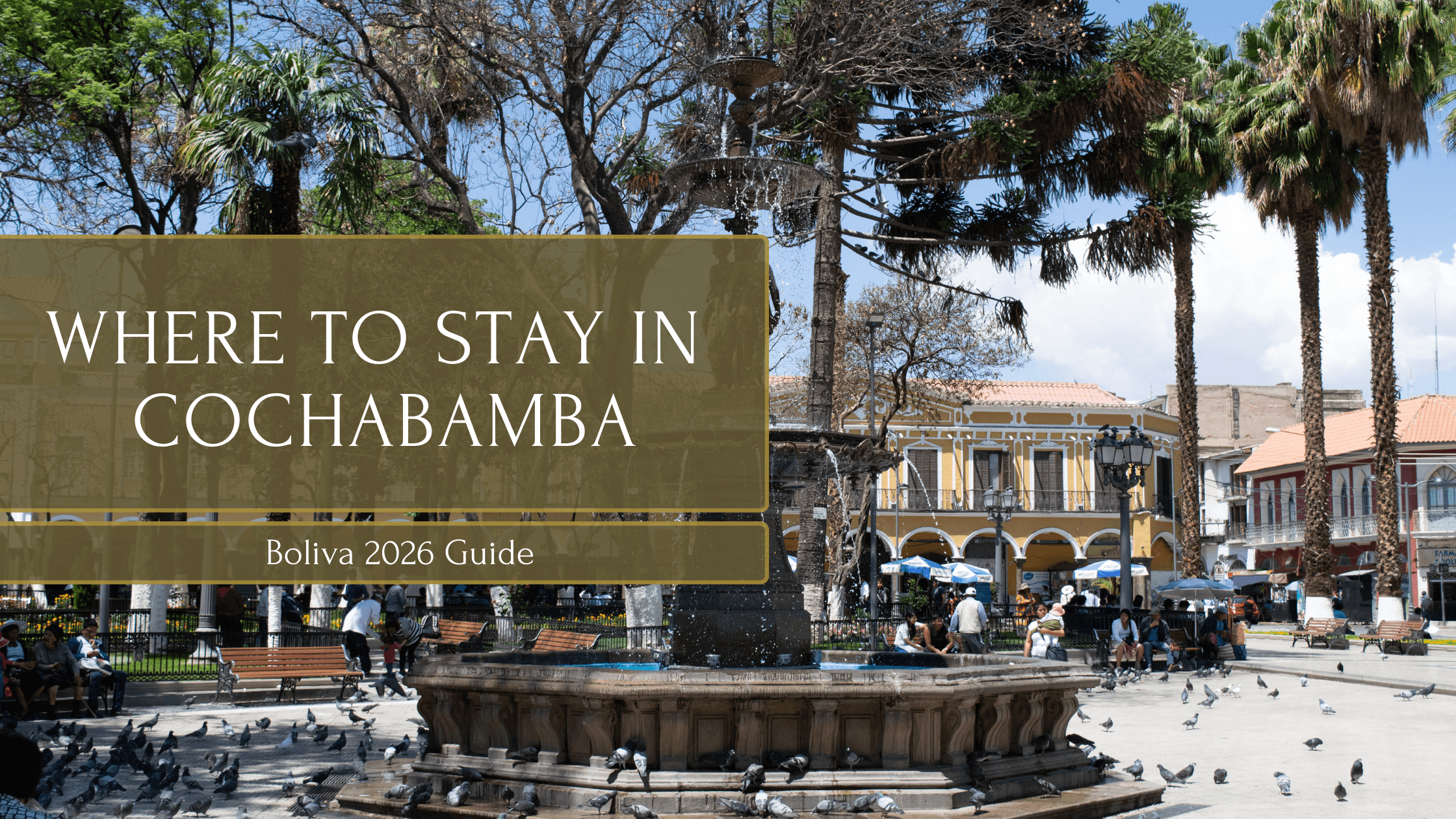
Plaza 14 de Septiembre — Historic plaza at city center with colonial-era buildings and local energy.
Key Takeaways
- La Recoleta is the best overall neighborhood—safe, walkable, authentic, and charming for experiencing Cochabamba.
- Avenida Ballivián is the best choice for modern comfort and reliable hotel and restaurant options.
- Centro works only if you prioritize budget and transit access over convenience.
- Tupuraya is best for longer stays and anyone interested in local Bolivian student culture.
- Safety is generally good across tourist-friendly neighborhoods; use basic precautions around pickpockets.
- Cochabamba accommodation is affordable—mid-range hotels run $40–$70/night.
- Book in advance during Carnaval (February/March) or holiday periods. Altitude sickness is manageable; the city sits at 2,558m, lower than La Paz.
Frequently Asked Questions
Is Cochabamba safe for tourists?
Cochabamba is safer than La Paz and comparable to Sucre. Use basic precautions (don’t flash valuables, avoid solo walking after midnight), and you’ll have no issues. Tourist crime is low relative to other places in Bolivia. If you’re planning your next trip, consider exploring the top neighborhoods in Santa Cruz de la Sierra as they offer a vibrant atmosphere and a mix of cultural experiences. These areas are known for their safety and welcoming communities, making it easy for visitors to enjoy everything from local cuisine to nightlife. You’ll find plenty of attractions and activities that cater to all interests, ensuring a memorable stay.
What's the best time to visit Cochabamba, Bolivia?
May through October is dry and cool—ideal for walking and exploring Cochabamba attractions. December through March is rainy and warm. July is coldest. Avoid Carnaval if you dislike crowds, or plan ahead if interested.
Do I need to speak Spanish in Cochabamba?
Spanish helps. English is less common than in La Paz. Hotels and tour operators can arrange translators, or stay on Avenida Ballivián where some English is spoken. Basic phrases go far with friendly locals.
How do I get around Cochabamba?
Taxis are cheap ($0.80–$2 per ride). Local bus systems are cheaper but harder to navigate. The city is compact; you can walk much of it, especially La Recoleta. Use taxis for uphill journeys.
What day trip attractions are near Cochabamba?
Sucre (colonial city, 3 hours by bus) is excellent. Tarata village (30 minutes) offers hiking. Toro Toro National Park and Tunari Peak are accessible. Villa Tunari offers tropical attractions. Trinidad and Uyuni are longer excursions.
Are there ATMs and Wi-Fi in Cochabamba?
Yes. ATMs are everywhere, especially on Avenida Ballivián and in Centro. Wi-Fi quality is decent in hotels and cafés but slower than La Paz. Download offline maps.
What's the altitude, and will I get altitude sickness?
Cochabamba sits at 2,558 meters (8,391 feet)—high altitude enough to cause mild symptoms in some people, but lower than La Paz or Sucre. Give yourself 1–2 days to acclimate. Drink water, avoid alcohol initially, and don’t overexert. Coca tea helps with altitude sickness.