
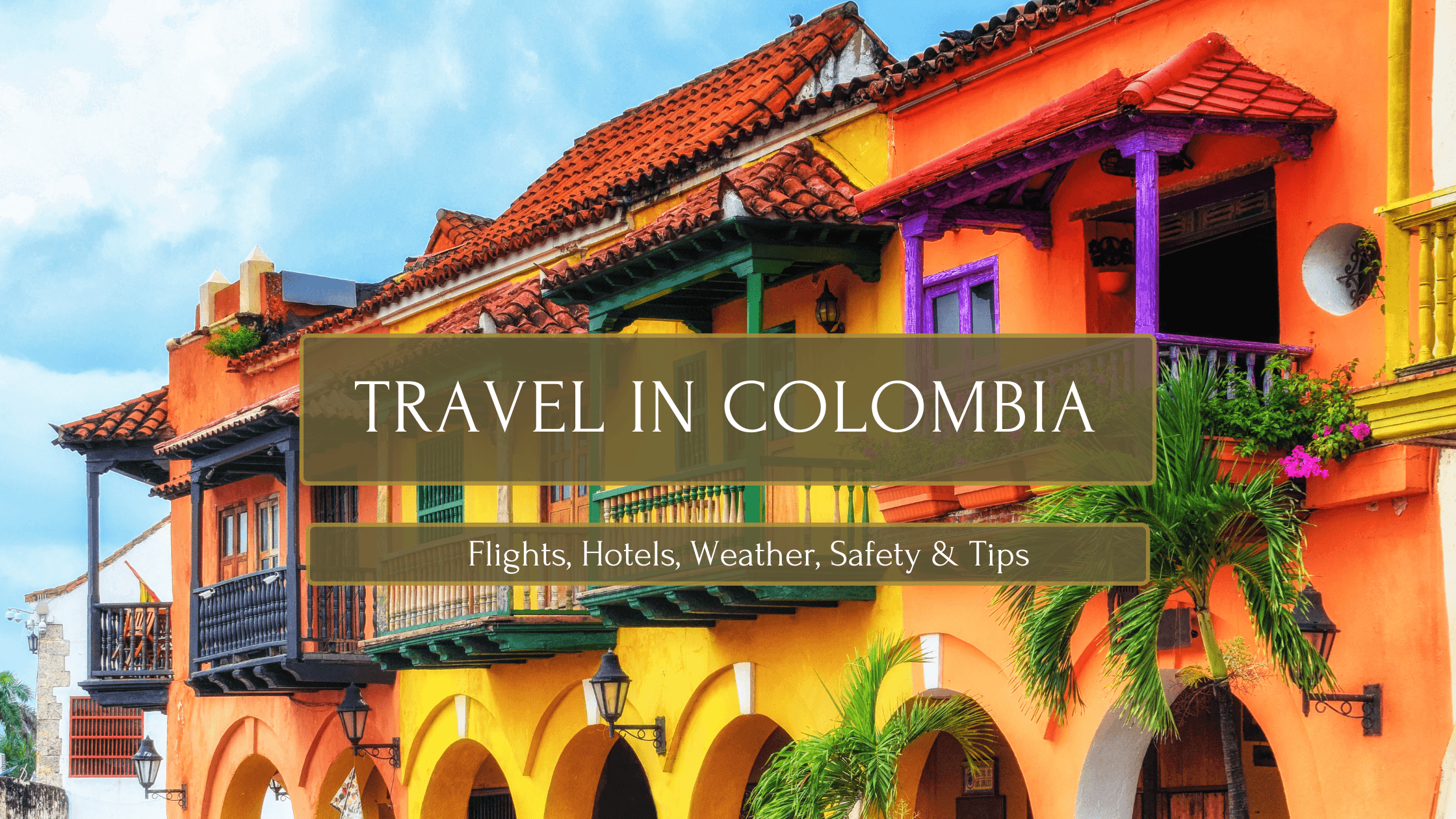
Travel in Colombia: Essential Travel Advice for Tourists
Flights, Hotels, Weather, Safety & Tips
Colombia has become one of South America’s most compelling destinations for tourists seeking authentic experiences. Once overlooked by many independent travellers, this diverse South American country now attracts backpackers exploring colonial towns, families enjoying Caribbean beaches, digital nomads settling in Medellín, and budget-conscious tourists drawn by exceptional value and Colombian warmth.
Visiting Colombia offers an experience few destinations match. You can trek through cloud forests to ancient sites, relax on Caribbean islands, wander colourful colonial streets, and explore vibrant modern cities without the crowds or expense of Peru or Ecuador. Colombia’s remarkable biodiversity, welcoming people, and affordability make it ideal for any traveller style. One of the highlights of a trip to Colombia is discovering the top neighborhoods in bogota, each with its unique charm and atmosphere. From the artistic streets of La Candelaria to the upscale vibe of Chapinero, there’s something for everyone. These areas not only showcase the city’s rich history but also its modern flair, making them perfect for exploration and relaxation.
Quick Facts About Colombia
- Capital: Bogotá
- Currency: Colombian Peso (COP)
- Languages: Spanish (English widely spoken in tourist areas and larger cities)
- Time Zone: Colombia Standard Time (CST), UTC-5
- Visas & Entry and Exit: Most tourists from North America, Europe, and Australasia receive 90 days or less visa-free upon arrival in Colombia; verify specific entry and exit requirements with your colombian embassy or consulate before you need to travel
- Plug Type: Type A and B (US-style)
- Travel Insurance: Recommended for all visitors
- Typical Daily Budget: $30–$50 (backpacker), $60–$100 (mid-range), $150+ (comfort/luxury)
Flights to Colombia
El Dorado International Airport in Bogotá and José María Córdova International Airport near Medellín serve as Colombia’s primary international gateways for tourists. Both offer strong connectivity throughout South America and direct flights from North American and European cities.
Direct flights to Colombia typically depart from major US hubs like Miami, with Bogotá and Medellín as primary destinations. From Europe, connections through Madrid or Miami are standard. Regional flights from Ecuador, Peru, and Panama are frequent and affordable, making it easy to enter and exit Colombia as part of a larger South American journey.
Flight prices for your trip to Colombia are lowest during shoulder seasons—May to June and September to November. Booking 6–8 weeks ahead generally yields better fares. Weekday departures cost less than weekend flights. Using flight comparison tools helps catch deals, particularly outside peak holiday periods.
Hotels in Colombia
Accommodation in Colombia suits every travel style. Budget tourists find abundant hostels in Santa Marta, Bogotá, and Cartagena ($12–$20 nightly for dorms). Mid-range hotels and colombian guesthouses range $40–$80 and often provide authentic character. Families frequently choose mid-range hotels or apartments ($60–$120 nightly) for kitchen access. Luxury resorts in Cartagena and the Coffee Triangle offer exceptional value at $150–$300+ per night.
Tourist areas cluster around specific destinations: Bogotá for culture, Cartagena for Caribbean colonial charm, Santa Marta for Tayrona National Park access, Medellín for urban transformation, and the Coffee Triangle for rural colombian experiences. Smaller colonial towns attract those seeking authentic, quieter Colombia away from main tourist routes.
Families should prioritise secure accommodation with reliable utilities and proximity to family-friendly attractions. Solo travellers benefit from hostels with strong social atmospheres. Longer-stay visitors and digital nomads often rent monthly apartments for better value than nightly rates.
Weather in Colombia by Month
Weather in Colombia’s equatorial location means temperature varies by altitude rather than season. The Caribbean coast stays warm year-round (26–32°C), highland cities like Bogotá remain mild (12–22°C), and the Amazon region is hot and humid.
The best time to visit Colombia is December to March for stable nationwide weather, ideal for Caribbean swimming and outdoor activities. July to August also offers good conditions. Rainy seasons (April-May, September-November) bring afternoon showers but fewer tourists and lower prices—excellent for budget travellers seeking authentic experiences.
Families should note that colombian school holidays (late November to early January, mid-July to early August) bring peak tourism. Visiting during shoulder seasons provides better value while maintaining good weather for family activities, hiking, and beach time.
Weather in Cartagena, Colombia in December
Weather in Cartagena, Colombia in December December in Cartagena is the month many travelers dream about: warm, dry, and blissfully rain-free. If you’re trying to
Weather in Cartagena, Colombia in November
Weather in Cartagena, Colombia in November November marks the tail end of Cartagena’s rainy season and the beginning of the dry season transition. If you’re
Weather in Cartagena, Colombia in September
Weather in Cartagena, Colombia in September September in Cartagena de Indias is hot, wet, and quiet. The rainy season peaks, average temperature hovers around 30°C
Weather in Cartagena, Colombia in October
Weather in Cartagena, Colombia in October Cartagena in October is hot, humid, and rainy—but not a washout. You’ll dodge the worst of the Caribbean heat
Weather in Cartagena, Colombia in August
Weather in Cartagena, Colombia in August August in Cartagena de Indias is hot, humid, and wet. The Caribbean coast sees regular afternoon downpours, but mornings
Weather in Cartagena, Colombia in July
Weather in Cartagena, Colombia in July July in Cartagena is hot, humid, and wet. Rain arrives regularly in the afternoon, humidity sits at uncomfortable levels,
Is Colombia Safe for Tourists? Important Travel Advice
Colombia’s security profile has improved significantly, and it’s now safer than many Latin American destinations for tourists. Modern larger cities like Medellín and Bogotá, plus major tourist areas like Cartagena and the Coffee Triangle, see regular international visitors with established tourist infrastructure.
Travel Advice: Common Concerns
Traveller concerns often stem from outdated perceptions. While certain remote departments of Cauca and Valle remain risky due to armed groups and other criminal activity, major tourist areas are well-established and secure. Armed groups are active in specific regions, but tourists staying in designated tourist areas face minimal risk.
Practical Safety Guidance for Your Stay in Colombia
In larger cities, remain in recognised tourist areas and ask accommodation staff which neighbourhoods suit tourist visits. Avoid hailing taxis on the street; use official taxis or apps instead. Book activities through reputable operators. Avoid non-essential travel between cities at night. While petty crime exists, it’s typically non-violent.
Important Travel Advice: Additional Considerations
Scammers target tourists by charging them elevated prices for services, particularly in public places and at restaurants. Ask for a printed price list before ordering. Most Colombian authorities and tourism officials are helpful to visitors. Travel insurance covering medical evacuation is strongly recommended, particularly if visiting remote areas.
Kidnapping receives outsized media attention but remains extremely rare for tourists in established destinations. Citizens and residents face different risk profiles than short-term visitors. Avoid political activities, rallies, or public demonstrations, which can turn violent.
Entry and Exit Requirements for Colombia
Travel Documents & Entry Requirements
Most tourists can enter and exit Colombia visa-free for 90 days or less. Your travel document (passport) must be valid for six months beyond your intended stay in Colombia. Colombians returning home and foreign visitors must have proof of sufficient funds and a return ticket.
If you need to travel beyond the standard 90 days, apply for an extension through colombian authorities before your visa expires. Documents must be translated into Spanish if required by colombian embassy or consulate officials.
Exit Colombia & Regional Travel
When you exit Colombia, ensure your immigration paperwork is complete. To enter Ecuador from Colombia through land borders, have your documents ready for border officials. Some travellers choose to exit Colombia via international airport rather than overland.
Health & Medical Considerations
Quality of medical care varies significantly between larger cities and remote areas with no access to medical or mental health services. Travel insurance including medical evacuation coverage is essential. Avoid cosmetic or other elective surgeries in Colombia unless performed by internationally-trained colombian physicians in major cities.
Who Colombia Is Best For
Families: Colombia offers diverse family appeal—Caribbean beaches, cable car rides in Medellín, white-water rafting, and safe, walkable colonial streets. Affordability lets families extend trips economically.
Backpackers & Budget Tourists: Excellent hostel networks, low daily costs, and established backpacker routes make Colombia ideal for budget travel. The social atmosphere means meeting other tourists easily.
Digital Nomads: Bogotá, Cartagena, and Medellín attract remote workers with reasonable costs, good internet in public places, co-working spaces, and growing nomad communities. Perfect for those looking to stay in Colombia long-term.
First-Time South American Travellers: Colombia’s accessibility, reasonable tourism prices, friendly locals, and English prevalence in tourist areas make it ideal for South American debut trips.
Planning Your Trip to Colombia
Most tourists spend 2–3 weeks exploring Colombia properly. A classic travel plan combines Cartagena (3–4 days), the Coffee Triangle (3–4 days), Medellín (3–4 days), and Bogotá (2–3 days). Longer stays let you trek, relax on Caribbean beaches, or remain in Colombia for deeper exploration.
Transportation During Your Visit to Colombia
Long-distance buses connect all major destinations reliably and cheaply, though journeys are lengthy. Domestic flights save time on longer routes. In larger cities, buses, metro systems, and ride-sharing apps provide affordable transport. Many tourists combine different methods based on preferences.
Entry and Exit Considerations
Upon arrival in Colombia at El Dorado or other international airports, immigration processing is straightforward for tourists. Have your documents ready. Before you exit Colombia, ensure all entry and exit paperwork is complete.
Connectivity & Communication
Internet in Colombia works well in cities and tourist destinations. Mobile SIM cards are inexpensive and easy to purchase. Mid-range accommodation typically offers reliable wifi. In remote areas, connectivity becomes limited—part of adventure travel’s appeal.
Health, Legal, and Practical Considerations
Medical Care
Quality varies between larger cities and remote areas. Hospitals in Bogotá and Cartagena meet international standards, but some locations lack basic first aid or emergency plans. Dental and cosmetic services attract medical tourists, but standards vary.
Legal Issues for Tourists
Colombia enforces strict drug laws. Trafficking of illegal drugs and use or trafficking of illegal drugs carry severe penalties. Convicted offenders can expect long pre-trial detention and prison sentences under harsh conditions. Foreign convicted offenders face particular scrutiny.
Do not participate in local political activities or demonstrations, which can turn violent. Avoid areas where terrorist groups are active (primarily remote, non-tourist regions). Terrorist groups and armed groups operate outside tourist zones.
Common Scams & Street Safety
Scammers target tourists by charging them elevated prices for services. Always ask for printed price lists. Petty theft occurs but rarely involves violence. Stay aware in crowded public places.
FAQs: Travel in Colombia
Is it safe to go to Colombia right now?
Yes. Colombia is safer than many Latin American destinations for tourists visiting established destinations. Bogotá, Cartagena, Medellín, and the Coffee Triangle see regular international visitors. Major tourist areas have good security infrastructure. Avoid non-essential travel to remote regions where armed groups are active, but standard tourist routes are secure for those following practical safety advice.
Where is the safest place for tourists in Colombia?
Cartagena offers excellent safety with its walled colonial centre and heavy tourist presence. Medellín has transformed significantly and now attracts many tourists safely. The Coffee Triangle provides a peaceful, rural colombian experience. Bogotá’s tourist zones are well-established and secure. All three larger cities maintain good tourist infrastructure.
Where should I go in Colombia for first timers?
Start with Cartagena for Caribbean charm and history, then travel to the Coffee Triangle for rural colombian culture. Add Bogotá for museums and urban exploration, or Medellín for its transformation story. This classic trip to Colombia covers diverse experiences within 2–3 weeks.
What is the nicest part of Colombia?
Preferences vary, but Cartagena impresses most tourists with its colonial architecture and Caribbean setting. The Coffee Triangle charms those seeking authentic, slower-paced colombian life. Medellín appeals to urban explorers. The Caribbean coast near Santa Marta offers pristine beaches and Tayrona National Park access.
Which is safer, Medellín or Cartagena?
Both are safe for tourists in designated areas. Cartagena has a more established tourist infrastructure and draws more international visitors. Medellín has improved dramatically and offers distinct urban tourism experiences. Both maintain good security in tourist zones.
How much can $100 USD buy in Colombia?
$100 USD (approximately 400,000+ Colombian Pesos) covers significant expenses. Budget travellers can eat well, stay in hostels, and visit attractions for several days. Mid-range tourists can stay in comfortable hotels and dine at good restaurants. Your money stretches considerably in Colombia compared to North American or European prices.
What is the nicest part of Colombia?
Most tourists appreciate Cartagena’s blend of history and Caribbean beauty. The Coffee Triangle offers authentic, peaceful colombian experiences. Medellín provides urban culture and innovation. The Caribbean coast delivers pristine beaches and nature access.