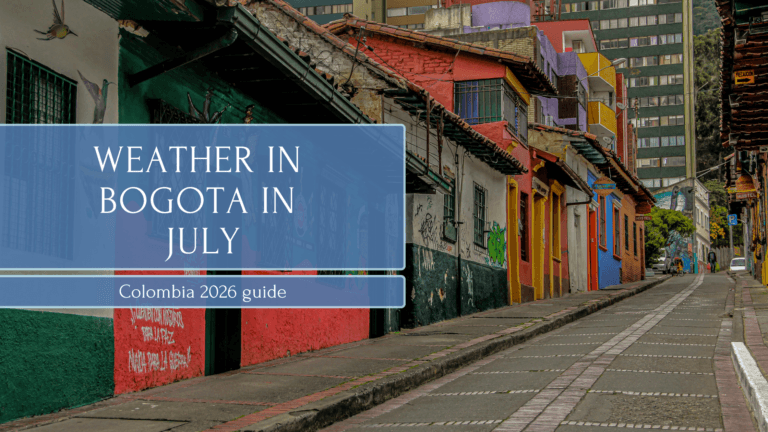
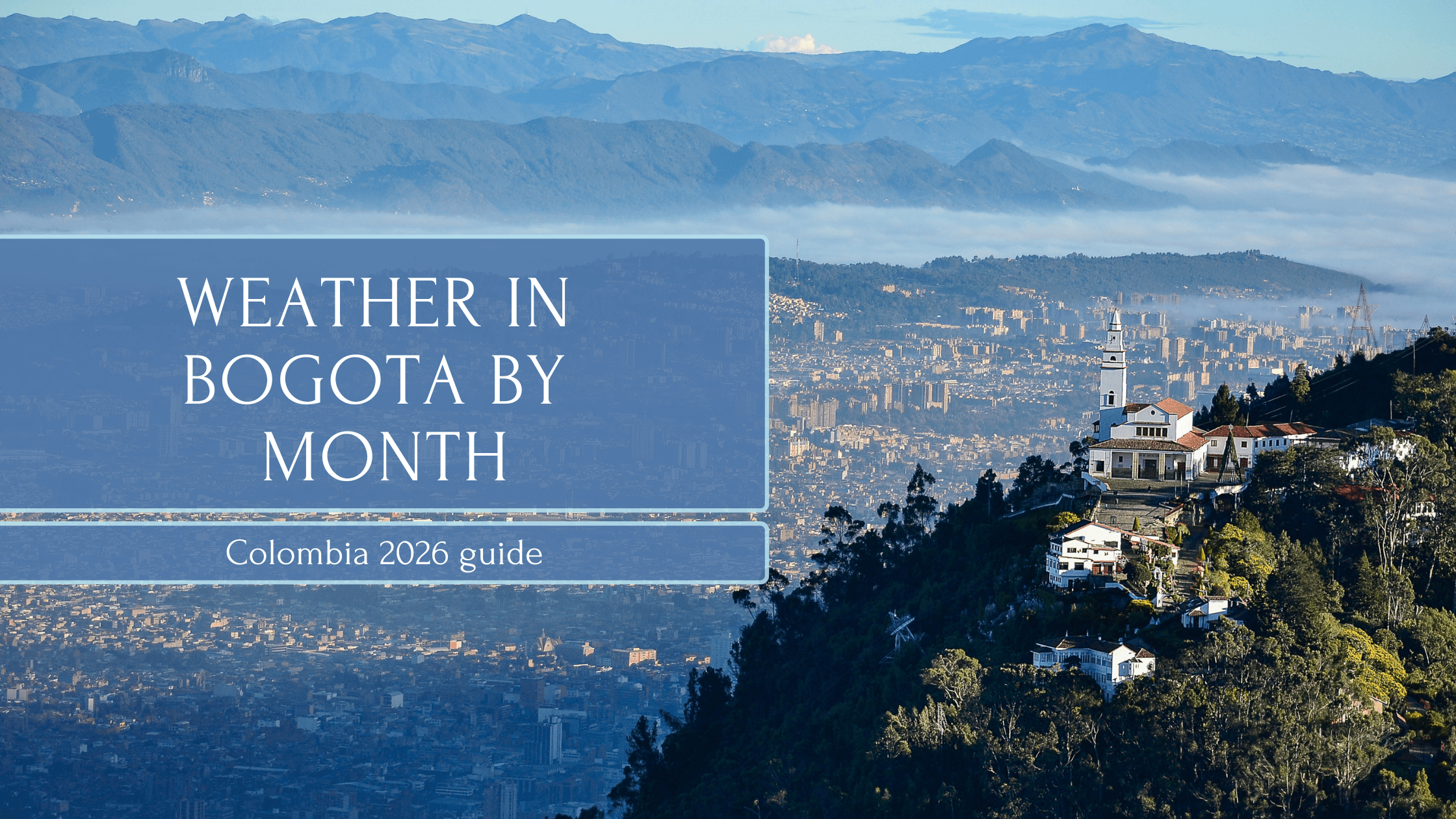
Weather in Bogota, Colombia By Month
Weather in Bogota, Colombia By Month
Bogota sits at 2,600 meters above sea level. That altitude shapes everything about its weather, and it means the city doesn’t follow the tropical rulebook most travelers expect from Colombia.
Understanding the weather in Bogota by month is one of the most useful things you can do before booking. The right month means comfortable sightseeing, dry trails, and clear skies over the Andes. The wrong month means soggy afternoons and muddy day trips. Plan around where to stay in Bogota and the seasonal calendar together, and you’ll get much more out of the city.
Quick Weather Snapshot: Bogota's Year at a Glance
Bogota has two dry seasons and two rainy seasons per year. Unlike most tropical destinations, there’s no single “wet” or “dry” half — the year alternates.
| Month | Season | Avg High | Avg Low | Rainfall | Crowds |
|---|---|---|---|---|---|
| January | Dry | 19°C / 66°F | 7°C / 45°F | Low | Moderate |
| February | Dry | 19°C / 66°F | 8°C / 46°F | Low–Moderate | Moderate |
| March | Shoulder → Rainy | 19°C / 66°F | 9°C / 48°F | Moderate | Low–Moderate |
| April | Rainy | 18°C / 64°F | 10°C / 50°F | Heavy | Low |
| May | Rainy | 18°C / 64°F | 10°C / 50°F | Heavy | Low |
| June | Shoulder → Dry | 19°C / 66°F | 9°C / 48°F | Moderate | Moderate |
| July | Dry | 19°C / 66°F | 8°C / 46°F | Low | High |
| August | Dry | 19°C / 66°F | 8°C / 46°F | Low | High |
| September | Shoulder → Rainy | 18°C / 65°F | 9°C / 48°F | Moderate | Moderate |
| October | Rainy | 17°C / 63°F | 10°C / 50°F | Heavy | Low |
| November | Rainy | 17°C / 63°F | 10°C / 50°F | Heavy | Low |
| December | Shoulder → Dry | 18°C / 65°F | 8°C / 46°F | Low–Moderate | High |
Temperature data sourced from IDEAM — Instituto de Hidrología, Meteorología y Estudios Ambientales, Colombia’s national meteorological authority.
What Bogota Feels Like Month by Month
January & February — Peak Dry Season
What it’s like: The best weather Bogota offers. Clear mornings, blue skies over the Eastern Andes, and cool but comfortable afternoons. January is the driest month of the year. average temperatures in bogotá in january typically hover around 14 degrees Celsius, making it ideal for outdoor activities. Visitors can enjoy vibrant street markets and cafes, all while taking in the stunning natural scenery. With minimal rainfall, it’s the perfect time to explore the city’s historic sites and cultural attractions. As the months progress, average temperatures in Bogota this April tend to rise slightly, reaching around 15 degrees Celsius. This transitional period marks the beginning of the rainy season, where afternoon showers can refresh the city’s parks and gardens. Visitors during this time can still relish a mix of sunny moments and vibrant cultural festivities despite the occasional rain.
Mornings are cold — bring a jacket if you’re heading out before 9am. By midday it warms up enough to walk comfortably in layers. Evenings drop quickly after sunset.
Rain is possible but brief. Most days are dry enough for walking tours, cycling, and day trips to Zipaquirá or the Sabana.
Overall comfort: ★★★★★ Best for: First-time visitors, outdoor explorers, families Avoid if: You need warm evenings outdoors without a coat
March & June — Shoulder Months
What it’s like: The transition months. March sees rainfall starting to pick up; June sees it tapering off. Both offer a decent middle ground — less crowded than the peak dry months, but not as wet as April–May or October–November.
Morning sightseeing is generally fine. Afternoon showers are more frequent, but usually short-lived.
Overall comfort: ★★★★☆ Best for: Budget travelers, those flexible on timing
April, May, October & November — Rainy Season
What it’s like: Persistent afternoon and evening rain. April and May form Bogota’s first rainy peak; October and November form the second — and heaviest.
Mornings are usually clear, which matters for planning. If you schedule outdoor activities before noon, you’ll dodge most of the rain. Afternoons can bring heavy downpours that last 1–3 hours.
The city doesn’t shut down. Museums, restaurants, and cultural spaces operate normally. But hiking in Chingaza or day trips to páramo ecosystems get harder and muddier.
October and November are the wettest months. Flooding in low-lying city districts is possible.
Overall comfort: ★★☆☆☆ (Oct–Nov), ★★★☆☆ (Apr–May) Best for: Travelers on a tight budget; those focused on urban, indoor itineraries Avoid if: You’re prioritizing hiking or outdoor photography
July & August — Second Dry Season (Peak Tourism)
What it’s like: The most popular months to visit. School holidays in Europe and North America overlap with Bogota’s driest, sunniest stretch. Skies are often clear and crisp, though high winds are common in July.
July can be cold and windy — locals call this the vientos de julio. Bring a windproof layer.
August is slightly calmer. Both months are excellent for outdoor markets, bike tours along Ciclovía, and excursions outside the city.
Overall comfort: ★★★★★ Best for: Most travelers; families and couples Avoid if: Budget is a concern — hotels and tours fill up fast
December — Festive Season
What it’s like: The city transforms with alumbrados (light installations), holiday markets, and family events. Weather improves through December as the rainy season fades.
Early December can still catch afternoon showers. By mid-to-late December, conditions are largely dry and festive. Christmas week is very crowded, with Colombians traveling internally.
Overall comfort: ★★★★☆ Best for: Travelers who want a cultural, festive atmosphere Avoid if: You dislike holiday crowds and higher prices
Temperatures in Bogota
Bogota’s temperature range is remarkably consistent year-round — roughly 7–19°C (45–66°F). This is not a hot city.
Daytime highs hover between 17–19°C regardless of the month. Rainy season months (April–May, October–November) can feel slightly cooler due to cloud cover. Nighttime lows dip to 7–10°C and occasionally lower at high elevation during cold spells.
The sun at altitude is deceptively intense. Even on a cool day, direct midday sun can cause sunburn. Evenings cool rapidly after sunset — always have a layer ready.
For detailed climate normals, see World Meteorological Organization climate data for Bogota.
Rainfall in Bogota
Bogota averages around 1,010mm of rain per year, distributed unevenly across two rainy peaks.
- Driest months: January, February, July, August (under 45mm/month)
- Wettest months: October, November (often 100–130mm/month)
Rain in Bogota usually comes in the form of afternoon and evening showers, not all-day drizzle. Mornings are disproportionately dry — even in the wettest months.
Storms are rare but possible, especially in the transition months of March and November. Flash flooding can affect lower-lying neighborhoods like Bosa and Fontibón during intense downpours.
Humidity in Bogota
Bogota’s high altitude keeps humidity lower than most of Colombia. It rarely feels muggy.
Relative humidity averages 70–80%, but the cooler temperatures mean the heat index is never oppressive. Visitors from coastal cities like Cartagena or Santa Marta will find Bogota noticeably drier and crisper.
The main discomfort isn’t humidity — it’s cold. Evenings in the dry season, combined with high altitude, can feel quite raw.
Is Bogota Busy? Tourism Levels by Month
Peak seasons: July, August, December–early January Low seasons: April–May, October–November Shoulder seasons: March, June, September
July and August draw international tourists and Colombian domestic travelers simultaneously. Hotel rates rise 20–40% and popular attractions like the Gold Museum and Monserrate see longer queues.
Easter week (Semana Santa) in March or April is a major Colombian holiday. Domestic travel spikes, city traffic increases, and accommodation books out in advance.
October and November are the quietest — and cheapest — months. Those comfortable navigating wet weather can find significantly lower prices on hotels and tours.
Best Things to Do in Bogota by Season
Dry Season (Jan–Feb, Jul–Aug)
- Ciclovía — Sunday car-free cycling on 120km of city streets
- Monserrate — hike or cable car to the 3,152m hilltop for panoramic views
- Day trip to Zipaquirá Salt Cathedral — easier on dry roads
- Chingaza National Park — hiking in páramo ecosystem
- La Candelaria walking tours — street art, colonial architecture, plazas
- Usaquén flea market (Sundays) — artisan crafts, antiques, street food
- Gold Museum (Museo del Oro) — works in any weather, but clearer days make the walk more enjoyable
- Cycling to Paloquemao market — early morning produce and flower market
Rainy Season (Apr–May, Oct–Nov)
- Gold Museum and Botero Museum — world-class indoor culture
- Andrés Carne de Res (Chía) — plan around midday to avoid evening rain
- Cooking classes and food tours — ideal rainy-day activity
- Zona Rosa café-hopping — compact, walkable, covered options
- Teatro Colón — Colombia’s national theater, check the schedule in advance
Events & Festivals in Bogota by Month
| Month | Event |
|---|---|
| January | Rock al Parque applications open; New Year residual tourism |
| March/April | Semana Santa — processions, closures, high domestic travel |
| April | Bogotá International Book Fair (FILBO) — one of Latin America’s largest |
| June | Bogotá Pride (Marcha LGBT) — large annual march in late June |
| July | Ibero-American Theater Festival (biennial — confirm the year) |
| August | Feria de las Flores (Medellín, not Bogotá — sometimes causes confusion) |
| October | Halloween celebrations in Zona Rosa and Parque de la 93 |
| November | Jazz al Parque — free outdoor jazz festival |
| December | Alumbrados — city-wide light installations; Christmas markets in Usaquén |
For current event listings, check ProColombia — Colombia’s official tourism board.
What to Pack for Bogota
Clothing
- Light-to-mid layers (not summer clothes, not heavy winter gear)
- Waterproof or water-resistant jacket — year-round essential
- Long-sleeved shirts and a fleece or sweater for evenings
- One warm layer for cold night outings (especially July)
Footwear
- Comfortable walking shoes with grip (cobblestones in La Candelaria)
- Waterproof ankle boots or rain-resistant sneakers for wet season
Sun & Rain Protection
- SPF 50+ sunscreen — altitude intensifies UV radiation significantly
- Compact umbrella or packable rain poncho
- Sunglasses
Other Essentials
- Altitude medication (soroche pills) if you’re sensitive to elevation changes
- Power bank — useful during long outdoor days
Seasonal Travel Tips for Bogota
- Start outdoor activities before noon — especially April, May, October, November. Rain patterns are afternoon-heavy.
- Layer, don’t pack extremes — Bogota days can start cold, warm up by midday, then drop again by 6pm. Three thin layers beat one heavy coat.
- Altitude acclimatization takes 1–2 days — avoid strenuous hikes on arrival day regardless of the month.
- Ciclovía runs every Sunday — block 7am–2pm on Sundays in any season if you want to use it.
- Uber and taxis are widely available for wet afternoons — plan flexible evening itineraries during rainy months.
- Book Monserrate morning slots in July and August — queues get long by midday.
Weather Hazards in Bogota
Altitude sickness: At 2,600m, some visitors experience headaches, fatigue, or shortness of breath on arrival. More common in older travelers and those coming from sea level. Hydrate well, move slowly for the first 24 hours.
UV exposure: Bogota’s altitude means UV Index regularly hits 11–13 (extreme range) even on cloudy days. Sunscreen is non-negotiable year-round.
Flash flooding: Heavy October–November rains can flood low-lying districts. Stick to higher neighborhoods (Chapinero, Usaquén, Zona Rosa) during peak downpours.
Cold nights: Evening temperatures below 8°C are common in dry season. Hypothermia risk is low but underprepared travelers get uncomfortable quickly.
Thunderstorms: Occasional in the shoulder months. Rarely dangerous in the city, but can disrupt day trips to higher elevations.
Health and altitude guidance available from Colombia’s Ministerio de Salud y Protección Social.
Key Takeaways
- Best months to visit: January, February, July, August — dry skies, comfortable temperatures, full outdoor access
- Worst months for outdoor plans: October and November — heaviest rainfall, highest flood risk
- Temperature barely changes year-round — plan for cool and variable, not hot or cold
- Altitude affects everyone — build in an acclimatization day on arrival, no matter the season
- Morning is always better than afternoon for outdoor plans in rainy months
- July–August is peak tourism — book hotels and popular tours 4–6 weeks ahead
- Rain doesn’t ruin a Bogota trip — the city’s indoor culture (museums, restaurants, markets) is strong enough to carry a rainy-day itinerary
FAQs: Weather in Bogota, Colombia
What is the best month to visit Bogota for weather?
January and February are the driest and most reliable months. July and August are equally dry and are the most popular with international visitors, though they’re also the most crowded and expensive.
Does Bogota get hot?
No. Bogota sits at 2,600m above sea level, which caps temperatures at roughly 19°C (66°F) year-round. It never gets hot in the tropical sense. Pack layers, not summer clothes.
What is the rainy season in Bogota?
Bogota has two rainy seasons: March–May and September–November. The second peak (October–November) is heavier. Both follow a pattern of clear mornings and afternoon or evening showers.
Is Bogota cold at night?
Yes, particularly in the dry season (December–February, July–August), when nights regularly drop to 7–8°C (44–46°F). Evenings in the rainy season are slightly milder but still require a jacket.
How does altitude affect visitors to Bogota?
At 2,600m, first-time visitors may experience mild altitude sickness — headaches, fatigue, or breathlessness — for the first 24–48 hours. Drinking water, avoiding alcohol on arrival day, and limiting strenuous activity on day one reduces the impact significantly.