
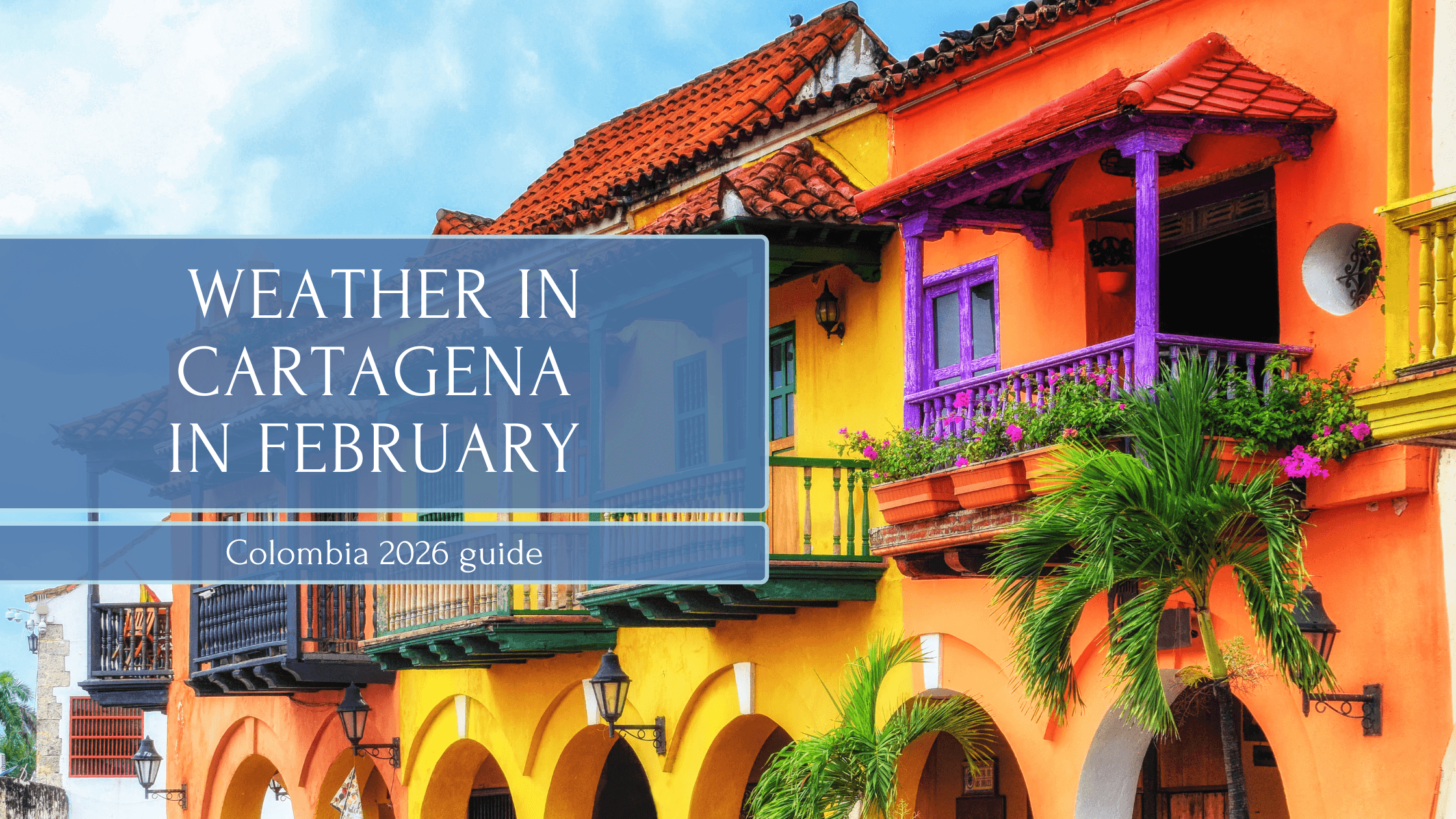
Weather in Cartagena, Colombia in February
Weather in Cartagena, Colombia in February
Cartagena in February is hot, dry, and crowded. It’s the height of the dry season—Caribbean sun without the rain that defines other months. If you’re planning to visit Cartagena during this window, you’re looking at nearly guaranteed sunny days and beach time, but also peak tourism prices and the kind of heat that demands planning.
February is a great time to visit if you thrive in tropical climate warmth, want reliable weather for outdoor activities, and don’t mind crowds. If you’re heat-sensitive or prefer quieter, cheaper travel, consider September or November instead. For everyone else—couples on beach holidays, families with school breaks, solo travelers chasing perfect skies—February in Cartagena offers ideal conditions. Learn more about where to stay in Cartagena to find accommodations that match your budget and style before you book.
Quick Weather Snapshot
- Average high: 31–32°C (88–90°F)
- Average low: 23–24°C (73–75°F)
- Average rainfall: Minimal (less than 5 rainy days)
- Humidity: 75–80% (moderate-high)
- Water temperature: 27°C (81°F)
- Season: Dry season (December to April peak)
- Crowd level: Very busy (peak season)
- Overall comfort: Good for heat lovers; challenging for heat-sensitive travelers
Weather in Cartagena in February
February in Cartagena feels like stepping into a tropical greenhouse. The sky is consistently blue with abundant sunny weather, the sun is intense, and the ocean is warm enough to swim in comfortably. Mornings are slightly cooler and more pleasant for walking the walled city’s cobblestone streets; by afternoon, the heat dominates and many locals retreat indoors or to shade.
The Caribbean breeze helps—it prevents the heat from feeling as oppressive as it could. However, humidity lingers even as rainfall stays away, so expect to feel sticky by midday. Evenings cool down enough to be comfortable outdoors, especially near the Caribbean Sea.
Average Temperature in Cartagena in February
Daytime temperatures in Cartagena reach 31–32°C, with average low temperatures settling near 23–24°C at night. The sun is relentless and direct; even brief exposure without protection will burn. February is marginally cooler than March but noticeably warmer than January. The temperature in February is consistent—no sudden cold snaps, no dramatic swings. It’s reliable tropical climate warmth, which means you can plan activities with confidence. The average temperature in Cartagena in June typically remains steady, offering similar conditions as earlier months. With the combination of high humidity and warmth, it’s ideal for beachgoers and tourists exploring the vibrant coastal culture. However, visitors should stay hydrated and seek shade during peak hours to fully enjoy their stay.
Rainfall and Humidity in Cartagena During February
Cartagena receives almost no average rainfall in February. The dry season is in full effect, and you can expect fewer than five rainy days for the entire month. When rain does arrive, it’s typically brief afternoon showers rather than sustained storms. This predictability is a major draw—you won’t lose days to weather cancellations. The reliable climate conditions in Cartagena, Colombia, make it an ideal destination for travelers seeking sunny days and outdoor activities. Many visitors take advantage of this favorable weather by exploring the vibrant streets and historical sites without worrying about sudden downpours. As the warm temperatures persist, the city’s beaches become a popular spot for both relaxation and adventure.
Humidity levels sit between 75–80%, which is moderate-high for a tropical coast. The combination of heat and moisture will make you feel warm. Sweat dries slowly, and physical activity during peak afternoon hours feels more taxing. Early mornings and evenings are more tolerable for sightseeing and exploration.
Is February the Best Time to Visit Cartagena?
February is the best time to visit Cartagena if you prioritize dry weather and warm ocean temperatures. It’s also peak season—hotels fill up, walking tours have larger groups, and restaurant reservations become necessary. Prices are at their annual high; expect to pay 20–40% more than during low season. School holidays in North America and Europe drive much of the crowd. Booking flights and accommodations several months ahead is strongly recommended.
If you’re looking for a good time to visit without crowds, September or May offer better value while still providing decent weather.
Best Things to Do in Cartagena in February
- Beach days on Rosario Islands: Dry weather and calm seas make island hopping ideal. Book tours in advance.
- Explore the walled city at dawn: Beat crowds and heat by walking the city of Cartagena’s colonial streets early.
- Sunset walks along the waterfront: The hour before dusk offers warm but not oppressive conditions.
- Swimming and snorkeling: Water temperature near Cartagena is around 27°C (81°F)—perfect for extended time in the ocean.
- Museum visits on hot afternoons: Retreat indoors to air-conditioned museums like the Naval Museum or Cartagena Museum.
- Boat tours to nearby islands: Weather forecast data shows stable conditions for day trips to Barú or Cholón.
- Dinner in open-air restaurants: Breezy evenings make dining outside comfortable.
- Visit San Felipe de Barajas: The fortress is impressive but hot; go early to avoid peak midday heat.
Events & Festivals in February
Cartagena doesn’t have major festivals scheduled throughout February. The city quiets slightly after New Year celebrations, and the next major events (like the Cartagena Film Festival in March) haven’t begun. This makes February in Cartagena ideal if you prefer exploring without competing with large crowds of event attendees.
What to Pack for a Trip to Cartagena in February
- Lightweight, breathable clothing: Cotton and linen preferred. Plan for short sleeves, shorts, sundresses, and light layers.
- Sun protection: High-SPF sunscreen (reapply hourly), wide-brimmed hat, and sunglasses are non-negotiable.
- Swimwear and beach bag: You’ll use them daily.
- Lightweight scarf or cardigan: Restaurants and indoor spaces run cold air conditioning.
- Comfortable walking shoes: Cobblestones are unforgiving. Consider broken-in sneakers or supportive sandals.
- Light rain jacket or compact umbrella: Rare but possible for brief showers.
- Mosquito repellent: February is within mosquito season; bring repellent with DEET.
Seasonal Travel Tips for February Weather
- Plan beach time for early morning or late afternoon. Midday heat (11 a.m.–3 p.m.) is intense; use this window for air-conditioned museums or leisurely meals.
- Hydrate constantly. The combination of heat and sun exposure dehydrates quickly. Carry water everywhere.
- Book activities and restaurants in advance. Peak season means tours fill up and popular restaurants require reservations.
- Swim in the morning. The water is calmest and most pleasant before afternoon winds pick up.
- Wear reef-safe sunscreen. Cartagena’s marine ecosystem is fragile; avoid oxybenzone and octinoxate.
- Expect higher prices. Budget 20–40% more for accommodations, food, and tours compared to low season.
- Check weather reports daily. While rain is unlikely, brief afternoon showers can occur; stay informed.
Weather Hazards in Cartagena in February
The primary hazard is sun exposure. UV intensity at the equator is severe, and many travelers underestimate protection needs. Dehydration and heat exhaustion are real risks if you overexert during peak afternoon hours. Mosquitoes in Colombia carry dengue, Zika, and malaria; use repellent and consider long sleeves at dawn and dusk. The ocean can have strong currents near certain islands; always ask local guides about safety.
Key Takeaways
- February offers the driest, most reliable weather in Cartagena—ideal for beach plans and outdoor sightseeing.
- Expect heat and humidity; it’s a good time to visit if you handle tropical climate warmth well.
- Crowds and prices peak in February; book accommodations months in advance.
- Sun protection is critical—stronger than you likely think.
- The warm ocean, abundant sunny days, and minimal rainfall make this month perfect for island hopping and water activities.
- Early mornings and evenings are the most pleasant times to explore the walled city of Cartagena.
- This is the time to visit if weather predictability matters more than budget or solitude.
FAQs
Is February a good time to visit Cartagena, Colombia?
Yes, if you like heat and crowds. February offers the most reliable weather in Cartagena—blue skies, minimal rainfall, and warm ocean temperatures. However, it’s the priciest and busiest month. First-time visitors often prefer February specifically for its weather predictability, but budget-conscious travelers might choose September or November instead.
What’s the average temperature in Cartagena during February?
The average high temperature in Cartagena reaches 31–32°C (88–90°F), while average low temperatures drop to 23–24°C (73–75°F) at night. Water temperature near Cartagena is around 27°C (81°F), making it comfortable for swimming and snorkeling throughout the month.
How much rainfall does Cartagena get in February?
Average rainfall in February is minimal—fewer than five rainy days expected. February is part of the dry season (December to April), when Cartagena experiences some of its driest weather. When rain occurs, it’s brief afternoon showers, not extended storms.
What should I pack for Cartagena in February weather?
Pack lightweight, breathable clothing: cotton shorts, linen shirts, sundresses, and sandals. Bring high-SPF sunscreen, a hat, and sunglasses. Include swimwear, a light cardigan for air-conditioned spaces, and a compact umbrella for rare showers. Comfortable walking shoes are essential for navigating the cobblestone streets of the walled city.
Is February the best time to visit Cartagena for activities?
February is ideal if you want guaranteed sunny weather and warm ocean temperatures for activities. The dry season and sunny days make it perfect for beach visits, island tours, and outdoor exploration. However, crowds are significant and prices are highest. If you prefer fewer travelers and lower costs while still enjoying decent weather, April and May offer good alternatives with slightly less heat.
Sources: