Where to Stay in Santo Domingo, Dominican Republic (2026 Guide)
Where to Stay in Santo Domingo, Dominican Republic (2026 Guide)
Santo Domingo doesn’t look like the rest of the Caribbean. Instead of beachfront resorts, you get cobblestone streets, colonial architecture, and a real working capital of 3 million people.
Choosing where to stay in Santo Domingo matters more than in other Dominican Republic destinations. The city sprawls across multiple districts, and your neighbourhood determines whether you’re walking to restaurants or stuck in traffic. This guide breaks down the best places to stay for tourists, what each offers, and which to avoid.
What to Expect in This Post
This guide to where to stay is built for quick scanning and real-world decisions. Here’s what you’ll get:
- A clear breakdown of Santo Domingo’s 5 best neighbourhoods for tourists, including safety, walkability, and vibe
- Practical guidance on where first-time visitors should book, based on proximity to attractions and infrastructure
- Honest pros and cons of each area, including noise levels, room rates, and transport access
- Specific recommendations for nightlife, families, and food lovers, matched to the right neighborhoods
- What areas to skip, and why convenience matters more than budget in this city
Where to Stay in Santo Domingo: Quick Overview
- Zona Colonial – Historic heart, walkable, tourist-friendly, best for culture and nightlife
- Piantini – Modern business district, upscale, safe, less charm but excellent restaurants
- Naco – Residential, quiet, near Piantini, ideal for longer stays
- Gazcue – Budget-friendly, walkable to Colonial Zone, local feel, mixed reviews on safety
- Malecón – Waterfront boulevard, scenic views, central, dated hotels but improving
Zona Colonial: Best Hotels in Santo Domingo for First-Time Visitors
Best for: History lovers, couples, solo travelers who want walkability and nightlife.
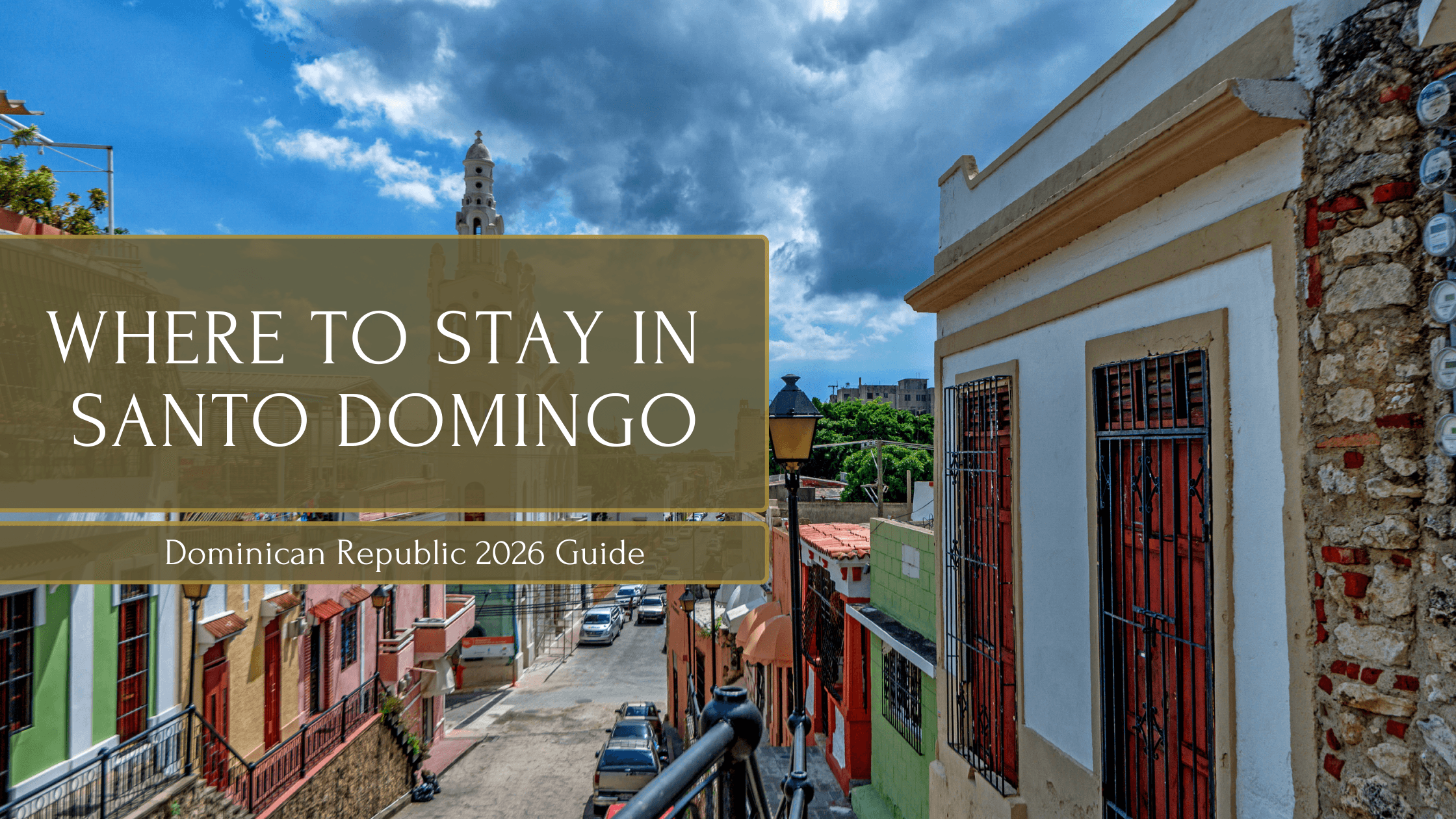
This is where most tourists stay, and for good reason. The Colonial Zone is a UNESCO World Heritage Site packed with 16th-century architecture, museums, cafes, and bars. You can walk to nearly everything.
The streets are cobblestone and atmospheric. During the day, you’ll see tour groups near the cathedral and Christopher Columbus monuments. At night, the plazas fill with live music and outdoor dining.
Safety is generally good in the main tourist corridors, especially near Calle El Conde and Parque Colón. Side streets can feel sketchy after dark. Stick to well-lit areas and avoid walking alone late at night.
Hotels in Santo Domingo’s Zona Colonial range from boutique properties in restored colonial buildings to small guesthouses and hostals. Many occupy buildings from the oldest city in the Americas, some dating to Primada de América status. Expect narrow staircases, rooms with historical charm, and occasional rooftop terraces with views.
Room rates here vary widely. Budget options exist, but quality varies. Mid-range boutique hotels offer romantic, intimate settings in old colonial structures. Some properties include breakfast and have bars on-site.
Pros: Walkable, atmospheric, central to attractions, great food and nightlife, romantic settings.
Cons: Can be noisy at night, some streets feel unsafe after dark, limited parking, inconsistent WiFi.
Piantini: Best Places to Stay in Santo Domingo for Modern Comfort
Best for: Business travelers, families wanting contemporary amenities, anyone prioritizing safety over charm.
Piantini is Santo Domingo’s wealthy business district. It’s clean, safe, and filled with high-rise hotels, shopping malls, and upscale restaurants.
This area feels more like Miami than the Caribbean. You won’t find colonial architecture, but you will find reliable infrastructure, international hotel chains, and English-speaking guest services.
Walkability is decent within the neighborhood, but you’re not walking to the Colonial Zone from here. Budget 15-20 minutes by taxi or Uber. That said, Piantini has some of the city’s best restaurants and cafes, so you won’t need to leave often.
Hotels here are modern and well-maintained. Expect amenities like pools, gyms, parking, and business centers. Many properties have rooftop bars with city views. Room rates are higher than the Colonial Zone, but quality is consistent.
This district serves as a trendy, chic alternative to touristy areas. You’ll dine at elegant restaurants and stay in contemporary hotels with award-winning service.
Pros: Safe, modern, excellent restaurants, reliable hotels, good for families, parking available.
Cons: No colonial atmosphere, not walkable to major sightseeing, more expensive rates.
Naco: Best Area for Apartments and Longer Stays
Best for: Digital nomads, couples, anyone staying more than a week.
Naco sits just east of Piantini and shares its safety and infrastructure without the business-hotel vibe. It’s quieter, more residential, and has better value for longer stays.
You’ll find apartment rentals and small boutique hotels here rather than international chains. Supermarkets, pharmacies, and local restaurants are within walking distance. The neighborhood feels authentic without being overwhelming.
Safety is comparable to Piantini. You can walk around during the day and evening without concern. It’s not a nightlife destination, but you’re close enough to Piantini and the Colonial Zone to reach them quickly by booking a short ride.
This area works best if you’re renting an apartment and want a local experience. Many rentals include parking and have balconies with views. It’s less convenient for short trips focused on exploring Santo Domingo’s historic sites.
Pros: Residential feel, safe, good value, walkable within the neighborhood, parking available.
Cons: Limited hotel options, not walkable to main attractions, quiet (not ideal for lively nightlife seekers).
Gazcue: Budget-Friendly Places to Stay in Santo Domingo
Best for: Solo travelers, backpackers, anyone prioritizing price and proximity to the Colonial Zone.
Gazcue bridges the gap between the Colonial Zone and the modern city. It’s older, less polished, and significantly cheaper than Piantini or Zona Colonial.
You can walk to the Colonial Zone in 15-20 minutes, which makes it appealing for budget travelers who still want access to the main attractions. The neighborhood has a local feel with small shops, street food, and residential buildings.
Safety is the tradeoff. Gazcue isn’t dangerous, but it’s grittier than tourist zones. According to the U.S. Department of State, Santo Domingo requires standard urban awareness. Gazcue fits that description. Walk confidently, don’t flash valuables, and avoid walking alone late at night.
Hotels and guesthouses here are basic. Don’t expect modern amenities, pools, or English-speaking staff. Room rates are the lowest in the city. Quality varies, so read reviews carefully before booking.
Pros: Affordable rates, walkable to Colonial Zone, local atmosphere.
Cons: Less safe than tourist zones, basic accommodations, limited restaurants and bars.
Malecón: Ocean Views Along the Caribbean Sea
Best for: Travelers who want waterfront proximity and don’t mind older infrastructure.
The Malecón is Santo Domingo’s waterfront boulevard. It runs along the Caribbean Sea and connects the Colonial Zone to the modern city. The area offers sea views, breezy evenings, and a central location.
Hotels here tend to be older mid-range properties. Some are being renovated, but many feel dated. The advantage is location: you’re close to both the Colonial Zone and Piantini without being in either.
The Malecón itself is pleasant for evening walks and has a few restaurants and bars. Many hotels have rooms with sea views and balconies overlooking the coast. Safety is decent along the main road, but side streets can be sketchy. Stick to well-trafficked areas.
This area works if you want centrality and don’t mind trading contemporary comforts for it. It’s not the top choice for first-timers, but it’s a solid backup if your preferred neighborhoods are booked.
Some properties offer parking and have pools, though amenities vary widely by hotel.
Pros: Ocean views, central location, walkable to Colonial Zone, parking at some hotels.
Cons: Aging hotels, inconsistent quality, some areas feel unsafe at night.
Best Neighborhoods for First-Time Visitors
If this is your first time in Santo Domingo, stay in Zona Colonial or Piantini.
- Zona Colonial gives you walkability, atmosphere, and proximity to everything you came to see in the oldest city in the New World.
- Piantini offers safety, contemporary hotels, and excellent restaurants if you prefer comfort over charm.
Both neighborhoods have reliable taxi and Uber access to Las Américas International Airport and the rest of the city. You won’t feel lost or overwhelmed in either.
Best Hotels in Santo Domingo for Nightlife, Food, and Families
Nightlife: Zona Colonial dominates. Calle El Conde and the surrounding plazas have bars, live music, and outdoor seating. The area stays lively late into the night. Piantini has upscale lounges and rooftop bars but less street-level energy.
Food: Piantini wins for variety and quality. You’ll find international cuisine, high-end Dominican restaurants, and reliable cafes where guests dine in elegant settings. Zona Colonial has atmospheric dining but fewer standout restaurants.
Families: Piantini is the safest and most convenient option. Hotels have pools and amenities, and the neighborhood feels secure for kids. Zona Colonial works for older children who can handle cobblestones and noise.
Hotel vs Apartment: What's Better in Santo Domingo?
Hotels make sense for short trips (3-5 days) focused on sightseeing. Most are in or near the Colonial Zone and include breakfast, which simplifies logistics. Many hotels offer free parking and have on-site restaurants and bars.
Apartments work better for longer stays (1+ weeks) or if you’re working remotely. Naco and Piantini have well-equipped rentals with kitchens and workspaces. According to Numbeo, Santo Domingo’s cost of living is lower than most U.S. cities, so renting an apartment can save money if you cook occasionally.
Both options are safe if you book through reputable platforms and read recent guest reviews.
Where NOT to Stay in Santo Domingo
Avoid neighborhoods far from the Colonial Zone, Piantini, or Malecón unless you have a specific reason to be there.
Los Mina, Villa Consuelo, and Cristo Rey are residential areas with limited tourist infrastructure. They’re not inherently dangerous, but they’re inconvenient and offer nothing for visitors exploring Santo Domingo.
Some streets in Gazcue and the outer Colonial Zone feel sketchy at night. If you’re staying in these areas, walk confidently and avoid isolated streets after dark.
Budget hotels outside tourist zones often lack security, reliable WiFi, and English-speaking staff. The savings in room rates aren’t worth the hassle.
Key Takeaways
- Zona Colonial is the top choice for first-time visitors who want walkability, atmosphere, and proximity to historic monuments and attractions.
- Piantini offers safety and contemporary comforts but lacks colonial charm and requires taxis to reach sights.
- Naco works for longer stays with a residential feel and good value for apartment rentals.
- Gazcue is the budget option with the lowest room rates but requires more street awareness and tolerance for basic accommodations.
- The Malecón provides centrality and Caribbean Sea views but hotels are aging and quality varies.
- Hotels suit short trips; apartments make sense for longer stays, especially in Piantini or Naco.
- Avoid neighborhoods far from tourist zones unless you have a specific reason to stay there—convenience matters in this capital city.
FAQ
Is it safe to stay in Zona Colonial?
Yes, the main tourist areas of Zona Colonial are generally safe during the day and evening. Stick to well-lit streets near Calle El Conde and Parque Colón, and avoid walking alone late at night on side streets.
What's the best neighborhood for first-time visitors to Santo Domingo?
Zona Colonial is ideal for first-timers. It’s walkable, central to major attractions, and has the most tourist infrastructure. If you prefer contemporary hotels and prioritize safety, Piantini is the best alternative.
How can I find the best hotels in Santo Domingo using online booking sites?
Filter by neighborhood first (Zona Colonial or Piantini), then sort by guest ratings. Look for properties with recent reviews mentioning cleanliness, safety, and location. Check if amenities like breakfast, parking, and pools are included in the rate.
Are there beaches in Santo Domingo?
No. Santo Domingo is a port city on the Caribbean Sea without swimmable beaches. The nearest beach destinations are Boca Chica (30 km east) and Juan Dolio (60 km east). For beaches, most visitors head to Punta Cana. Many travelers combine a few days in Santo Domingo for culture with a beach destination.
What's the cheapest area to stay in Santo Domingo?
Gazcue offers the most affordable accommodations near the Colonial Zone. Expect basic hotels, hostals, and guesthouses with lower room rates and fewer amenities than tourist-focused neighborhoods, and exercise standard urban caution.
Do I need a car in Santo Domingo?
No. If you stay in Zona Colonial, you can walk to most attractions. For trips between neighborhoods, Uber and taxis are inexpensive and reliable. Driving in Santo Domingo is chaotic and not recommended for tourists. Parking can also be difficult to find.
Is Santo Domingo worth visiting instead of the beach resorts?
Yes, if you’re interested in history, Spanish colonial architecture, and city culture. Santo Domingo offers a completely different experience from Punta Cana or Puerto Plata. The city is located near Las Américas International Airport and serves as an excellent base for exploring the Dominican Republic beyond the coast.