Where to Stay in Quito, Ecuador (2026 Guide)
Where to Stay in Quito, Ecuador (2026 Guide)
Quito sprawls across a narrow Andean valley at 2,850 meters high in the Andes, making it one of the highest South American capitals. This historic city stretches over 50 kilometers from north to south, and choosing where to stay in Quito can genuinely make or break your visit to Quito.
Most first-time visitors underestimate how spread out the capital of Ecuador is. The colonial historic center, modern business districts, and residential areas are separated by significant distances. Picking the right place to stay in Quito saves you hours of commuting and puts you closer to what you actually want to experience. Exploring the vibrant culture and rich history of Quito is just the beginning. From the capital, you can easily access breathtaking natural wonders like discover the Amazon rainforest in Ecuador, where diverse wildlife and lush landscapes await. It’s an adventure that complements your urban experience, offering a chance to immerse yourself in the beauty of nature.
What to Expect in This Post
This guide to where to stay is built for quick scanning and real-world decisions. Here’s what you’ll get:
- Clear breakdown of the best areas to stay in Quito with safety and walkability notes
- Honest assessment of who each area suits best – first-timers, nightlife seekers, families, or digital nomads
- Specific hotel recommendations including boutique hotels and practical accommodation options
- Practical guidance on different areas and what works better in Quito’s climate and layout
- Specific advice on areas to avoid without fear-mongering
- Quick-reference recommendations for things to do in Quito, food, and nightlife
Where to Stay in Quito Ecuador: Quick Overview
- La Mariscal – Budget-friendly backpacker hub with hotels, bars, and tour agencies
- La Floresta – Trendy, artsy neighborhood with cafés, galleries, and a younger crowd
- González Suárez – Residential area with parks, upscale restaurants, and city views
- Old Town (Centro Histórico) – UNESCO World Heritage historic centre with churches and cobblestone streets
- La Carolina – Modern business district near La Carolina Park with shopping malls
La Mariscal: Budget Base with Nightlife Access
La Mariscal is where most backpackers and budget travelers planning a trip end up. It’s compact, walkable, and packed with hotels in Quito, tour operators, and exchange bureaus.
The neighborhood sits between Avenida Patria and Avenida Orellana in the northern part of Quito city. You’ll find dozens of restaurants serving international food, plenty of bars on Calle Foch, and easy access to buses heading to the historic center or northern districts.
Safety here is acceptable during the day but requires awareness at night. Stick to well-lit streets, avoid walking alone after 10 PM, and don’t flash valuables. Petty theft is the main concern, not violent crime.
Best for: Solo travelers, backpackers, and anyone prioritizing budget over comfort.
La Floresta: The Artisan Quarter Alternative
La Floresta sits just east of La Mariscal and offers a more laid-back, bohemian vibe. This is Quito’s creative quarter, with independent coffee shops, craft beer bars, and small boutique galleries lining the streets near El Ejido Park.
The architecture here is a mix of renovated colonial houses and modern apartments. You’ll find boutique hotels and apartment rentals rather than hostel dorms. The neighborhood attracts digital nomads and longer-term visitors who want a residential feel with easy access to restaurants.
Walkability is excellent. You can reach La Mariscal in 10 minutes on foot, and the Ecovía bus line runs along Avenida 6 de Diciembre for quick trips to other areas of the city.
The nearby artisan market at Plaza El Quinde offers local crafts within walking distance of most hotels.
Best for: Couples, solo travelers seeking a local vibe, and anyone who values character over convenience.
González Suárez: Views and Upscale Dining
González Suárez is a residential neighborhood that runs along a ridge offering stunning views of the city and Pichincha volcano. The main avenue is lined with upscale restaurants, wine bars, and a few mid-range hotels.
This is one of the safest areas to stay in Ecuador’s capital. You’ll see fewer backpackers and more Ecuadorian families. The Parque La Carolina is a 15-minute walk away, and you’re close to the business district if you need reliable transport.
Safety is notably better here than in La Mariscal. The streets are well-maintained, and the neighborhood has a visible security presence. Hotel options lean toward boutique properties with decorated rooms and courtyard settings rather than budget hostels.
Fine dining options showcase Ecuadorian cuisine alongside international menus, making this an ideal base for food-focused travelers.
Best for: Travelers who prioritize quiet evenings, good food, and don’t mind paying slightly more for accommodation.
Historic Center: Colonial Heart and Best Places to Stay in Quito
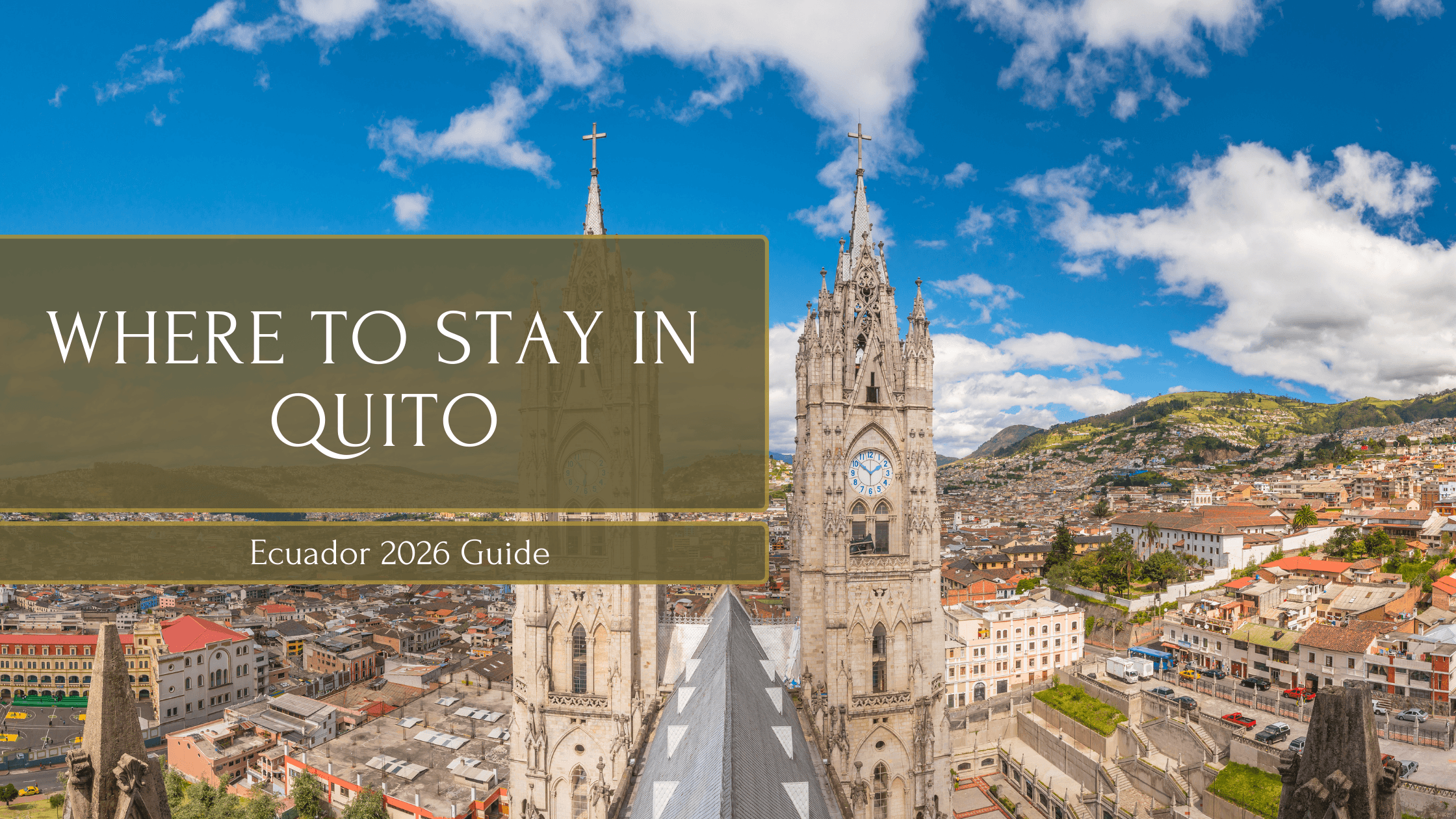
The Centro Histórico is Quito’s UNESCO-listed Old Town, founded in 1534 and packed with baroque churches, colonial plazas, and centuries-old architecture. Staying close to the old town puts you at the heart of the city’s main tourist attractions.
This historic old town has improved dramatically in terms of safety over the past decade. During daylight hours, it’s generally safe to walk around Plaza Grande (also called Plaza de la Independencia), the main square where you’ll find Hotel Plaza Grande.
Casa Gangotena, a luxury boutique hotel overlooking Plaza San Francisco, exemplifies the high-end options in restored colonial buildings. For mid-range stays, La Casona de la Ronda sits on the pedestrian street of La Ronda, the historic centre’s most atmospheric calle.
The area offers incredible things to do in Quito: visit Basílica del Voto Nacional, climb El Panecillo for panoramic views, or explore San Francisco Church. After dark, stick to well-populated streets and avoid wandering into residential blocks.
Hotel options range from restored colonial guesthouses to properties like Casona de la Ronda with traditional courtyard layouts. The main downside is that Old Town empties out after business hours, leaving fewer dining options compared to northern neighborhoods.
Best for: History enthusiasts, first-time visitors who want to see churches and museums, and travelers who don’t mind early nights.
La Carolina: Modern Business District Close to Quito Airport
La Carolina is Quito city’s modern business hub, centered around the large park of the same name. This area features shopping malls, international hotels, and glass-fronted office buildings.
Staying here means access to reliable Wi-Fi, 24-hour pharmacies, and familiar amenities. The park itself is pleasant for morning runs, and the neighborhood feels safe at all hours. You’re also significantly closer to Quito Airport (Mariscal Sucre International in Tababela) than the historic center.
The cable car to Cruz Loma for views of the city is accessible from this area, and day trips to Cotopaxi or Quilotoa are easier to arrange from this central location.
The trade-off is atmosphere. La Carolina lacks the character of Old Town or the energy of La Mariscal. You’re also further from the main historic sites, though the Ecovía bus line provides quick access south.
Best for: Business travelers, families who want a safe base with shopping nearby, and anyone prioritizing modern comforts.
Best Neighborhoods for First-Time Visitors to Plan Your Trip
If this is your first time figuring out where to stay in Quito, prioritize convenience and safety over local character.
- Historic Center is ideal if you want to maximize sightseeing time in Quito’s historic quarter and don’t plan on much nightlife
- La Floresta offers a good balance of safety, restaurants, and residential feel – it’s a convenient base between old and new
- La Carolina works well for families or anyone anxious about safety in Latin American cities
La Mariscal is manageable for solo travelers, but it requires more street awareness and isn’t as relaxing as a place to stay.
Best Areas to Stay for Nightlife and Food in Ecuador
La Mariscal has the highest concentration of bars and clubs, but the scene skews heavily toward backpackers and can feel chaotic on weekends. The plaza areas fill up with street vendors and promoters after 8 PM.
La Floresta offers better quality restaurants and craft beer bars without the aggressive club promoters. The vibe is more “dinner and drinks” than “party until 4 AM.” Small boutique eateries serve everything from Ecuadorian cuisine to international fusion.
For upscale dining, González Suárez and the areas around La Carolina have the city’s best restaurants. Expect international cuisine, wine lists with marble bathrooms in high-end establishments, and prices to match.
Old Town has traditional food and some atmospheric bars on La Ronda, a charming pedestrian street. Options thin out quickly after 10 PM, but the historic ambiance beats the modern city center for evening strolls.
Hotel vs Boutique Hotel: What's Better in Quito
Standard hotels make more sense for short stays in Ecuador’s capital. Most travelers spend 2-4 days in Quito before heading to the coast or outside the city to places like Cotopaxi, and the convenience of hotel services outweighs any cost savings.
Boutique hotels offer more character, especially in the historic centre. Properties like Casa Gangotena provide a more intimate experience with personalized service and unique decorated rooms that reflect the building’s history.
For longer stays near Quito Airport, consider Holiday Inn Quito Airport if you have early departures or late arrivals. It’s the most practical option in Tababela.
Apartments become worthwhile if you’re staying a week or longer. Kitchen access matters since dining out at altitude can be heavy on your stomach. A deluxe room with a kitchenette helps with acclimatization.
Where NOT to Stay in Quito
Avoid booking anything in the far south of the city. These areas are residential, distant from tourist sites, and harder to reach by public transport. Quito is a city where location matters significantly.
The immediate blocks surrounding the bus terminal (Terminal Terrestre Quitumbe) are gritty and not tourist-friendly. If you’re arriving by bus, plan to transfer immediately to your accommodation rather than staying nearby.
Some budget hotels in La Mariscal are located on sketchy side streets. Read recent reviews carefully and prioritize properties on main avenues like Avenida Amazonas or Foch. Not every place to stay in this neighborhood is created equal.
Avoid any accommodation claiming to be “near the middle of the world” monument unless you specifically want to stay outside the city. These are far from Quito’s main attractions.
Key Takeaways
- Quito is spread out – choosing the wrong neighborhood adds hours of daily commuting
- La Mariscal suits budget travelers but requires street awareness at night
- La Floresta offers the best balance of safety, restaurants, and local character
- The historic center is ideal for maximizing sightseeing but empties out after dark
- González Suárez and La Carolina are among the safest areas to stay with better infrastructure
- Boutique hotels in Old Town provide more atmosphere than chain hotels in business districts
- Stay within walking distance of your main interests to maximize time
Frequently Asked Questions
What is the safest area to stay in Quito for tourists?
La Carolina and González Suárez are the safest areas to stay in Quito, with lower petty crime rates and better lighting at night. La Floresta is also very safe while maintaining more character than the business district. The historic center is safe during the day but requires more caution after dark.
Is it better to stay in Old Town or the new town in Quito?
Old Town is better for first-time visitors focused on sightseeing, while the northern neighborhoods (La Floresta, La Mariscal) suit travelers who want nightlife and restaurants. Most visitors find the north more convenient as a place to stay, though boutique hotels in the historic centre offer unmatched atmosphere.
How many days should I stay in Quito Ecuador?
Plan for 2-3 days to see the main attractions in the historic city, visit the Middle of the World monument, and acclimatize to the altitude. Add an extra day if you want to take a day trip to Otavalo’s artisan market or Cotopaxi National Park.
Is Quito safe for solo female travelers?
Quito is manageable for solo female travelers with normal urban precautions. Stick to well-populated areas after dark, use registered taxis or Uber, and avoid displaying expensive jewelry. La Floresta and González Suárez are the most comfortable neighborhoods with fantastic cuisine options and safe streets.
Should I stay near Quito Airport?
The new airport (Mariscal Sucre) is 45 minutes from central Quito in Tababela. Only stay near it if you have an early morning flight or short layover. Otherwise, base yourself in the city center or historic areas – you’ll waste too much time commuting and miss the best places to stay.
What is the best area to stay in Quito for families?
La Carolina offers the best infrastructure for families, with parks, shopping malls, and chain hotels. González Suárez is also good if you want a quieter residential feel with access to restaurants. Both areas have hotels with spacious rooms, some featuring lounge areas and bathroom facilities suitable for families.
Is La Mariscal safe at night?
La Mariscal is relatively safe but requires awareness. Stick to main streets like Foch and Calama, travel in groups after 10 PM, and use registered taxis. Avoid dark side streets and be mindful of your belongings in crowded bars. It’s not one of the safest areas, but most incidents are petty theft rather than violent crime.