
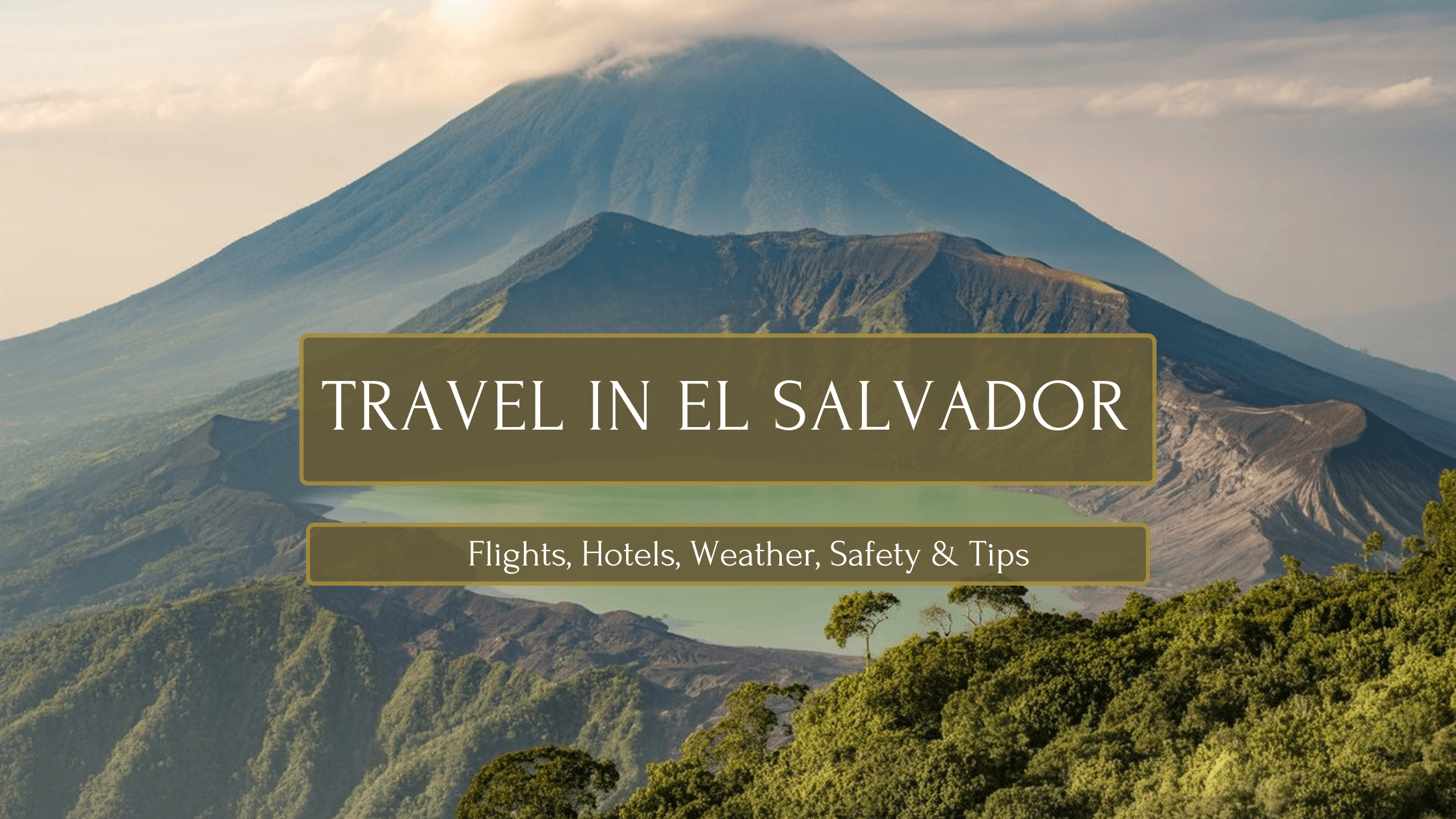
Travel in El Salvador: Complete Travel Advice for Independent Travellers
Flights, Hotels, Weather, Safety & Tips
El Salvador is Central America’s most compact nation and an underrated destination for those seeking authentic travel experiences. Volcanic peaks rise above cloud forests, black-sand beaches curve along the Pacific coast, and colourful colonial architecture tells stories spanning centuries. For independent travellers, families, and digital nomads exploring Central America, El Salvador offers exceptional value without overwhelming tourist crowds.
Whether you’re hiking volcano trails, surfing world-class waves, exploring ancient ruins, or discovering revitalised neighbourhoods in San Salvador, this smallest country in Central America rewards curious explorers. Travel here feels like genuine discovery rather than following well-worn tourist paths.
El Salvador suits independent travellers, families seeking adventure on a budget, digital nomads attracted to low living costs, and anyone planning a wider Central American journey who wants an underrated gem.
Quick Facts About El Salvador
Capital: San Salvador
Currency: US Dollar (USD) — El Salvador has used the US dollar as official currency since 2001
Languages: Spanish (official); English spoken in tourist areas and among younger generations
Time Zone: Central Standard Time (UTC-6); no daylight saving time
Visa & Entry Requirements: Citizens of most Western nations (US, UK, Canada, Australia, EU countries) receive 90 days visa-free on arrival. You’ll receive a tourist card upon entry. Check current entry requirements with your nearest embassy before your travel plans, as policies occasionally change. A valid passport with at least six months validity is required for entry and exit.
Plug Type: Type A and B (standard North American outlets)
Travel Insurance: Recommended for all visitors to cover medical emergencies and unexpected trip cancellations
Typical Daily Budget: Budget travellers: $30–50 USD; Mid-range: $60–100 USD; Comfort: $100–150+ USD
Flights to El Salvador
Monseñor Óscar Arnulfo Romero International Airport (SAL), located 40 kilometres south of San Salvador, is the primary hub for all international arrivals and departures.
Common Flight Routes
From North America, direct flights and connections depart from major US cities including Houston, Miami, Dallas, and Los Angeles. Regional connections from Guatemala and Honduras are abundant. From Europe, you’ll typically connect through US gateways—expect 12–18 hours total travel time.
When Flights Are Cheapest
Prices are lowest during the green season (May to October), particularly June through August. Budget travellers save significantly during this period. Expect premium fares during December through March. Book 6–8 weeks in advance for better rates than last-minute purchases.
Booking Tips
Set up price alerts on comparison sites. Tuesday and Wednesday departures are sometimes cheaper than weekend flights. Calculate total cost including baggage fees. Flights within Central America are competitive; consider regional routings if visiting multiple countries.
Hotels & Where to Stay in El Salvador
Accommodation throughout the country ranges from budget hostels to upmarket beach resorts, with excellent mid-range options offering quality without inflated prices.
Accommodation Types and Price Ranges
Budget travellers stay in shared hostels (\$10–20 USD nightly) concentrated in San Salvador’s Zona Rosa, the beach town of El Tunco, and mountain villages. Double rooms in family-run pensiones cost $25–40 USD. Mid-range hotels and boutique properties ($50–100 USD) offer comfort with character—restored colonial homes, eco-lodges, and beachfront cabañas fall into this bracket. Higher-end resorts and city hotels range $120–200+ USD.
San Salvador remains the transport hub; staying in Zona Rosa or Calle Concepción offers better access to restaurants and culture. Coastal towns attract different travellers: El Tunco draws surfers and young backpackers, while eastern beaches suit those wanting quieter experiences. Highland towns like Suchitoto offer cooler weather and colonial charm. Families and those seeking adventure gravitate toward El Imposible National Park areas.
What Different Travellers Should Prioritise
Families benefit from all-inclusive beach resorts or spacious casitas with kitchenettes. Solo travellers and backpackers value hostel social scenes and proximity to transport. Digital nomads should prioritise reliable WiFi and proximity to coworking spaces increasingly available outside San Salvador.
Weather & Best Time to Visit El Salvador
El Salvador has a tropical climate, but elevation creates distinct zones. Coastal areas remain hot and humid year-round; mountain regions stay pleasantly cool.
Seasons Explained
The dry season (November to April) brings clear skies and lower humidity—ideal for outdoor activities including volcano hikes and beach days. The rainy season (May to October) features afternoon downpours and morning sun, with lush green landscapes. The annual average temperature stays warm throughout.
Best Time to Visit El Salvador
December to March offers ideal conditions: dry weather, manageable crowds, and comfortable temperatures. The green season (May to October) suits budget-conscious travellers who don’t mind afternoon rain. June through August sees the heaviest rainfall but also the lowest accommodation prices.
Considerations for Families and Activities
For hiking volcano trails and waterfall visits, November through March is best—trails stay accessible and visibility remains excellent. Beach days suit year-round travel. If visiting during May to October, plan activities for early mornings when weather is clearest.
Entry & Exit: Travel Documents and Requirements
Entry Requirements
To enter El Salvador, you need a valid passport with at least six months remaining validity. Most Western nationals receive 90 days on arrival—issued as a tourist card. No visa is required for most travellers.
Health Precautions
Yellow fever vaccination is recommended if you’re visiting rural areas or remote jungle regions. Travel health insurance is strongly advised for all visitors. Proof of vaccination may be required if you’re arriving from certain countries. Contact the embassy for the latest travel health requirements affecting your travel plans.
Customs & Declaration
Declare any items of significant value. Avoid carrying large sums of cash. Do not leave food or drinks unattended—this is standard travel safety across the region.
Safety & Security: Travel Advice for El Salvador
Safety concerns deter some potential visitors, but the reality for tourists differs from international headlines.
The Honest Overview
San Salvador has genuine violent crime in specific neighbourhoods—but travellers naturally avoid these areas just as they would rough parts of any major city. Tourist areas, beach towns, and popular destinations see regular tourist traffic without significant incident. Local authorities maintain police presence around tourist destinations.
Travel Advisories & Current Situation
Several places outside San Salvador and in rural areas experience gang activity. A state of exception remains in effect in certain regions. Check latest travel advisories before your trip. The government of El Salvador has strengthened security in major tourist destinations. Exercise a high degree of caution in remote rural areas.
What Travellers Should Actually Do
Avoid displaying valuables. Don’t walk alone late at night in unfamiliar areas. Stick to established tourist destinations and neighbourhoods recommended by local authorities. Use registered taxis or ride-hailing apps rather than hailing cabs on streets. Travel on public transport during daylight hours between towns when possible.
Throughout the country, speak with your accommodation hosts about safe areas—locals know which neighbourhoods to visit. Tourist police patrol main attractions and tourist areas.
Practical Safety Tips
Exercise caution regarding sexual assault and robbery, particularly at night. The risk of sexual assault exists, as in any destination—travel with companions when possible. Reduce your risk by avoiding isolated locations after dark. Do not accept drinks or food that may contain drugs. Be aware of local or political events that may affect your travel plans.
The Bottom Line
Thousands of tourists and digital nomads stay in El Salvador safely yearly. Common-sense precautions mean your experience is comparable to visiting other Central American destinations. The key is awareness without paranoia.
Who El Salvador Is Best For
Families
Affordable beach resorts, manageable distances, and warm hospitality make El Salvador excellent for families. Volcano hikes suit mixed ages. The dish of El Salvador—pupusas—appeals to all palates, and healthcare standards are reasonable.
Backpackers and Budget Travellers
Low daily costs, established hostels, and straightforward logistics appeal to backpackers. El Tunco and mountain villages host classic backpacker circuits rewarding independent exploration.
Digital Nomads
Growing coworking infrastructure, reliable internet in main towns, and extremely low living costs attract remote workers. No visa complications for extended stays (90 days visa-free), plus affordable monthly budgets allowing regular exploration.
First-Time Central America Travellers
El Salvador’s compact size suits those new to the region. You can experience diverse ecosystems—beaches, mountains, forests—without vast overland journeys. Spanish is widely spoken, tourist infrastructure functions smoothly, and the overall vibe is welcoming.
Planning Your Trip to El Salvador
How Long to Stay
A week allows solid overview: a few days in San Salvador, 2–3 days on the beach, and time in highlands. Two weeks lets you slow down, hike volcano trails, and experience multiple beach towns. Even four days works for beach breaks or stops on wider Central American itineraries.
Typical Travel Routes
Many visitors fly into San Salvador, spend a day there, then split time between El Tunco on the coast and Suchitoto or Santa Ana in the highlands. A full loop includes eastern beaches, national parks like El Imposible, and colonial Ataco. Overland connections to Guatemala and Honduras exist.
Transport Basics
Domestic travel relies on buses (colectivos) linking all towns—cheap, frequent, and authentic travel experiences. They’re hot, crowded, and stop constantly, but essential to experiencing El Salvador. For faster journeys between main towns, occasional options exist, though bus travel is usually more practical. Car rental isn’t necessary unless exploring remote areas.
Connectivity
Multiple mobile providers offer affordable SIM cards with decent data coverage in towns and along main routes. WiFi is standard in hotels, cafes, and coworking spaces in tourist destinations.
Things to Do in El Salvador
Beaches and Surf
El Salvador’s Pacific coast offers world-class surf breaks, particularly at El Tunco and spots favoured by experienced surfers. Black-sand beaches provide dramatic backdrops for relaxation and water sports.
Volcano Hiking
Santa Ana and other volcano trails attract hikers seeking dramatic landscapes. Views from volcanic peaks span toward Guatemala on clear days.
Colonial Towns
Suchitoto and Santa Ana preserve colonial architecture and artisan culture. These towns offer cooler mountain air and authentic Salvadoran experiences.
Frequently Asked Questions About Travel in El Salvador
How safe is El Salvador for tourists?
El Salvador is generally safe for tourists who exercise common-sense precautions. Tourist areas, beaches, and established towns see regular visitor traffic without significant incident. Local authorities maintain security around tourist destinations. Avoid displaying valuables, don’t walk alone late at night in unfamiliar areas, and stick to recommended neighbourhoods. Thousands of tourists visit safely yearly—the key is awareness and avoiding isolated areas after dark.
Can you drink the water in El Salvador?
Tap water in San Salvador and major tourist areas is generally safe for locals and visitors with established immunity. However, many travellers stick to bottled water to avoid stomach upset, particularly in smaller towns and rural areas. Ice in drinks is usually made from purified water in tourist establishments, but ask if uncertain. Carrying a water filtration bottle is a practical solution for extended travel throughout the country.
Is El Salvador a good place for tourists?
Yes. El Salvador offers excellent value, warm hospitality, authentic experiences, and diverse attractions including beaches, volcano hikes, colonial towns, and world-class surf. The country is compact, making travel between destinations manageable. It suits independent travellers, families, backpackers, and digital nomads. Tourist infrastructure functions smoothly, and the overall vibe is welcoming without overwhelming crowds. Many visitors describe it as an underrated gem in Central America.
How much can $100 USD buy in El Salvador?
$100 USD stretches far in El Salvador. Budget travellers can cover daily expenses including accommodation ($20–30), meals ($15–25), and activities ($10–15) comfortably. At restaurants, a meal costs $4–8 USD. A hostel bed runs $10–15 USD nightly. Local transport by bus costs under $1 USD per journey. Your purchasing power depends on your travel style—budget travellers experience excellent value, while mid-range and comfort travellers pay proportionally more for better accommodation and dining.
What not to bring to El Salvador?
Avoid large quantities of cash—use ATMs in tourist areas instead. Don’t bring expensive jewellery, designer watches, or high-end camera equipment that attracts attention. Leave prescription medications in original bottles with labels clearly visible. Avoid packing items that may contain drugs, even accidentally—customs inspections are thorough. Don’t bring tattoo-related items if planning tattoos, as cultural attitudes vary. Essentially, pack as you would for any developing country: valuables should be minimal, documents should be secure, and items should be practical for travel.