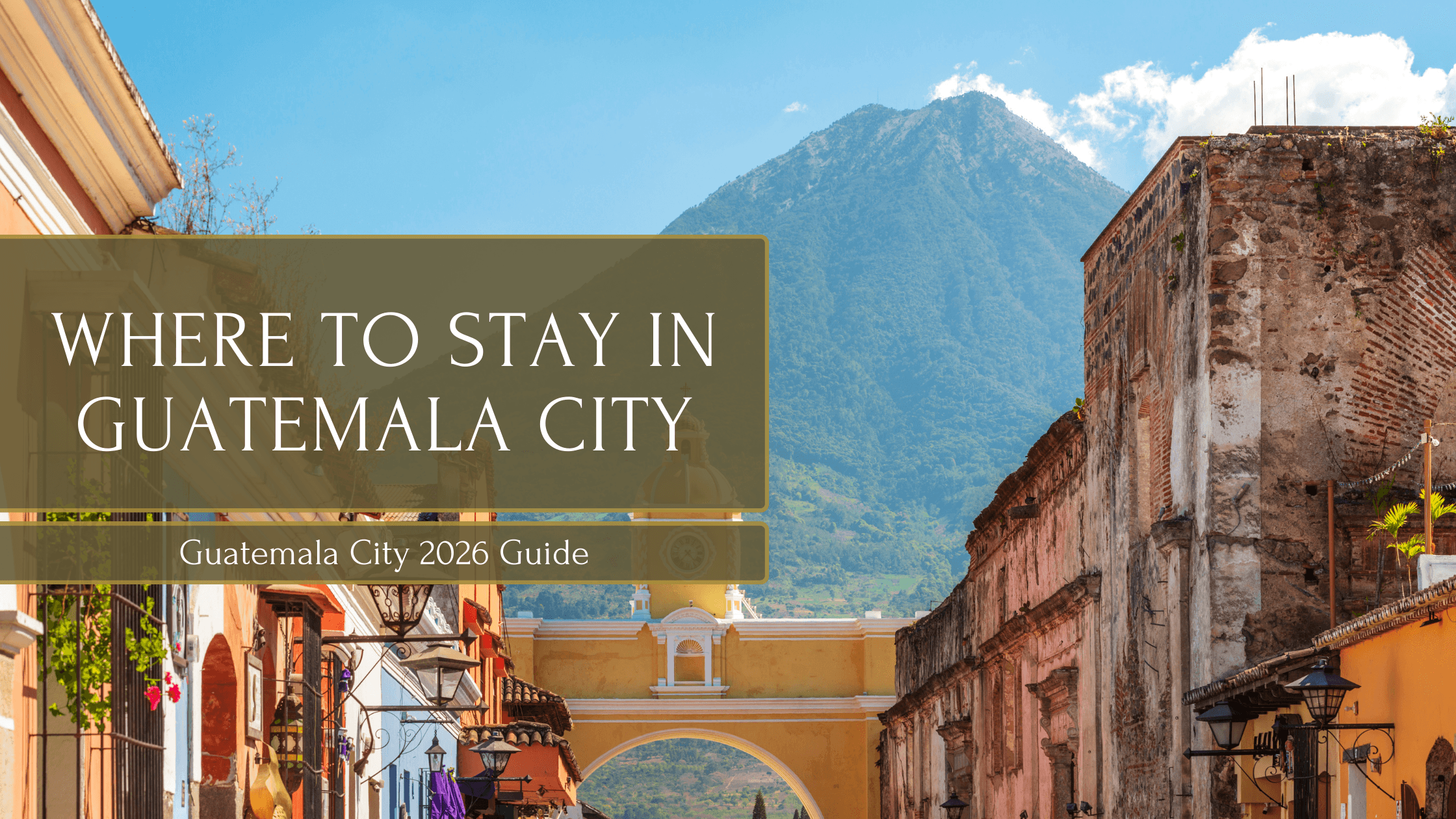
Where to Stay in Guatemala City, Guatemala (2026 Guide)
Where To Stay In Guatemala City, Guatemala (2026 Guide)
Guatemala City isn’t a typical tourist destination.
But if you’re flying in or out, passing through to Antigua or Lake Atitlán, or here for business, you need to know where to stay in Guatemala City—because the wrong choice can wreck your trip.
This sprawling capital city is divided into different zones, and they’re not created equal. Some are safe, walkable, and packed with accommodation options. Others you should avoid walking in, especially late at night. The difference between the safest neighbourhoods and dangerous areas is the difference between a smooth stay and a serious mistake.
What to Expect in This Post
This guide to where to stay is built for quick scanning and real-world decisions. Here’s what you’ll get:
- Quick overview of the best places to stay for tourists
- Detailed breakdowns of the 5 most suitable zones for hotel and hostel options
- Safety and walkability information for each area
- Best areas for nightlife, good food, and families
- Hotel vs apartment guidance for different traveller types
- Zones to avoid and why it’s advisable to skip them
Where to Stay in Guatemala City: Quick Overview
- Zone 10 (Zona Viva) – Tourist hub with upscale hotels, restaurants, and nightlife
- Zone 9 – Quieter residential area with value for money hotel options
- Zone 4 (Cuatro Grados Norte) – Hipster cultural district with art galleries and bars
- Zone 16 (Paseo Cayalá) – Modern, walkable development with shops and dining
- Zone 1 – Historic centre, best for daytime sightseeing only
Zone 10 (Zona Viva): Safest Hotel Area for First-Time Visitors
Zone 10 is where most tourists stay, and for good reason.
This is Guatemala City’s tourist bubble. You’ll find international hotel chains like Hyatt Centric, English-speaking staff, and a concentration of restaurants, bars, and shopping centers. The area has visible security and is considered one of the safest places to stay in Guatemala for walking at night.
Who it’s best for: First-time visitors, business travelers, anyone prioritizing safety and convenience.
The neighborhood comes alive after dark. Zona 10 is known for its vibrant nightlife with numerous bars, nightclub venues, and restaurants, from Shakespeare’s Pub to upscale lounges. You’ll pay more here—expect hotel in Guatemala City prices from \$60–\$200+ per night—but you’re paying for peace of mind.
Walkability: High during daylight hours and evening in the main areas. Use Uber or taxi service at night for longer distances.
Hotel options range from international chains to boutique properties. The airport is only 10–15 minutes away, making Zone 10 close to the airport and extremely convenient for early flights. This convenient location is one of the main reasons travelers choose accommodation here.
Zone 9: Best Budget Guatemala City Accommodation
Zone 9 sits just west of Zone 10, separated by Avenida La Reforma.
This area is near the airport, safe, and offers much better value for money than Zone 10. You’ll find mid-range hotel in Guatemala options and apartments at 20–40% lower prices than neighboring Zona Viva. The tradeoff is a quieter atmosphere with fewer restaurants around within walking distance.
Who it’s best for: Budget-conscious travelers, those wanting a residential feel, solo travelers.
The area feels more Guatemalan than touristy. Zone 9 is a residential area with shopping centers and cheaper hotels, though it’s quieter at night with limited nightlife. You’ll need to walk 10–15 minutes or take a quick taxi to reach Zone 10’s dining and entertainment scene.
Safety: Similar to Zone 10 during the day. Use rideshare apps at night.
Zone 9 works well if you’re spending most of your time visiting other destinations in Guatemala like Antigua or Lake Atitlan and just need a clean, safe place to sleep.
Zone 4 (Cuatro Grados Norte): Safest Alternative for Culture Seekers
Zone 4 is Guatemala City’s answer to Brooklyn.
The neighborhood is inspired by the 1889 Paris World’s Fair and features the Torre del Reformador, a mini version of the Eiffel Tower built in 1935. Today it’s the city’s creative hub, packed with street art, galleries, and a thriving food scene.
Who it’s best for: Young travelers, couples, backpacker types seeking local flavor over tourist amenities.
The Cuatro Grados Norte district is pedestrian-friendly and buzzing with energy. You’ll find trendy bars, craft beer spots, and many restaurants serving everything from traditional Guatemalan food to international fusion. The district features bars, restaurants, shopping, and cultural activities, competing with Zona Viva in Zone 10.
Accommodation types: Boutique hotel options, modern apartments, hostel choices, and B&B properties.
The area feels more authentic than Zona Viva. Prices are moderate—$40–$100 for hotel options, less for hostel or apartment stays. The vibe is younger and more artistic, with colorful murals covering many buildings.
Safety note: It’s safe during the day and evening in the main pedestrian areas. Use Uber at night when traveling to other parts of the largest city in Central America.
Zone 16 (Paseo Cayalá): Upscale Hotels and Maximum Safety
Paseo Cayalá is an artificial city within the city.
This privately developed neighborhood houses a university campus, hotel facilities, health centers, and office buildings, all in a walkable street network. Think European-inspired architecture, cobblestone streets, and armed security at entry points.
Who it’s best for: Families, business travelers, those wanting maximum safety.
The area is completely safe to walk around once inside. You can walk between shops, restaurants, cafes, and the AC Hotel by Marriott without ever feeling unsafe. The surrounding area is designed to be safe and walkable with shops, restaurants, and fake European architecture.
Everything here is upscale and polished—some would say sterile. You’re paying for a controlled environment where you can actually relax and walk freely, something rare in Guatemala City.
Downsides: Expensive ($100–$200+ for hotels), artificial atmosphere, 20 minutes from other tourist areas.
If you’re spending just one night before flying to Antigua or stay in Lake Atitlán, Cayalá might feel isolated. But for families or longer business stays, it offers unmatched walkability and amenities.
Zone 1 (Historic Centre): For Museum Visits Only
Zone 1 is Guatemala City’s historic heart, but you shouldn’t stay here.
The area features the city’s main square with the Cathedral and National Palace museum, plus a long shopping street full of restaurants. During daylight hours, there’s a strong police presence and thousands of locals and tourists exploring the sights.
Why not stay here? Because after dark, Zone 1 empties out and it’s not safe. Even locals avoid walking in the area at night.
Budget hostel and hotel options line the streets around Parque Central, often advertising rooms for $15–35 per night. The savings aren’t worth the risk.
If you want to see Zone 1’s historic sites—the National Palace, Metropolitan Cathedral, Paseo La Sexta—base yourself in Zone 10, 9, or 4 and take an Uber here for a few hours during the day.
Safety during daytime visits: Moderate. Watch for pickpocket activity, stay on main streets.
Best Places to Stay in Guatemala for First-Time Visitors
Stick to these areas if it’s your first time in this Central and South America destination:
- Zone 10 – Safest bet, most amenities, walkable at night
- Zone 9 – Slightly quieter, good value, still safe
- Zone 16 – Best walkability and security, but isolated
These three zones give you easy access to hotels, restaurants, and transport without the safety concerns that come with other parts of the city.
According to travel safety resources, keeping yourself around Zone 4, 9, 10, 11, 12, 14, 15, and 16 provides the best balance of safety and accessibility for visitors.
Best Area for Nightlife and Good Food
Nightlife: Zone 10 (Zona Viva) wins by a landslide.
The neighborhood transforms after dark into the city’s premier entertainment district. You’ll find everything from casual bars with live music to high-energy nightclub spots and upscale lounges. Shakespeare’s Pub, Astro Bar, and Red Lion Pub are popular spots for tourists and locals alike.
Zone 4 offers a more alternative nightlife scene—craft breweries, jazz bars, and intimate venues where you’re more likely to meet locals than other travelers.
Food: Both Zone 10 and Zone 4 excel here.
Zone 10 provides international cuisine and upscale dining. The neighborhood is famous for its vibrant dining scene, offering everything from upscale hotels’ restaurants to delightful local dishes. Expect sushi, steakhouses, Italian restaurants, and high-end Guatemalan fare.
Zone 4’s Cuatro Grados Norte district leans toward trendy cafes, gastropubs, and fusion restaurants. Prices are generally lower than Zona Viva while maintaining good food quality.
Paseo Cayalá in Zone 16 also has excellent dining but skews expensive and touristy.
Best Places to Stay in Guatemala City for Families
Paseo Cayalá (Zone 16) is the clear winner for families.
The pedestrian-only streets mean you can let kids walk without constant worry about traffic. Security is tight but discreet. The area has parks, a cinema, restaurants with outdoor seating, and even a small carousel.
The AC Hotel by Marriott in Cayalá offers family-friendly rooms and is within walking distance of everything.
Zone 10 works for families who want more dining variety and don’t mind using Uber for all movement. Luxury hotels here often have better pool facilities and more space than Cayalá.
Avoid staying anywhere with young children outside these safest zones. The safety trade-offs aren’t worth it when traveling with family.
Hotel vs Hostel vs Airbnb: Guatemala City Accommodation Options
It depends on your length of stay and comfort level.
Hotel stays make sense for short visits (1–3 nights). They provide security, reception staff who can arrange transport, and often include breakfast. In Guatemala City, that peace of mind matters more than in other Central American cities. Nice hotels like La Inmaculada Hotel and Hyatt Centric offer full-service experiences.
Hostel options work for backpacker types on longer itineraries through Central America. Zone 10 and Zone 4 have several clean, social hostels where you’ll meet other travelers heading to popular destinations like Antigua and Lake Atitlán. Expect $10–$25 per night.
Airbnb and casa rentals work better for longer stays (4+ nights) if you’re comfortable navigating the city. You’ll save money and have kitchen access, useful since restaurant meals add up quickly in touristy zones.
Key considerations: Most apartment buildings in safe zones have security guards and locked entrances. If booking an Airbnb, confirm the exact address and check hotels are located in Zone 9, 10, 4, 14, 15, or 16. Never book accommodation in zones marked as dangerous areas by local advice.
For first-time visitors, a hotel in Guatemala City eliminates variables. You can always try casa or apartment stays on future visits once you know the city better.
Where NOT to Stay in Guatemala City
Avoid booking Guatemala city accommodation in these zones under any circumstances:
High-danger zones: 3, 5, 6, 18, 21. Zone 18 is considered one of the most dangerous areas in the city, where gang activity is widespread. Zone 6 has high rates of car theft. These areas serve no tourist purpose.
Not recommended: 2, 7, 8, 11, 12, 13, 17, 19, 24, and Villa Nueva. While not all uniformly dangerous, they offer no advantages for visitors and significantly higher risk than the safe zones.
Zone 1 late at night: As mentioned, the historic centre is acceptable for daytime visits but shouldn’t be your accommodation base.
Even in “safe” zones, crime exists. According to the UK government’s travel advice, no parts of Guatemala City are free from crime, including Zone 10, which is popular with tourists.
Stay vigilant everywhere. Use Uber or official taxi services rather than walking at night, even in Zone 10. Don’t flash expensive items or avoid walking quiet side streets after dark.
Exploring Beyond: Adding Antigua and Lake Atitlán to Your Itinerary
Most travelers use Guatemala City as a gateway to the country’s more scenic destinations.
Antigua is only 45 minutes away—a colonial gem with cobblestone streets, Mayan markets, and volcano views. Many travelers spend just one night in Guatemala City before heading here.
Lake Atitlán is about 2.5–3 hours from the capital. The lake is surrounded by Mayan villages and volcanoes, offering a completely different experience from the urban environment. You can stay in Lake Atitlán towns like Panajachel or San Pedro for a more relaxed vibe.
Casa Carmel near Antigua is a popular B&B for those seeking a quieter new place between the capital and colonial town.
If you’re flying in late or out early, one night in Zone 10 makes sense. Otherwise, consider whether you really need to stay in Guatemala City accommodation at all—many visitors find Antigua a better base with day trip access to the capital.
Key Takeaways
- Zone 10 (Zona Viva) is the safest, most convenient base for first-time visitors with the best hotel options
- Zone 9 offers similar safety at lower prices but with fewer amenities—great value for money
- Zone 4 provides authentic local culture, good food, and unique hotels at moderate prices
- Zone 16 (Cayalá) is ideal for families wanting maximum security and walkability
- Zone 1 is fine for museum visits and daytime sightseeing but not for overnight stays
- Avoid Zones 3, 5, 6, 18, and 21 completely—they’re genuinely dangerous areas
- Always use Uber or hotel taxi services at night, even in the safest zones
FAQs About Places to Stay in Guatemala City
What is the safest area to stay in Guatemala City?
Zone 10 (Zona Viva) is considered the safest area for tourists, with high security presence, international hotels, and well-lit streets. Zone 16 (Paseo Cayalá) offers even more controlled safety but is located near fewer attractions.
Is it safe to walk around Guatemala City at night?
Not in most areas. Even in Zone 10, which is safer than other parts, you should use Uber or taxi services after dark. Zone 16 (Cayalá) is the only area where nighttime walking feels genuinely safe throughout, though it’s advisable to stay alert everywhere.
How far is Zone 10 from the airport?
Zone 10 is approximately 10–15 minutes from La Aurora International Airport by taxi or Uber, depending on traffic. Early morning trips can be as quick as 8 minutes. Expect to pay $8–$15 for a ride. This makes hotels around Zone 10 extremely convenient.
Should I stay in Zone 1 to be near the historic sites?
No. While Zone 1 has important historic attractions and a museum district, it’s not safe at night when the area empties out. Stay in Zone 10, 9, or 4 and visit Zone 1 during the day via Uber. This is a better Guatemala City accommodation strategy.
What's the difference between Zone 9 and Zone 10?
Zone 10 (Zona Viva) is the tourist and entertainment hub with luxury hotels, restaurants, and nightlife. Zone 9 is quieter and more residential with similar safety levels but fewer amenities and lower prices. Both are close to the airport.
Are Airbnbs safe in Guatemala City?
Airbnbs can be safe if located in Zones 4, 9, 10, 14, 15, or 16 in buildings with security. Confirm the exact address before booking and read recent reviews carefully. Hotels offer more peace of mind for first visits to this Central American destination.
How many nights should I spend in Guatemala City?
Most travelers spend 1–2 nights maximum, using the capital as a transit point to Antigua, Lake Atitlán, or other destinations in Guatemala. If you’re interested in museums and urban culture, 2–3 nights allows time to explore without rushing. Consider whether you want to stay in Lake Atitlán region instead for a more scenic experience with stories from the road.