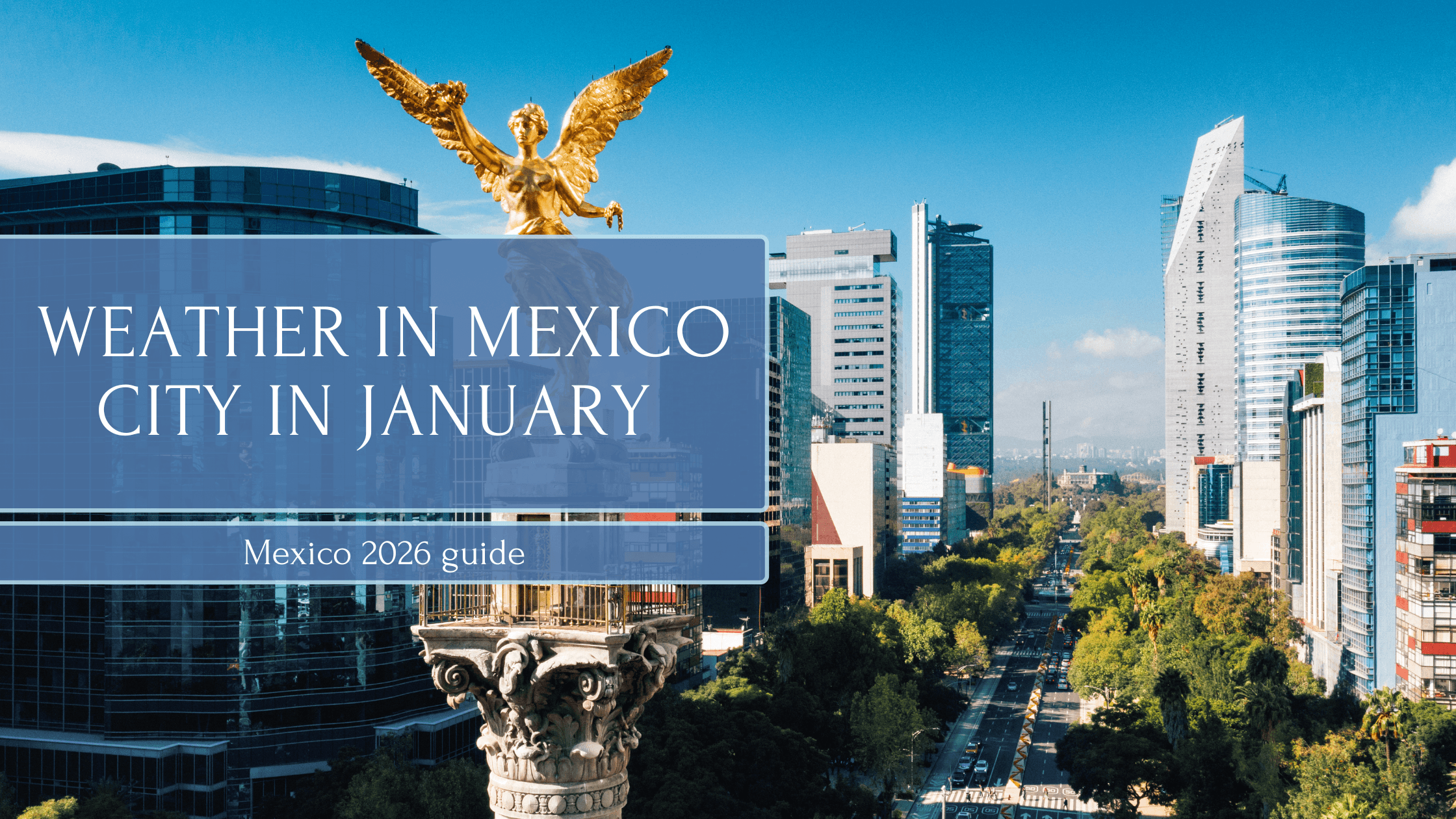
Weather in Mexico City, Mexico in January (2026 Guide)
Weather in Mexico City, Mexico in January (2026 Guide)
January is one of the best months to visit Mexico City. Crisp, sunny days and cool nights make the capital comfortable for walking, sightseeing, and outdoor exploration. The weather in Mexico City in January is dry, stable, and perfect for first-time travelers who want to experience this great city without dealing with rain or oppressive heat.
This time to visit Mexico works well for couples, solo travelers, and families. Hotels offer steep discounts after the holiday rush, crowds thin out compared to December, and the city’s cultural calendar heats up with festivals, exhibitions, and cultural events. If you dislike rain or prefer mild comfortable temperatures, January is one of the best months to visit for travelers seeking authentic cultural immersion without peak-season chaos. As you enjoy the vibrant atmosphere, take advantage of the beautiful beaches to explore in Cancun that offer a serene escape from the busyness of city life. The stunning coastline presents opportunities for various water activities, making it an ideal spot for adventure enthusiasts. Don’t miss the chance to dive into the rich marine life or simply relax on the soft sands under the warm sun.
Quick Weather Snapshot
- Average High: 21°C / 70°F (occasionally reaching 25°C)
- Low Temperature: 8°C / 46°F (occasionally dropping to 0°C on rare nights)
- Rainfall: Low (less than 0.4 in; ~1 rainy day)
- Humidity: 57–64% (moderate, feels dry)
- Season: Dry season
- Crowd Level: Low to moderate (after January 6, very light)
- Overall Comfort Rating: Excellent for outdoor activities and cultural immersion
Weather in Mexico City in January
January feels moderately chilly in the morning, then pleasant by afternoon. Sunrise hours sit around 7–8°C (45–46°F), requiring a jacket or sweater. By midday, temperatures climb to a pleasant 20–21°C (68–70°F), perfect for walking neighborhoods like Roma, Condesa, and the Historic Center without overheating. Evenings drop back to 8–10°C (46–50°F), so a light layer is essential for dinner or evening strolls.
Skies are predominantly clear and blue, with low cloud cover. Sunshine averages 8–10 hours daily, and the air feels crisp—a result of post-holiday winds clearing pollution. Rain is rare, with only about one rainy day expected all month. Walking and sightseeing conditions are ideal; you can plan a travel itinerary for outdoor activities without weather anxiety.
Average Temperature in Mexico City During January
Daytime highs average 21–22°C (70–72°F), with the warmest days typically occurring mid-to-late January. Nighttime lows drop to 6–8°C (43–46°F), occasionally approaching 0°C on the coldest nights. The temperature swing of about 14°C (25°F) between day and evening is significant, so layering remains non-negotiable. January is the coolest time to visit Mexico City, but it never feels frigid—locals and visitors move comfortably with proper clothing. Sun exposure is strong despite moderate average temperature, so sunscreen is still wise, especially at altitude.
Rainfall in Mexico City in January
January ranks among the driest months, with average rainfall of less than 0.4 inches for the entire month and roughly one rainy day expected. When precipitation does fall, it’s typically light and brief, lasting only an hour or two. Downpours and storms are not a concern; you won’t face the afternoon deluges that plague the rainy season from May through September. This predictability means you can plan outdoor activities, museum visits, and neighborhood walks without backup weather plans. Rainfall rarely disrupts your trip to Mexico City. Weather in Mexico City, Mexico in March starts to warm up, making it an ideal time for outdoor exploration. With average temperatures ranging from the mid-50s to low 70s Fahrenheit, visitors can enjoy pleasant conditions for sightseeing and recreational activities. Additionally, while March marks the onset of the spring season, rainfall remains minimal, allowing you to fully enjoy the city’s vibrant parks and historic sites.
Humidity in Mexico City During January
Humidity ranges from 57% to 64%, registering as moderate. The dry season and cooler temperatures combine to make the air feel comfortable—not sticky or oppressive. Even when afternoon temperatures reach 21°C (70°F), the humidity stays low enough that you won’t feel clammy. Travelers seeking comfort will find January refreshing. The dry air does mean sunscreen and lip balm become important; moisturize to avoid chapped skin during longer day in Mexico City activities.
Is Mexico City Busy in January? (Time to Visit Mexico)
Early January (January 1–6) sees holiday crowds lingering—families celebrating New Year’s and Día de los Reyes (Three Kings’ Day on January 6). After this festive period ends, tourism drops sharply as holiday breaks end and international visitors return home. From mid-January onward, Mexico City in January feels significantly quieter than December. Hotel prices plummet 35–50% below peak season rates after January 6, and main attractions have manageable lines. This window makes late January an ideal time to visit Mexico City: excellent pleasant weather, low prices, and authentic local experience without peak-season congestion.
Best Things to Do in Mexico City in January
Explore Teotihuacán Pyramids: Clear skies and cool morning temperatures make this UNESCO World Heritage Site spectacular. Sunrise visits offer fewer crowds and scenic light for photography.
Visit the National Museum of Anthropology: Perfect indoor attraction on rare overcast days; the Aztec Sun Stone and pre-Columbian artifacts reward hours of exploration. Wind speed here is minimal; protected indoor environment.
Witness the Monarch Butterfly Migration: Day trips to El Rosario or Sierra Chincua sanctuaries (3–4 hours outside central Mexico) peak in January. Millions of butterflies cluster in oyamel fir trees—an unforgettable must visit sight. Go mid-week and arrive at sunrise.
Stroll Xochimilco’s Floating Gardens: Ride traditional boats through canals lined with flowers. Early mornings are calmest; expect more crowds on weekends. This scenic attraction pairs well with any travel itinerary.
Explore Roma and Condesa Neighborhoods: Tree-lined streets, boutique cafés, galleries, and street art are best enjoyed on foot in January’s crisp weather. Both neighborhoods offer restaurants, bookstores, and design shops perfect for cultural heritage exploration.
Experience Día de los Reyes (January 6): Join locals at bakeries enjoying Rosca de Reyes (King’s Cake). Festive energy and cultural events make this experience memorable.
Visit Chapultepec Park: Rent a bike or walk around lakes, gardens, and museums. Weekend concerts and art installations add energy. Tamayo Museum and National Museum of Anthropology sit within this must visit central Mexico destination. Exploring popular neighborhoods in Mexico City offers a unique glimpse into the vibrant culture and history of the capital. Each area, from Coyoacán to Roma, is filled with art, food, and architecture that reflects the city’s diverse character. Don’t forget to sample local delicacies and visit bustling markets to fully immerse yourself in the experience.
Experience Spanish Colonial Architecture: Wander the Historic Center’s main attractions, plazas, and churches. Sunset hours offer scenic lighting without harsh midday glare.
Events in Mexico City in January
January 1: New Year’s Day. Many tourist attractions close; restaurants remain open.
January 6: Día de los Reyes Magos (Three Kings’ Day). Parades, traditional music, and several festivals and events take place. Ice skating rinks set up in the Zócalo.
Throughout January: Bazar Resiliente (independent creators’ market). Stranger Things immersive experience. Jazz music festival at various venues. Festival del Centro Histórico with guided tours. Jewish Film Festival.
Late January: Zona Maco Art Fair (contemporary Latin American art). Material Art Fair and exhibitions at Palacio de Bellas Artes. Concert series and theater performances throughout Roma, Condesa, and the Historic Center.
Check Mexico City tourism websites for confirmed dates closer to your time to visit.
What to Pack for Best Time to Visit Mexico City in January
- Layering is essential: Light sweaters, cardigans, or pullovers for mornings and evenings; t-shirts or long-sleeve lightweight shirts for midday warmth.
- Jacket or windbreaker: A compact, water-resistant jacket for early morning and nighttime. Denim jackets work well.
- Comfortable walking shoes: Mexico City rewards exploration on foot. Wear broken-in sneakers or closed-toe shoes.
- Sun protection: Sunglasses, a wide-brimmed hat, and SPF 30+ sunscreen (UV is strong at altitude despite cooler temperatures).
- Light rain jacket or compact umbrella: Unlikely needed, but carrying one is smart.
- Moisturizer and lip balm: The dry season air can chap skin.
- Comfortable pants or jeans: Temperatures don’t support shorts for most of the day.
- Light scarf or shawl: Useful for warmth and cultural respect when entering churches.
Seasonal Travel Tips for January Weather in Mexico City
- Plan early starts for outdoor activities: Sunrise visits to Teotihuacán, Monarch sanctuaries, or parks avoid afternoon chill and maximize scenic photography.
- Dress in layers you can remove: Mornings are chilly; midday warmth arrives quickly. Pack a small bag for shed layers.
- Book hotels immediately after January 6: Prices drop sharply. Availability improves mid-to-late January.
- Eat Rosca de Reyes on January 6: Find a local bakery. The tradition is worth experiencing.
- Walk the Zócalo at sunrise: Low light, cooler temperature, minimal crowds, and beautiful architecture make dawn visits memorable.
- Use public transportation or Metro: January weather is ideal for walking, but the Metro is efficient for longer distances across Mexico City.
- Check wind speed forecasts: Wind can make mornings feel colder than thermometer readings suggest. Layer accordingly.
Weather Hazards in Mexico City in January
Altitude Considerations: Mexico City sits at 2,240 meters above sea level. Oxygen levels are 25% lower than at sea level, which can cause mild symptoms (shortness of breath, headaches) in some visitors. Allow 24–48 hours to acclimate. Stay hydrated and avoid heavy exertion on arrival day.
Cold Mornings and Evenings: Nighttime temperatures drop to 6–8°C (43–46°F). Discomfort is real if underdressed. Always carry a jacket for evening activities.
Air Quality: January is one of the better months for air quality due to post-holiday winds clearing pollution. However, occasional pollution spikes can occur. Check real-time air quality indices if you have respiratory sensitivity.
Rare Frost: Historically, overnight temperatures can approach 0°C (32°F) on the coldest nights, though freezing is extremely rare.
Key Takeaways
- Weather in Mexico City in January is excellent—dry, sunny, and mild—ideal for outdoor sightseeing and cultural immersion.
- Average high temperatures reach 20–21°C (70°F); pack layers to handle the 14°C daily temperature swing.
- Rainfall averages less than 0.4 inches with roughly one rainy day, making outdoor activity planning straightforward.
- January is one of the best months to visit for budget travelers; post-holiday rates drop 35–50% after January 6.
- Mexico City’s altitude means lower oxygen levels; budget a day to acclimate and stay hydrated.
- Pack sunscreen despite moderate temperatures; UV exposure is strong at elevation.
- Time to visit Mexico City in January combines pleasant weather, low prices, and authentic local cultural heritage without peak-season crowds.
FAQ
Is January a good time to visit Mexico City?
Yes. January offers excellent pleasant weather (mild, dry, sunny), manageable crowds after January 6, and hotel discounts of 35–50%. It’s one of the best months for first-time visitors and travelers seeking value while visiting this great city.
What should I wear visiting Mexico City in January?
Layer your clothing. Mornings require a jacket (7–8°C / 45–46°F); midday allows t-shirts (20–21°C / 68–70°F); evenings need a light layer (8–10°C / 46–50°F). Include comfortable walking shoes, sunglasses, sunscreen, and a compact rain jacket for the rare chance of weather conditions requiring it.
Will it rain in Mexico City in January?
Rainfall is very unlikely. January averages less than 0.4 inches and roughly one rainy day. Downpours and storms are not concerns. You can plan your travel itinerary for outdoor activities with confidence.
How crowded is Mexico City in January?
Early January (January 1–6) is moderately busy due to holiday celebrations. After January 6 (Día de los Reyes), tourism drops sharply. Museums, attractions, and neighborhoods are far more enjoyable from mid-to-late January compared to other busy months.
Do I need to worry about altitude sickness visiting Mexico City?
Mexico City sits at 2,240 meters. Some visitors experience mild symptoms due to 25% lower oxygen levels. Allow 24–48 hours to acclimate, stay hydrated, and avoid strenuous activity on arrival day. Most people adjust quickly without issue.