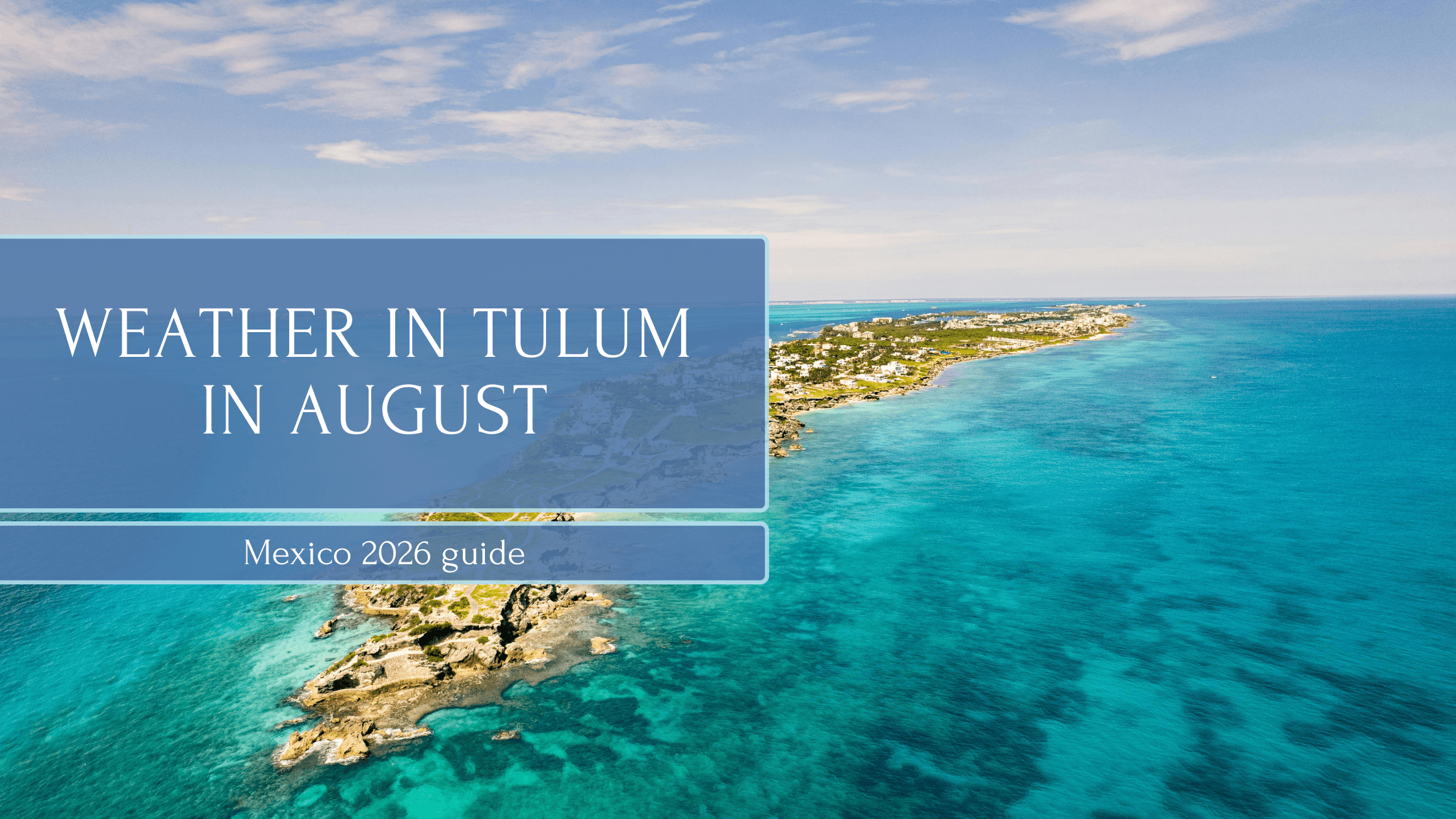
Weather in Tulum, Mexico in August
Weather in Tulum, Mexico in August
August in Tulum brings hot, humid weather and frequent rainfall—it’s peak rainy season on the Riviera Maya and Riviera. Afternoon thunderstorms are common, and the Caribbean sky shifts between bright blue and threatening gray several times daily. If you’re considering a visit to Tulum in August, understand what you’re getting: intense heat, frequent rain, and smaller crowds—but also lower prices and a certain raw, tropical energy that beach travelers rarely experience.
This is the month for budget-conscious explorers in Quintana Roo, travelers who don’t mind rain, and those seeking solitude over perfect weather. It’s not ideal for families planning beach days or couples looking for sunset moments, but it’s excellent for cenote diving, Mayan ruins exploration, and catching deals on hotels and resorts. When choosing where to stay in Tulum, consider properties with covered outdoor space and reliable air conditioning—they become your refuge during afternoon downpours. Learn more about finding the right accommodation in our guide on where to stay in Cancun.
Quick Weather Snapshot: Average High Temperatures & August Weather Forecast
- Average High Temperature: 32°C (around 90°F)
- Average Low Temperature: 24°C (75°F)
- Precipitation & Rainfall Level: Heavy
- Average Humidity: Very high (80–90%)
- Season: Rainy season peak
- Sunshine Hours: 6–7 per day
- Crowd Level: Low to very low
- Overall Comfort Rating: Challenging; best suited for rain-tolerant travelers
What Tulum Is Like in August
August in Tulum feels tropical in the most visceral sense. Heat wraps around you the moment you step outside, and humidity makes the air feel thick enough to drink. Mornings start clear and warm—ideal for early beach swims or cenote visits before 10 a.m. By midday, humidity peaks and the sun becomes oppressive. Afternoons bring dark clouds rolling in from the Caribbean, triggering sudden, heavy downpours that last 30 minutes to two hours. Evenings cool slightly but remain warm and muggy.
Walking and sightseeing require rhythm and planning. The ruins of Tulum and Cobá are walkable in early morning but become nearly unbearable by noon. Ruins sites offer limited shade, and the combination of sun exposure and humidity can lead to heat exhaustion. Plan outdoor exploration for 7–10 a.m., return to your hotel for lunch and rest, then resume activities after 4 p.m. once the daily storm has passed and temperatures drop.
Average High Temperatures in Tulum in August
The average temperature in Tulum during August stays consistently hot. Daytime highs hover around 32°C (around 90°F), with some days reaching 33–34°C (91–93°F). The average low temperature at night settles around 24°C (75°F). The heat is intense and relentless, but it’s the combination of heat and humidity that makes August feel oppressive. The heat index—what the temperature actually feels like—often reaches 38–40°C (100–104°F). Direct sun exposure is dangerous without sunscreen and hydration. For a given day, expect no relief from the warmth even after sunset. Compared to July, August’s average temperature is marginally cooler but significantly more humid; September brings similar high temperatures with even heavier precipitation.
Average Rainfall in Tulum in August
August is one of the wettest months of the year in Tulum, with heavy precipitation expected. Average rainfall in Tulum during August comes in at roughly 150–180 mm (6–7 inches) of total accumulation, though some years exceed this amount. Expect rain on roughly 10–12 days during the month, typically concentrated in intense afternoon or evening downpours. Rain seldom falls all day—mornings are often dry, and rainfall patterns are predictable enough that experienced visitors work around them. Brief, heavy storms disrupt beach and pool plans but rarely derail exploration of indoor attractions or cenotes. Standing water and flooded streets are possible but uncommon in town; the sand drains quickly. The chance of rain peaks between 2–5 p.m. on any given day.
Humidity & Weather Conditions in Tulum in August
Humidity in Tulum during August ranges from 80% in early mornings to 90%+ by mid-afternoon, creating muggy conditions throughout the day. This level of moisture makes the heat feel significantly more intense than the actual temperature. Physical exertion becomes taxing—a 20-minute walk feels like an hour’s work. Sunburn happens faster in humid conditions; sweat doesn’t evaporate efficiently, so your body’s cooling system works overtime. Travelers with respiratory issues, asthma, or heat sensitivity often find August uncomfortable. The humid weather in Tulum affects everything from packing to activity planning. For others, it’s simply a matter of pacing yourself: slow down, hydrate constantly, and don’t push hard during midday hours when humidity peaks.
Is Tulum Busy in August?
August is genuinely quiet, making it ideal for travelers seeking solitude at this destination. School holidays don’t align with August breaks in most of North America, so families aren’t traveling. European tourists are spread across the continent during their summer vacations. Locals know this is the worst weather window and plan trips elsewhere. Hotel occupancy drops significantly, which means restaurants and attractions operate with skeleton crews but offer dramatically lower prices. Beachfront resorts and mid-range hotels may drop rates by 30–50% compared to peak season. This isn’t a month for the party scene—bars and clubs are slower—but it’s ideal for those seeking authentic local life and bargaining power on resort bookings.
Best Things to Do in Tulum in August
- Cenote diving and swimming: Cool, clear water in cenotes feels refreshing during intense heat. Storm flooding rarely affects cenotes. Morning dives mean fewer tourists and calmer conditions. Snorkel or dive in the lush jungle-surrounded lagoons.
- Mayan ruins exploration: Visit Tulum, Cobá, or Xel-Há before 10 a.m. when it’s manageable. Afternoon rain clears crowds and cools the site (bring a rain jacket). Explore white sand surroundings on rainy days with fewer tourists.
- Indoor museums and cultural sites: Spend midday hours at Casa Costas, the Tulum Museum, or Puerto Aventuras exploration centers to escape heat.
- Fishing charters: Early morning fishing is excellent and less crowded. Boats return before afternoon storms. Charter fishing excursions target sea turtles and tropical species.
- Jungle zip-lining and eco-parks: Most eco-friendly parks operate year-round; rain actually enhances canopy tours by cooling you down and creating lush jungle scenery.
- Cooking classes: Book morning or evening sessions to avoid heat. Many small operators offer discounts in August for beach destination cooking experiences.
- Cenote-hopping road trips: Spend full days driving the Riviera Maya, stopping at multiple cenotes (Dos Ojos, Sac Actun, Aktun Chen). Rain creates temporary dry spells between visits.
- Water sports: Paddleboard, SUP, or snorkel in shallow water early mornings before afternoon showers. Kayak through coastal lagoons and jungle waterways.
- Beach time: Early mornings (before 10 a.m.) offer swimmable conditions and white sand lounging; afternoons are high-risk for sudden downpours.
Events & Festivals in August
There are no major festivals or events specific to August in Tulum. This is a quiet month culturally and touristically. Small-scale local celebrations and market days continue as usual, but nothing draws crowds or shapes travel plans.
What to Pack for Tulum in August
- Lightweight, breathable clothing: Cotton and moisture-wicking fabrics combat humidity. Long sleeves for sun and bug protection during jungle and beach excursions.
- Rain gear: Compact fold-up rain jacket or poncho. Don’t rely on umbrellas (wind during storms renders them useless). Waterproof bag for electronics.
- Footwear: Waterproof sandals or quick-dry shoes ideal for wet beach conditions; flip-flops for hotel use. Avoid leather (it rots in humidity).
- Sun protection: SPF 50+ sunscreen (reef-safe for Caribbean snorkeling), high-UV sunglasses, and a wide-brimmed hat for beach and ruins visits.
- Swimwear: Two or three suits so you can rotate and dry them properly in humidity. Include a rash guard for sun protection during water sports.
- Toiletries: Higher humidity speeds fungal growth; pack antifungal powder, extra deodorant, and moisture-control products essential for tropical destinations.
- Lightweight sleep clothing: Hotel AC can be aggressive; a thin long-sleeve shirt prevents chilling during sleeping hours.
- Medications: Antidiarrheal tablets, antihistamine cream for bug bites, and any personal prescriptions (pharmacies stock fewer brands in August).
Seasonal Travel Tips for August in Tulum
- Time outdoor activities for 7–10 a.m. when heat and humidity are most manageable. Rest from noon to 4 p.m. in your hotel resort or accommodation.
- Hydrate obsessively. Drink water constantly, even if you’re not thirsty. Heat and humidity accelerate dehydration without obvious symptoms. Carry water during all excursions.
- Check hourly weather forecasts the night before. Apps like Weather.com show detailed forecasts; plan around expected afternoon shower timing and destination activities.
- Negotiate hotel rates aggressively. August is low season. Walk-in rates at resorts are often lower than pre-booked rates. Compare offerings carefully.
- Hire drivers for ruins visits. Renting a car leaves you exposed to heat; a taxi or private driver means you stay cool between attraction stops.
- Book cenote visits early in the day. Tour operators fill morning slots first; afternoon tours struggle if storms hit the destination.
- Embrace the tropical rhythm. Locals work around weather seamlessly. Adopt the same patience and flexibility toward weather disruptions and schedule changes.
- Use bicycle rentals strategically. Early morning cycling is pleasant; avoid afternoon heat when humidity peaks.
Weather Hazards in Tulum in August
Intense heat and humidity: Heat exhaustion is the primary risk at this destination. Symptoms include dizziness, nausea, excessive fatigue, and headache. Avoid midday exertion and seek shade and water immediately if symptoms appear. The combination of warmth and moisture accelerates heat illness.
Afternoon storms and showers: Heavy rain and lightning are common during August. Storms pass quickly but create temporary flooding in low-lying areas and beach disruptions. Indoor attractions and cenotes remain safe during showers. Flash showers often last 30–60 minutes before clearing.
Rip currents and rough seas: Rough Caribbean Sea conditions during rainy season increase rip current risk. If you swim, stay in shallow water and ask locals about the safest beaches for that given day.
Mosquitoes and insects: High humidity increases mosquito and sand fly populations, particularly at dawn and dusk in jungle areas. Use insect repellent (at least 20% DEET) and wear long sleeves at dawn and dusk.
Sun exposure: The combination of intense UV and humidity increases sunburn risk despite lower perceived heat from cloud cover. Reapply reef-safe sunscreen after swimming and every two hours otherwise.
Hurricane season: August falls during Atlantic hurricane season (June–November). While direct hurricane hits at Tulum are rare, tropical systems can bring heavy rain and wind. Monitor weather forecasts and follow local guidance if a hurricane warning issues.
Key Takeaways
- August offers a weather forecast for Tulum that includes hot days (32°C/90°F), high humidity (80–90%), and heavy precipitation; best for flexible, rain-tolerant travelers.
- The average temperature climbs to 32°C (90°F) daytime highs with 24°C (75°F) nighttime lows; humidity makes conditions feel 38–40°C (100–104°F).
- Heavy rainfall (150–180 mm) concentrates in afternoon showers; mornings stay clear and swimmable most days in this rainy season.
- Tulum stays genuinely quiet in August; hotel occupancy and crowds drop dramatically, creating major savings on beach resort bookings.
- Schedule morning outdoor activities (before 10 a.m.) at attractions and beaches; plan afternoon indoor museum visits or cenote diving instead.
- Cenotes offer cool water relief, ruins are accessible with early visits, and beaches work for swimmers before afternoon storms.
- Pack lightweight clothing, waterproof footwear, SPF 50+ sunscreen, compact rain gear, and multiple swimsuits for tropical destination travel.
FAQs
Is Tulum safe to visit in August?
Yes. August is safe as a destination. Heavy rain and humidity are inconvenient, not dangerous. Standard travel precautions apply year-round at this Quintana Roo location. Tourists visit Tulum in August without incident; just plan around weather and protect yourself from sun and heat with proper sunscreen and hydration.
Can I swim in the Caribbean in August?
Yes, but weather conditions are rougher than other months. Rip currents are more common due to sea churning from storms. Swim in the morning when water is calmest, and ask locals about the safest beaches for a given day. Cenotes remain excellent for swimming and snorkeling any time during August.
Will my hotel have air conditioning in August?
Most hotels in Tulum have AC, especially mid-range and luxury resorts. Budget accommodations may rely on fans. AC is non-negotiable in August when heat and humidity peak. Confirm air conditioning before booking your hotel or resort.
How much cheaper are prices in August?
Accommodation rates at hotels and resorts typically drop 25–50% compared to peak season (December–March). Restaurant prices remain steady. Tours and excursions may offer discounts if demand is slow, but prices aren’t guaranteed to drop at all destinations.
What’s the best way to explore Mayan ruins in August?
Arrive at ruins sites at 7–8 a.m. when gates open. Explore for 2–3 hours, return to your hotel or resort by 11 a.m. to rest, then visit indoor museums or cenotes in the afternoon. If it rains during your ruins visit, use it as cover—fewer crowds and cooling rain make walking bearable through Mayan landmarks.
What’s the average water temperature in August?
The Caribbean Sea water temperature in Tulum averages 29°C (84°F) in August, remaining warm enough for comfortable swimming and snorkeling activities throughout the month.
Sources & References: