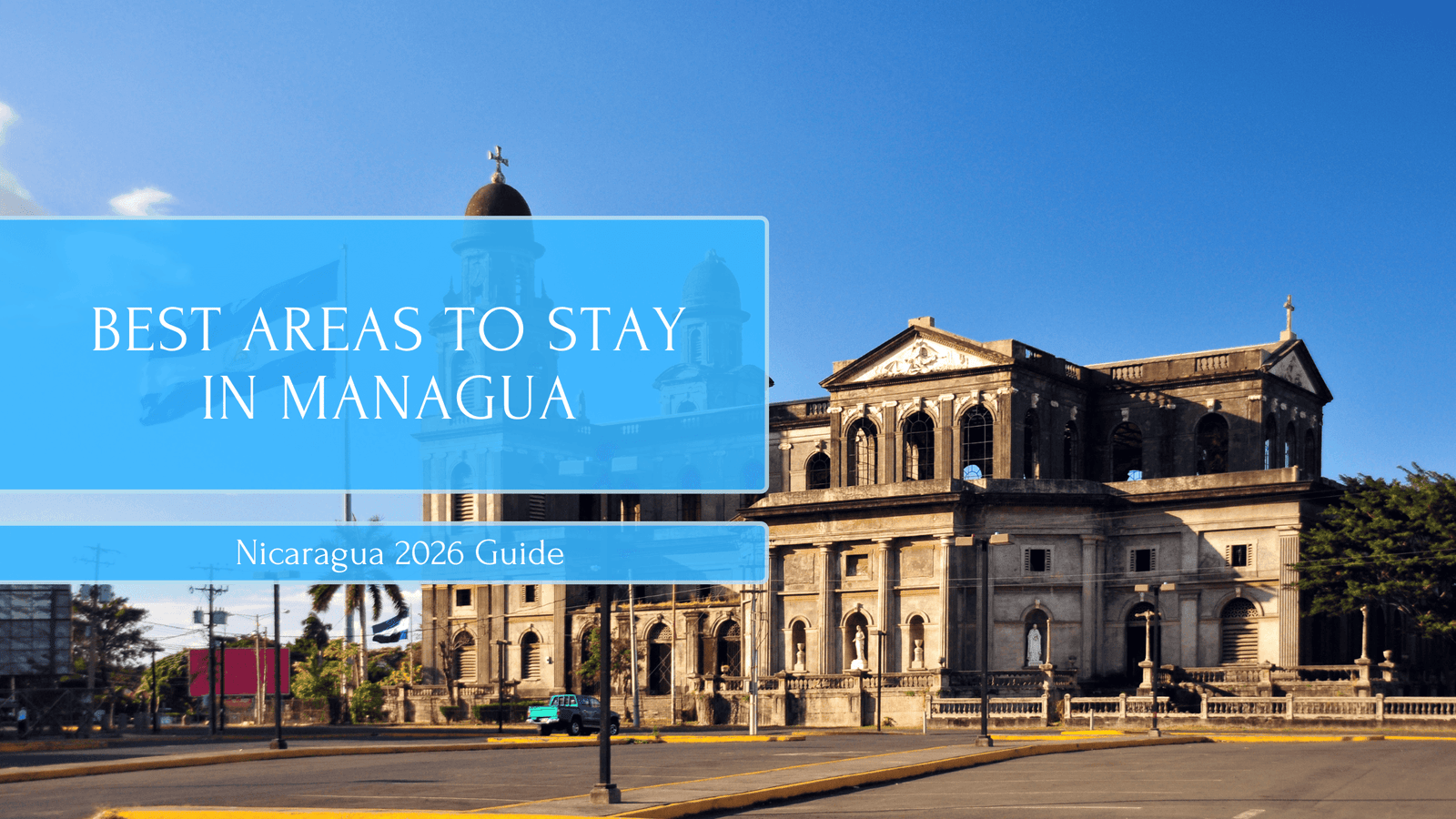
Best Areas to Stay in Managua, Nicaragua (Safe & Central Locations)
👉 Need a quick hotel pick? See the best-rated Managua Hotels here.
Best Areas to Stay in Managua, Nicaragua — A Hotel & Travel Guide for Every Traveler
Managua is not a city you visit by accident. Nicaragua’s capital is a transit hub, a business center, and a launching pad for the country’s best destinations. But figuring out where to stay in Managua can feel overwhelming — the city is sprawling, lacks a traditional center, and has genuine safety differences from one neighbourhood to the next.
The right neighbourhood changes everything. Stay in the wrong area and you’ll deal with poor transportation links, limited dining, and unnecessary risk. Stay in the right one and Managua becomes a perfectly functional base for exploring Nicaragua. This travel guide breaks it all down — from the safest hotels in Managua to the best budget hotel options for cost-conscious travelers. If you’re traveling with family, you’ll want to prioritize comfort and convenience. Exploring the best family hotels in Managua can provide you with a welcoming atmosphere and amenities for children. From spacious rooms to family-friendly dining options, these accommodations help ensure a pleasant stay for everyone.
Don't Have Time to Read? (Quick Area Picks)
| Area | Best For | Why |
|---|---|---|
| Carretera Masaya | Overall best pick | Safest corridor, best restaurants, easy airport access |
| Altamira / Los Robles | First-time visitors | Established, walkable pockets, expat-friendly |
| Metrocentro | Nightlife & dining | Central, well-known entertainment and hotel zone |
| Bolonia / Plaza España | Budget travelers | More affordable rates, convenient location |
Best Hotels in Managua by Neighbourhood — Detailed Breakdown
1. Carretera Masaya — Best Overall for Hotels in Managua
The vibe: Managua’s most developed corridor. Lined with malls, international restaurants, coffee shops, and hotels — from budget hotel options to upscale chain properties. This is where most business travelers and tourists end up, and it’s a convenient base whether you’re flying in via Augusto C. Sandino International Airport or arriving overland.
Safety level: High relative to the rest of Managua. Well-lit, active at night, private security common at hotels and restaurants.
Pros:
- Best concentration of restaurants, cafés, and supermarkets
- Easy road access south toward Granada, Masaya Volcano, and Rivas
- Wide range of accommodation — boutique hotels, chain hotels, and hostels and hotels at every price point
Cons:
- Car-dependent — you’ll need taxis or rideshares to get around
- Can feel more suburban than “local”
Best for: First-timers, business travelers, couples, anyone who wants convenience and safety over local immersion.
2. Altamira / Los Robles — Best Neighbourhood for First-Time Visitors
The vibe: Quiet, residential, and well-established. These adjacent neighbourhoods sit just off Carretera Masaya and have long been the go-to area for expats, NGO workers, and international visitors. Tree-lined streets, lower foot traffic, and a calm atmosphere. Los Robles in particular is well-known for its reliable hotel and dining options.
Safety level: One of the safest parts of the city. Low-crime residential zone with active neighbourhood security.
Pros:
- Walking distance to restaurants and cafés in certain pockets
- Close to embassies and international institutions
- Genuine neighbourhood feel without tourist overexposure
- ATMs, supermarkets, and Wi-Fi–equipped cafés within easy reach
Cons:
- Fewer budget options — tends toward mid-range and above
- Limited nightlife; you’ll need to travel out for evening entertainment
Best for: Solo travelers, couples, first-time visitors who want security without the sterile mall-corridor feel.
3. Metrocentro — Best Area to Explore Managua's Hotel & Nightlife Scene
The vibe: Metrocentro is one of the most central and well-known commercial zones in Managua. Anchored by the Metrocentro mall, this area has a strong concentration of hotels, restaurants, and bars, making it a practical and lively base. It’s also close to Laguna de Tiscapa, the hilltop volcanic lagoon and national park that offers one of the best views of the city.
Safety level: Moderate to good. Well-trafficked during the day and evening; stick to main streets and use rideshares at night.
Pros:
- Hotels in Managua near Metrocentro tend to be well-priced and centrally located
- Walking distance to the Tiscapa lagoon and its iconic statue of Augusto César Sandino
- Strong restaurant and entertainment options; easy to explore on foot during the day
Cons:
- Noise is a real issue if you’re a light sleeper
- Requires rideshares rather than walking after dark
Best for: Travelers who want to visit Nicaragua’s capital as a destination in its own right, not just a stopover.
4. Bolonia / Plaza España — Best Budget Hotel Area
The vibe: Closer to what remains of central Managua. The area around Plaza España has a more chaotic, urban feel — less polished than Carretera Masaya, but more affordable and convenient for travelers who need access to bus terminals heading north toward Matagalpa, Jinotega, and Chinandega.
Safety level: Use caution, especially on foot. Busier and less structured than the southern zones. Some streets can feel sketchy after dark — stay aware and use rideshares at night.
Pros:
- Noticeably cheaper accommodation, including solid budget hotel options
- Practical access to the northern bus terminal (terminal norte) and onward routes
- More authentic, city-center energy — good for travelers who want to see real Managua
Cons:
- Higher petty crime rate than southern neighbourhoods
- Less walkable at night; requires more situational awareness
Best for: Budget-conscious travelers, backpackers, and those heading north to Matagalpa or Jinotega rather than south toward Granada.
5. Las Colinas / Villa Fontana — Best Neighbourhood for Families
The vibe: A quieter, more upscale residential zone on the outskirts of the Carretera Masaya corridor. Wide streets, gated communities, and minimal foot traffic. Calm and suburban — ideal for families or long-stay visitors.
Safety level: High. One of Managua’s wealthier residential zones with a strong private security presence.
Pros:
- Very safe environment — a smart choice if you need to protect your family’s comfort and peace of mind
- Good proximity to international schools and family-friendly restaurants
- Several well-reviewed mid-range and business hotels with pools
Cons:
- Isolated from the main activity corridors — you’ll need transportation for almost everything
- Limited walkability
Best for: Families, long-stay visitors, travelers who prioritize quiet and safety above all else.
Safest Areas to Stay in Managua, Nicaragua
Safety is the right starting point for any Managua travel guide. The city has seen improvements in security in recent years, but conditions remain uneven across neighbourhoods.
Prioritize these areas:
- Carretera Masaya — best balance of safety, services, and airport access via Sandino highway
- Altamira / Los Robles — consistently low crime, well-monitored, great guest experience
- Las Colinas / Villa Fontana — quiet and secure, ideal for families
For first-time travelers, staying along the Carretera Masaya corridor is the clearest, lowest-risk choice. You sacrifice local color for reliability — which is a sensible trade on a first trip.
Areas to Avoid
Managua has several districts where tourist presence is minimal and petty crime is higher. These are not off-limits, but they’re not suitable as bases.
- Around the Old Cathedral / Barrio Martha Quezada — historically a backpacker neighbourhood but requires heightened awareness today
- Mercado Oriental and surrounding streets — worth a day visit but not a stay; chaotic and higher pickpocket risk
- Eastern peripheral districts — not tourist-facing; limited infrastructure and security presence
None of these areas require alarm. But they’re not recommended for accommodation, particularly for first-time visitors to Nicaragua.
How to Choose the Right Area in Managua — Expert Guide
- First-time visitors → Carretera Masaya or Altamira; safe, familiar, easy to navigate
- Budget travelers → Bolonia or Plaza España; lower rates, accept the trade-offs on walkability
- Families → Las Colinas or Villa Fontana; quiet, secure, family-friendly infrastructure
- Luxury travelers → Carretera Masaya; best hotel stock, closest to upscale dining
- Nightlife-focused travelers → Stay near Metrocentro or Zona Hippos; walkable access to bars and restaurants
- Transit stopovers → Carretera Masaya for southbound departure; Bolonia for northbound routes via terminal norte
Travel Tips for Every Traveler Staying in Managua
- Augusto C. Sandino International Airport is in the east of the city — factor in 20–40 minutes of travel time to most hotel zones; confirm your transfer or rideshare in advance
- Use Uber or InDriver — Managua’s rideshare apps are reliable, inexpensive, and safer than hailing taxis off the street; essential for any late-night departure
- Don’t walk at night in unfamiliar areas — even in safer zones, rideshares are the smarter call after dark
- Carretera Masaya stretches several kilometers — check your specific hotel’s location on a map; not everything is walkable
- Managua has no traditional historic center — the 1972 earthquake destroyed most of it; don’t pick accommodation based on proximity to a colonial downtown that no longer exists
- Granada is 45 minutes away — if you want a walkable base near Santo Domingo beach or Masaya Volcano day trips, consider basing yourself there instead
- Hotels and hostels fill up during Nicaraguan festivals — book ahead during Semana Santa and December holidays to secure the best rates
Key Takeaways
- Carretera Masaya offers the best hotels in Managua for most travelers — safe, well-serviced, and convenient to the airport via San Augusto highway
- Altamira / Los Robles is the top neighbourhood for first-time and solo visitors who want a quieter residential feel
- Metrocentro is the best area to explore Managua’s dining, nightlife, and attractions like the Tiscapa lagoon
- Budget travelers can save money near Plaza España and Bolonia, but should use rideshares after dark
- Families are best served by Las Colinas or Villa Fontana — safe, quiet, and low-stress
- Managua has no traditional city center; base your hotel choice on safety and transportation access, not centrality
- Use Uber or InDriver for all evening travel regardless of neighbourhood — it’s the safest and most convenient option
FAQs
What is the best area to stay in Managua, Nicaragua?
The Carretera Masaya corridor is the best overall choice for most travelers. It has the highest concentration of hotels in Managua alongside the most consistent safety levels in the city. It’s the default recommendation for first-time visitors, couples, and business travelers. If you’re looking for the best 5star hotels in Managua, you’ll find plenty of options that cater to various budgets and preferences. Many of these hotels offer luxurious amenities, stunning views, and exceptional service, ensuring a memorable stay. Additionally, the area is known for its vibrant culture and proximity to local attractions, making it an ideal base for exploring the city.
Which neighbourhoods are safest in Managua?
Altamira, Los Robles, Carretera Masaya, and Las Colinas are consistently the safest parts of the city. These southern and southeastern zones have lower crime rates, better lighting, and stronger private security than central or northern neighbourhoods.
Is it better to stay central or in the southern neighbourhoods?
For most travelers, the southern neighbourhoods — particularly along Carretera Masaya — are the better choice. Managua’s historic center was largely destroyed in 1972 and never fully rebuilt, so staying “central” near areas like Plaza España or the old lakefront offers few practical advantages.
Which area is best for first-time visitors?
Altamira or Los Robles. Both offer a manageable, well-serviced environment that lets you get oriented without navigating Managua’s more complex urban zones. Accommodation options are plentiful and the rideshare network makes getting around straightforward.
Where should families stay in Managua?
Las Colinas and Villa Fontana are the top picks for families. These quieter residential zones are among the safest in the city, with good hotels, family-friendly restaurants, and access to pools — plus a calm atmosphere that works well for younger travelers.