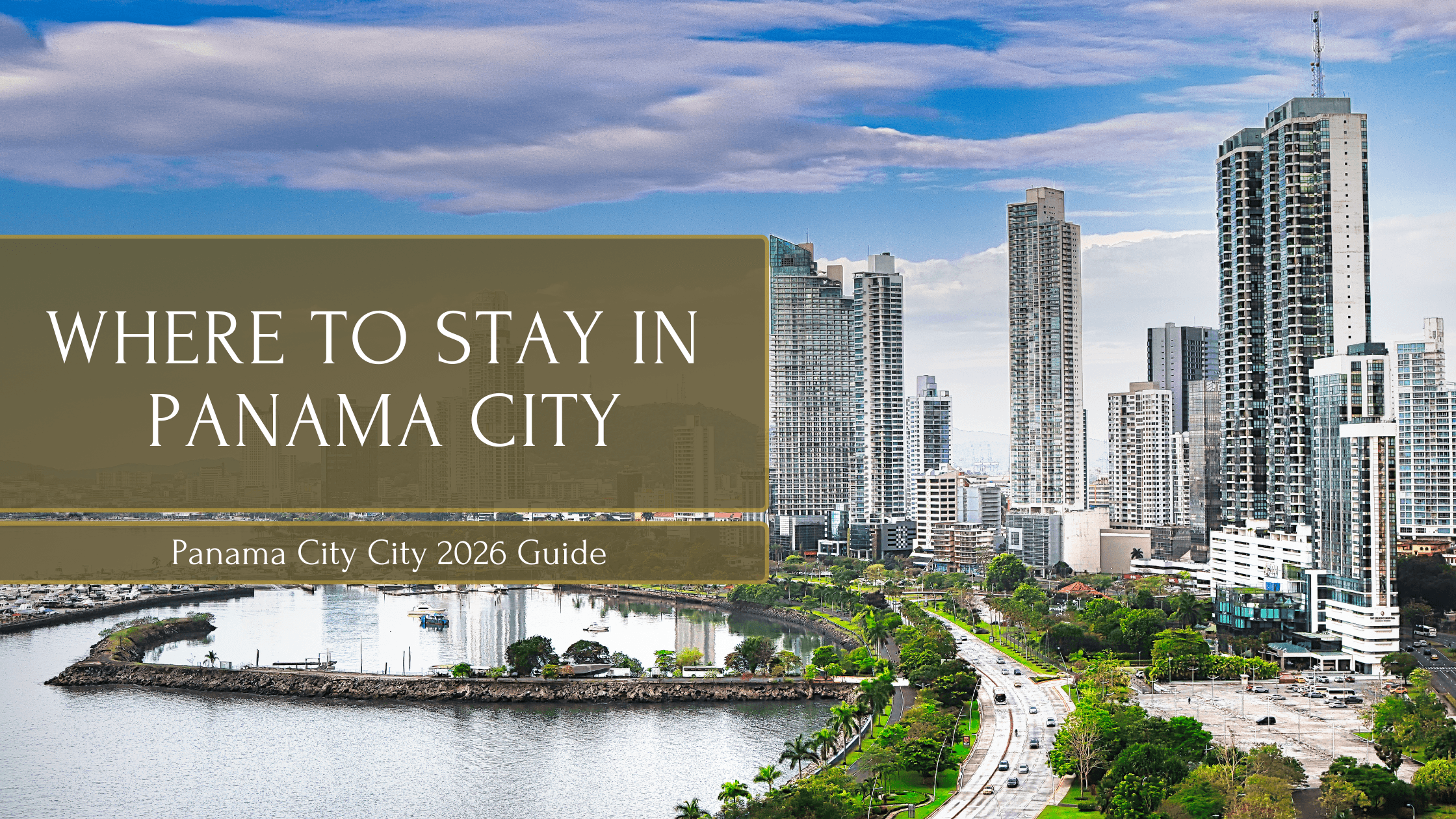
Where to Stay in Panama City, Panama (2026 Guide)

Where to Stay in Panama City, Panama (2026 Guide)
Panama City isn’t like most Central American capitals. You’ll find a Manhattan-style skyline, a UNESCO-listed old quarter, and a rainforest inside city limits.
But the city sprawls across multiple districts, and choosing the right place to stay in Panama City determines whether you’re walking to dinner or stuck in traffic for 40 minutes. First-time visitors often book the wrong area and waste half their trip figuring out how to get around.
What to Expect in This Post
This guide to where to stay is built for quick scanning and real-world decisions. Here’s what you’ll get:
- A breakdown of Panama City’s best areas for visitors
- Honest safety and walkability ratings for each district
- Where first-time travelers should prioritize staying
- Guidance on hotel vs apartment rentals
- Which areas to stay in Panama City to avoid entirely
- Practical FAQs with budget and luxury recommendations
Where to Stay in Panama City: Quick Overview
- Casco Viejo – Colonial old town with boutique hotels and rooftop bars
- Cinta Costera / Avenida Balboa – Waterfront promenade with high-rise hotels and skyline views
- Marbella – Financial district with modern hotels near dining and nightlife
- El Cangrejo & Obarrio – Central neighborhoods with mid-range accommodation and local restaurants
- Punta Pacifica – Upscale residential area near shopping and medical facilities
Casco Viejo (Best Area for First-Timers)
This is the postcard version of Panama City.
Casco Viejo is the colonial old quarter, founded in 1673 after the original city was destroyed by pirates. It’s compact, walkable, and packed with boutique hotels, rooftop bars, plazas, and restaurants.
Who it’s for: Couples, solo travelers, and anyone prioritizing atmosphere over convenience. You’ll walk cobblestone streets, dodge pigeons in Plaza de la Independencia, and watch the skyline light up at sunset from a terrace bar.
Safety is solid during the day and evening in the tourist core. Stick to well-lit streets at night and avoid wandering into residential blocks east of the main plazas. Most visitors stay in restored colonial buildings converted into boutique properties or small guesthouses with charm.
Walkability is excellent within Casco, but you’ll need an Uber to reach malls, beaches, or the Panama Canal. The neighborhood feels European, which means narrow sidewalks, stairs, and limited street parking.
Room rates here skew mid-range to luxury, with some budget hostels tucked into side streets. The area offers easy access to bars and restaurants serving both traditional Panamanian food and international cuisine.
Cinta Costera / Avenida Balboa (Best for Skyline Views)
This is where Panama City looks like Miami.
The Cinta Costera is a waterfront promenade running along Avenida Balboa, lined with high-rise hotels, jogging paths, and parks. You’ll see the skyline from your hotel room and walk directly onto the pedestrian path at street level.
Who it’s for: Travelers who want modern hotels with gyms, pools, and views. Families and business visitors gravitate here for the amenities and central location between the financial district and tourist sites.
Safety is excellent. The area is well-lit, heavily trafficked, and patrolled. You can walk or jog along the Cinta Costera at any time of day without concern.
Hotels here are typically mid-range to upscale chains like Hotel Riu Plaza Panama. Expect towers with 20+ floors, business centers, and breakfast buffets. The vibe is corporate but convenient—you’re a short Uber ride from Casco Viejo, Calle Uruguay (the main nightlife strip), and the Albrook bus terminal for day trips.
Walkability is mixed. The promenade itself is pedestrian-friendly with ocean views, but crossing Avenida Balboa requires navigating highway-speed traffic and overpasses. You won’t walk to restaurants; you’ll drive or ride.
This is one of the safest areas to stay in Panama City for foreigners unfamiliar with the capital.
Marbella (Best for Nightlife and Dining)
Marbella is the financial district by day and the restaurant district by night.
It’s centered around Calle Uruguay, a two-block strip packed with rooftop bars, fusion restaurants, sushi spots, and late-night clubs. If you’re in your 20s or 30s and want walkable nightlife, this is your destination.
Who it’s for: Young professionals, groups, and anyone who prioritizes dining and drinking within walking distance. The neighborhood has a polished, international feel—think expense accounts and cocktails, not backpacker hostels.
Safety is strong in the main dining zones. Calle Uruguay and surrounding blocks are busy until 2 a.m. on weekends, with security guards stationed outside many venues. The area feels urban and lively, not sketchy.
Hotels here range from mid-range chains to boutique properties tucked into office towers. Some buildings mix residential condos with short-term rentals on lower floors, so you’ll find Airbnb’s alongside traditional hotel accommodation.
Walkability is decent within the core blocks but drops off quickly. Streets are designed for cars, not pedestrians, and sidewalks can be uneven or blocked. You’ll walk to dinner; you won’t walk to Casco Viejo or the canal.
The area offers a central location with easy access to banking districts and upscale shops.
El Cangrejo & Obarrio (Best Central Area for Budget and Local Flavor)
El Cangrejo sits between the financial district and residential neighborhoods. It’s less touristy than Casco Viejo, less corporate than Marbella, and more affordable than both.
Obarrio borders El Cangrejo to the east and shares similar characteristics—central Panama City location, mixed-use development, and a blend of chain restaurants with local spots.
Who it’s for: Budget-conscious travelers, mid-range hotel seekers, and visitors who want a mix of local restaurants and international chains. You’ll find casino hotels, apartment rentals, and 24-hour grocery stores here.
Safety is generally fine in the main commercial blocks around Vía España and Vía Argentina. These are busy shopping streets with banks, pharmacies, and pedestrian traffic during daylight. At night, stick to well-lit avenues and avoid side streets.
Hotels in El Cangrejo and Obarrio tend to be older, with fewer amenities and lower rates. Some properties double as casino hotels, which can mean smoke-filled lobbies and slot machine noise at odd hours. Short-term apartment rentals are also common, especially through platforms offering spacious rooms with kitchens.
Walkability is moderate. You can walk to restaurants, ATMs, and small shops, but the streets are car-focused and lack the charm of Casco or the infrastructure of Cinta Costera. Public bus service runs frequently along Vía España, connecting you to Albrook and the coast.
This is one of the best places to stay if you’re looking for value and don’t mind taking a taxi or Uber to major attractions.
Punta Pacifica (Best for Upscale Stays and Luxury Hotels)
Punta Pacifica is Panama City’s wealthiest residential neighborhood. It’s home to luxury hotels, international hospitals, shopping malls, and high-end condos.
Who it’s for: Travelers seeking luxury accommodation, extended stays, or proximity to medical facilities. The area feels suburban and insulated—you won’t stumble into local street life or cheap eats.
Safety is excellent. Punta Pacifica is gated, guarded, and designed for affluent residents and expats. Crime rates are negligible, and the neighborhood is one of the safest areas for foreigners.
Hotel options are limited but upscale. The Trump Ocean Club is the landmark property—a massive sail-shaped tower with a casino, spa, pool, and multiple fine dining restaurants. Most other options are serviced apartments or condo rentals inside luxury towers.
Walkability is poor. The neighborhood was built for cars. You’ll drive to malls, restaurants, and any tourist sites. The nearest attractions—Casco Viejo, the canal—are 15 to 30 minutes away by car.
The area offers spacious rooms and modern amenities but lacks the energy and accessibility that most travelers prefer.
Best Neighborhoods for First-Time Visitors
If this is your first trip to Panama City, prioritize these two places to stay in Panama:
- Casco Viejo – Best atmosphere, most walkable, highest concentration of boutique hotels and restaurants
- Cinta Costera / Avenida Balboa – Best views, safest for evening walks, easy access to transport and central areas of the city
Both offer solid safety, clear tourist infrastructure, and proximity to major sites. You’ll spend less time navigating and more time exploring.
Best Area for Nightlife, Food, and Families
Nightlife: Marbella wins for density and variety. Calle Uruguay has rooftop bars, clubs, and late-night crowds Thursday through Saturday.
Food: Marbella and Casco Viejo tie. Marbella offers modern fusion and international cuisine; Casco Viejo delivers traditional Panamanian spots alongside upscale dining where you can dine with views of the bay.
Families: Punta Pacifica or Cinta Costera. Both offer modern hotels with pools, nearby shopping malls, and safe walking paths. Casco Viejo works for older kids but lacks kid-friendly amenities.
Hotel vs Apartment: What's Better in Panama City?
Hotels dominate in Casco Viejo, Cinta Costera, and Marbella. You’ll get daily housekeeping, on-site restaurants, and English-speaking front desks—useful if you’re staying less than a week.
Apartments make sense for longer stays (10+ days) or if you’re traveling with a group. Many residential towers in Punta Pacifica, El Cangrejo, and Obarrio rent furnished units by the week or month through Airbnb or Booking.com. You’ll save money and get access to kitchens and laundry, but you’ll sacrifice hotel services and central locations.
Budget travelers often find better bed-per-dollar value in hostels around Casco Viejo or apartment rentals in Obarrio.
Where NOT to Stay in Panama City
Avoid staying in Santa Ana, Calidonia, or Curundú unless you’re familiar with the city or traveling with Panamanians. These neighborhoods border Casco Viejo and downtown but lack tourist infrastructure and have higher crime rates.
Also skip Tocumen (near Tocumen International Airport) unless you have an early flight. It’s industrial, far from attractions, and offers no reason to stay overnight beyond convenience.
Finally, resist booking hotels in Amador Causeway unless you’re visiting the Biomuseo or enjoy being isolated. The causeway is scenic but disconnected from the city centre—you’ll spend 20+ minutes in traffic reaching restaurants or nightlife.
These aren’t the best places for travelers prioritizing safety and accessibility.
Key Takeaways
- Casco Viejo offers the best mix of atmosphere, walkability, and boutique accommodation for first-time visitors
- Cinta Costera delivers modern high-rise hotels with skyline views and waterfront access
- Marbella is the nightlife and dining hub, centered around Calle Uruguay with central location
- El Cangrejo and Obarrio provide budget-friendly hotels and apartments with local flavor
- Punta Pacifica suits upscale travelers who prioritize luxury over location
- Hotels are more practical for short stays; apartment rentals work for extended trips
- Avoid Santa Ana, Calidonia, and Tocumen unless you have specific reasons to stay there
FAQ
What is the safest area to stay in Panama City?
Punta Pacifica and Cinta Costera are the safest neighborhoods, with low crime rates, heavy foot traffic, and strong security presence. Casco Viejo is safe in tourist zones but requires caution on residential side streets at night. These are the best areas for travelers concerned about safety.
Is it better to stay in Casco Viejo or near the financial district?
Casco Viejo offers more character, walkability, and dining options but requires taxis for most destinations. The financial district (Marbella/Cinta Costera) provides modern hotels and easier transport access but less charm. Choose based on whether you prioritize atmosphere or convenience as your recommendation.
How far is Panama City's hotel district from the Panama Canal?
Most central hotels (Casco Viejo, Cinta Costera, Marbella) sit 15 to 25 kilometers from the Miraflores Locks visitor center. Expect a 30 to 45-minute drive depending on traffic. No major hotel district offers walking distance from this attraction.
Can you walk around Panama City safely at night?
Yes, in tourist areas like Casco Viejo’s main plazas, Cinta Costera, and Calle Uruguay in Marbella. Stick to well-lit streets, avoid empty side blocks, and use Uber after midnight. According to the U.S. Department of State, Panama City has moderate crime levels typical of Latin American capitals. Most visitors stay safe by following standard urban precautions.
What's the best area to stay in Panama City for families?
Punta Pacifica or Cinta Costera. Both offer modern hotels with pools, nearby shopping malls, and safe walking paths. Punta Pacifica is quieter and more residential; Cinta Costera provides easier access to attractions and restaurants. El Cangrejo also works for families on a budget seeking more spacious apartment rentals.
Do I need a car to get around Panama City?
No. Most visitors rely on Uber, taxis, and the Metro (two lines covering major districts). If you’re staying in Casco Viejo or Cinta Costera, you’ll rarely need transport within those neighborhoods. However, according to Lonely Planet, renting a car makes sense only for day trips outside the city to beaches or highland towns. The Panama Metro and bus system offer affordable ways to reach Albrook and other areas.
Is Casco Viejo too touristy?
Yes and no. The main plazas and restaurant blocks cater heavily to visitors, but residential streets and local shops still operate a few blocks away. It’s touristy compared to the rest of Panamá but far less commercialized than colonial districts in Cartagena or Cusco. You’ll still encounter locals and authentic street life if you explore beyond the main tourist centre.
What are some budget hotel options in Panama City?
El Cangrejo and Obarrio offer the best budget accommodation, with older hotels and hostels starting around $30-50 per night. Casco Viejo has backpacker hostels with beds in shared dorms for budget travelers. Look for properties near Vía España or Vía Argentina for central location without luxury hotel prices.