Weather in Cusco, Peru in February
Weather in Cusco, Peru in February
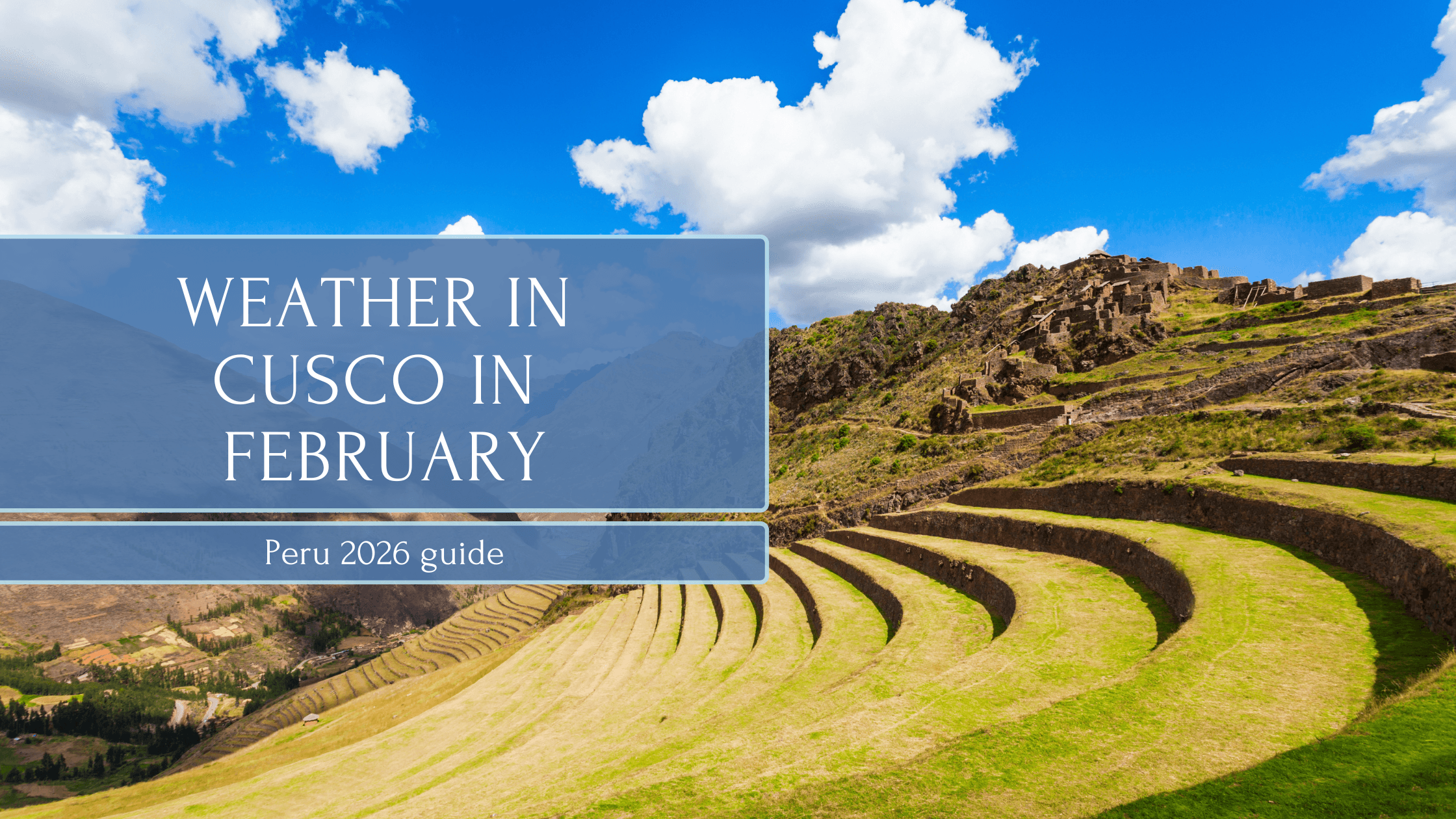
February in Cusco means rainy season. The ancient city of Cusco sits deep in the Andes at 3,400m, and this time of the year delivers warm days, heavy afternoon downpours, and lush green hillsides. Weather can be unpredictable—but the pattern is consistent enough to plan around.
If you want to visit Cusco with fewer crowds and lower prices, this can be a great time to visit. If you need dry trekking conditions or want to walk the Inca Trail to Machu Picchu, February is the wrong month. Before you book a trip to Cusco in February, check out where to stay in Cusco to match your accommodation to the weather and your budget.
Quick Weather Snapshot
- Maximum temperature: 19°C (66°F)
- Minimum temperature: 6°C (43°F)
- Average rainfall: ~165–180mm
- Humidity: Moderate to high (70–80%)
- Season: Peak rainy season
- Crowd level: Low
- Overall comfort rating: 6/10 — manageable with the right gear; challenging for outdoor-heavy itineraries
What Is the Weather Like in Cusco in February?
February is wet. The Andes receive most of their annual rainfall between January and February, and the Cusco region sits firmly in that window. Mornings are often clear—good light, cool air, and blue skies. By midday, clouds build. Afternoon showers arrive almost daily, sometimes heavy.
Weather changes fast. After rain, temperatures drop sharply and stone streets stay slick. Sightseeing is still very doable—exploring Cusco on foot works well in the mornings—but you’ll want to keep afternoons flexible throughout the month.
The average daily temperature range (6–19°C) makes the climate in Cusco feel mild but variable. It’s cooler than the coast but warmer than the altiplano. Dress for temperature changes and you’ll be fine.
Temperatures in Cusco in February
Daytime highs sit around 18–20°C (64–68°F)—comfortable for walking, though cloud cover keeps it from feeling warm. Sun exposure is significant when skies clear; altitude amplifies UV intensity even on overcast days.
Nights drop to 5–7°C (41–45°F). That’s cold enough to need real layers indoors and out. February is the warmest month of the year in terms of humidity and cloud cover, but nighttime lows rival the coldest month—June—more closely than most visitors expect.
Compared to April and May (when the Cusco weather begins to dry out), February runs wetter and slightly warmer by day. Compared to May to September—the dry season—it’s cloudier and cooler-feeling despite similar highs.
Rainfall in Cusco in February
Average rainfall in February sits around 165–180mm, making it one of the two wettest months alongside January. Rain typically falls as afternoon showers or evening storms rather than all-day drizzle. Morning windows of 3–5 hours are common and usually dry.
Storms can be intense—brief but heavy. Flash flooding in lower areas of the city of Cusco is possible. The Urubamba Valley and the Inca Trail receive even more rain than central Cusco, making trail conditions slippery. Certain routes around Cusco are temporarily closed due to flooding or landslide risk.
Average rainfall drops noticeably by the month of March, making February the peak of the wet cycle.
Humidity in Cusco in February
Relative humidity peaks in February, typically 70–80%. That’s noticeable but not oppressive at altitude—Cusco sits at 3,400m (11,150ft), which keeps it from turning muggy the way coastal cities do.
Travelers sensitive to cold, damp air may find early mornings tiring. The combination of altitude and humidity can accelerate fatigue, especially in the first 48 hours of a visit to Cusco. Hydration and slow movement matter more in February than in drier months.
Is Cusco Busy in February? (Tourism Levels)
Visiting Cusco in February means thin crowds. International tourist arrivals drop significantly during rainy season, and the Inca Trail—one of the main attractions—is officially closed for maintenance in February. Expect shorter queues, easier Machu Picchu tickets, and more room to negotiate on tours and hotels.
Pricing reflects the low season. Accommodation and tour rates run 20–40% lower than the June–August peak—the best weather window and the most expensive time to visit Peru. Domestic travel picks up around Carnival (typically mid-to-late February), bringing some local crowds and festivities to the region.
For travelers who want to visit Machu Picchu without the masses, February is arguably the best time of year to go.
Best Time of Day for Activities in February
The ideal time to explore is between 7am and noon. That’s when weather conditions are most stable, skies are clearest, and the city of Cusco and the sites around Cusco are least crowded.
Rain arrives most reliably between 1–4pm. Plan indoor options—museums, markets, cooking classes—for afternoons to make your visit run smoothly.
Best Things to Do in Cusco in February
Cusco offers plenty of time to explore its historic center, nearby sites, and access to the wider Cusco and the Sacred Valley region. Here’s what works well this month:
- Explore the historic center — Plaza de Armas, San Blas, and Qorikancha are walkable and far less crowded; a great time to enjoy the colonial architecture without tour groups
- Go to Machu Picchu — Machu Picchu is open in February and accessible by train; expect dramatic cloud-shrouded scenery and thinner crowds than peak season; book Machu Picchu tickets in advance
- Hike Huayna Picchu or Picchu Mountain — Both are open; permits still required; go early for clearer views before afternoon clouds move in
- Tour Cusco and the Sacred Valley — Pisac, Ollantaytambo, and Moray on a day trip; mornings are typically dry and this is an ideal time to explore the valley
- Browse San Pedro Market — Covered, weather-proof, and one of the best local markets in Peru; a top attraction for food and culture
- Visit the Inca Museum (Museo Inca) — A solid indoor option for rainy afternoons; one of the best archaeological site collections outside Machu Picchu itself
- Try a chocolate or cooking class — Popular in-city activity; no weather dependency and a great time to enjoy local cuisine
- Day hike to Sacsayhuamán — Go early before clouds build; fewer visitors than peak season make this a perfect month for this attraction
Visiting Cusco in February: The Inca Trail Question
The classic Inca Trail to Machu Picchu is closed for annual maintenance in February. This is a firm closure—no exceptions. If walking the Inca Trail is the reason you want to visit Peru, choose a different month.
That said, Machu Picchu is open in February and fully accessible by train from Aguas Calientes. The Salkantay Trek and Lares Trek remain open—both are wet in February but operational. They’re a great time to explore the high Andes outside of Cusco without the Inca Trail crowds.
If you’re weighing Cusco in June (dry season, Inca Trail open, peak crowds) against February (wet, trail closed, low season), your priorities determine the answer. Neither is the wrong month to visit—they’re just different trips.
Altitude in Cusco in February
Cusco sits at 3,400m. Altitude affects every visitor regardless of season, but the combination of altitude and February’s humidity and cold nights makes acclimatization more demanding than in dry season.
Spend at least one full day resting on arrival before major physical activity. This applies whether you’re planning days in Cusco or heading straight to Machu Picchu. The altitude at Machu Picchu (2,430m) is lower than Cusco, which is why many travelers actually feel better there.
Events & Festivals in February
- Carnival (Carnaval): Celebrated across Peru in the days before Ash Wednesday (date varies; typically mid-to-late February). Cusco’s version includes water fights, parades, and street music. Lively, but expect wet streets and some disruption.
- Fiesta de la Virgen de la Candelaria: Held primarily in Puno, about six hours from Cusco. One of the largest festivals in South America. Some travelers doing a trip to Cusco in February day-trip or overnight to Puno specifically for it.
What to Pack for a Trip to Cusco in February
Clothing:
- Lightweight moisture-wicking base layers
- Mid-layer fleece or wool sweater
- Waterproof outer layer / rain jacket (non-negotiable)
- Quick-dry walking trousers
- Warm layer for evenings—weather changes fast after rain
Footwear:
- Waterproof hiking boots or trail shoes with grip
- Light shoes or sandals for dry indoor days
Sun & Rain Protection:
- SPF 50+ sunscreen (altitude makes UV extreme even under clouds)
- Sunglasses
- Compact umbrella or packable rain poncho
- Dry bags or waterproof pack cover for electronics
Seasonal Travel Tips for February in Cusco
- Front-load outdoor plans: Schedule hikes, ruins, and valley tours for 7–11am; this is your most reliable dry window
- Book Inca Trail alternatives early: Salkantay and Lares spots fill even in low season; don’t leave it to the week before
- Acclimatize before big activity: Build in a rest day on arrival; rushing to Machu Picchu on day one is a common mistake
- Carry cash: Smaller vendors and markets in Cusco often go cash-only; ATM queues grow during Carnival
- Check train and road status: Rain can cause landslides that temporarily close the Aguas Calientes line; check Peru Rail or Inca Rail before travel
- Layer for temperature changes: You’ll sweat on climbs, then chill fast when you stop; a packable mid-layer beats one heavy jacket
- Book Machu Picchu tickets ahead: Even in low season, capacity is capped; buying on arrival risks missing out, especially on Huayna Picchu and Picchu Mountain slots
Weather Hazards in Cusco in February
Altitude sickness (soroche): Cusco requires acclimatization regardless of month in cusco. Humidity and exertion in February can worsen symptoms. Spend 1–2 days resting on arrival.
Landslides and road closures: Heavy rainfall saturates Andean slopes. Roads outside of Cusco—especially toward Aguas Calientes and through the Sacred Valley—are periodically disrupted. The Peruvian Ministry of Transport publishes real-time road alerts.
Flash flooding: Cusco’s drainage infrastructure can overflow during sustained downpours. Avoid narrow cobblestone streets and low-lying areas during heavy rain.
Cold nights: 5–6°C (41–43°F) with post-rain dampness feels colder than it reads. Budget accommodation without heating amplifies this.
UV exposure: The UV index in Cusco is extreme year-round due to altitude. Sunscreen is essential even on grey days—cloud cover does not block UV at 3,400m.
Cusco Month by Month: Where February Fits
| Month | Season | Crowds | Rain |
|---|---|---|---|
| Jan–Feb | Peak rainy | Low | Heavy |
| Mar–Apr | Shoulder | Low–Med | Moderate |
| May–Sep | Dry | High | Low |
| Oct–Nov | Shoulder | Med | Light |
| Dec | Early rainy | Med | Moderate |
February sits at the wettest and quietest extreme. The best weather for outdoor trekking runs May to September. The perfect time to choose the best time to visit depends entirely on what you’re prioritizing—weather conditions, crowds, or cost.
For a full breakdown of weather in Cusco month by month, the Peru Tourism Board maintains updated regional guides.
Key Takeaways
- February in Cusco is peak rainy season—afternoon showers are the norm, not the exception
- Mornings are typically dry and offer the ideal time to explore sites, hike, and visit the Sacred Valley
- Crowds are low, prices are lower, and Machu Picchu is less congested—making it a great time to visit for budget-conscious or crowd-averse travelers
- The Inca Trail is closed for maintenance in February; Machu Picchu itself is open and accessible by train
- Average daily temperatures range from 6–19°C; nights are cold and require proper layering
- Altitude hazards (soroche, UV exposure) apply year-round and are not reduced by cloud cover or rain
- February works well for flexible travelers; it’s a harder fit for those who need dry, predictable conditions throughout
FAQs
Is February a good time to visit Cusco?
It can be. February in Cusco means low crowds, lower prices, and lush Andean scenery. The trade-off is near-daily afternoon rain and the Inca Trail closure. Travelers who front-load activities in the morning and stay flexible in the afternoon tend to have a positive experience.
What will the weather be like in Cusco in February?
Expect warm mornings (up to 19°C/66°F), frequent afternoon rain, and cold nights (down to 6°C/43°F). Weather can be unpredictable day to day, but the pattern—clear mornings, afternoon showers—is consistent throughout the month. Pack waterproof layers and plan accordingly.
Can you still visit Machu Picchu in February?
Yes. Machu Picchu is open in February and fully accessible by train from Aguas Calientes. The Inca Trail is closed for maintenance, but the site itself is not. Crowds are significantly lighter than dry season, and Machu Picchu tickets are easier to secure.
Is the Inca Trail open in February?
No. The classic Inca Trail to Machu Picchu closes every February for annual maintenance. It typically reopens in March. Alternative routes—Salkantay, Lares—remain open but are wet and require solid gear.
How does visiting Cusco in February compare to June?
Cusco in June offers dry weather, open trekking trails, and peak-season crowds and prices. February offers heavy rain, closed Inca Trail, and significantly fewer tourists at lower cost. If best weather is your priority, June wins. If crowd-free exploration and lower prices matter more, February is a great time to visit.