Weather in Buenos Aires, Argentina in December
Weather in Buenos Aires, Argentina in December
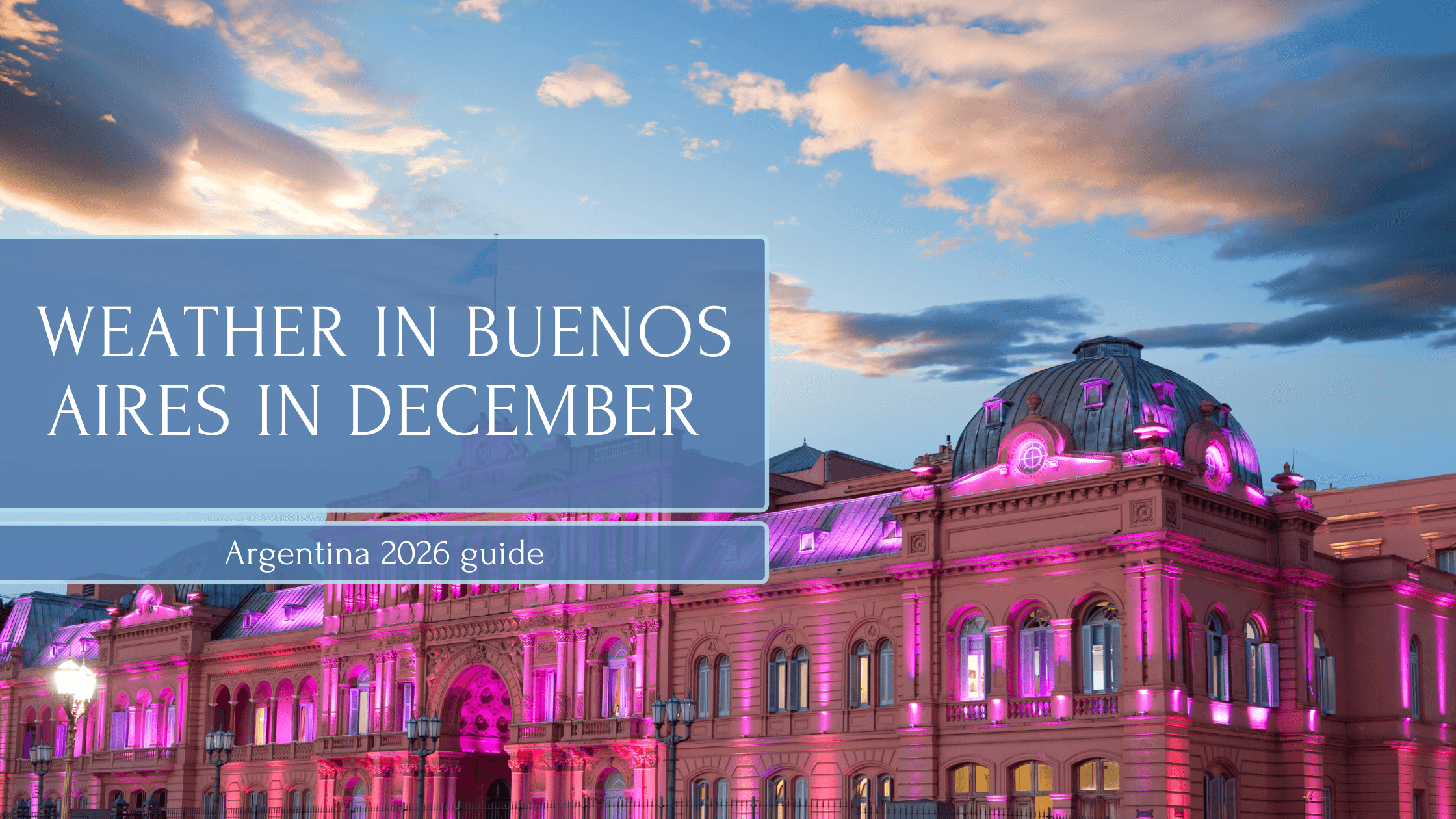
December in Buenos Aires is summer. The days are long, the sun is strong, and the city is in motion—locals are celebrating end-of-year festivities, and travelers are arriving in droves. If you’re considering a December trip to the capital of Argentina, you need to know what the weather in Buenos Aires will actually throw at you: warm afternoons, late-evening thunderstorms, and crowds that rival any other season.
This guide covers everything you need to decide if December is the best time to visit Buenos Aires. We’ll walk through temperature ranges, precipitation patterns, humidity levels, and what you should pack. December suits travelers who thrive in warmth, don’t mind occasional downpours, and can navigate peak-season pricing. It’s the best time to visit Argentina’s capital if you enjoy summer weather, though it’s less ideal if you prefer cooler conditions or quieter streets. Exploring the top neighborhoods in Buenos Aires will enhance your experience as you soak up the vibrant culture and lively atmosphere. Each area offers its own unique charm, from the colorful streets of La Boca to the upscale elegance of Palermo. Don’t miss the chance to indulge in local cuisine and discover hidden gems throughout the city.
Quick Weather Snapshot
- Average high: 29°C (84°F)
- Average low: 19°C (66°F)
- Precipitation: Moderate to heavy (frequent afternoon/evening storms)
- Humidity: 65–75% (moderate to high)
- Season: Summer (warmest months)
- Crowd level: High (peak season)
- Overall comfort: Good for heat-tolerant travelers; challenging for those who dislike humid weather and storms
What Buenos Aires in December Is Like
December is firmly summer in Argentina’s capital. The sky is often bright and mostly cloudy by afternoon, with clouds building throughout the day. By 4 or 5 p.m., thunderstorms become common—the kind that arrive suddenly, soak the city, and disappear within 30 minutes to an hour.
Mornings are the best time to explore Buenos Aires. Daytime temperatures are mild, humidity is lower, and the light is golden. By mid-afternoon, the heat peaks, and locals retreat indoors or to cafes with air conditioning. Evenings cool down pleasantly once storms pass, making late dinners and nighttime walks comfortable along neighborhoods like La Boca or San Telmo.
Average Temperature in Buenos Aires in December
Daytime highs average 29°C (84°F), though temperatures often reach 30–32°C on sunny days without cloud cover. Nights cool to around 19°C (66°F), dropping slightly after thunderstorms. The average daily temperature range shows the heat is dry rather than oppressive in the early part of December, but humidity increases toward late December, making warmer days feel heavier and more humid.
Unlike inland regions of Argentina—such as Mendoza or Salta—Buenos Aires doesn’t experience extreme heat. The Río de la Plata moderates weather conditions, preventing the kind of 40°C+ heat found in central Argentina or Patagonia. Sun exposure is intense, however—the summer sun at this latitude burns quickly. Maximum temperature can spike, so sun protection is essential.
Precipitation and Rainfall in Buenos Aires in December
December averages 80–100 mm of precipitation spread across 8–10 rainy days. Most rainfall comes as afternoon or evening thunderstorms rather than all-day drizzle. These storms are intense but brief, clearing within 30–60 minutes. Heavy rainfall is less common than frequent but manageable downpours.
Precipitation rarely disrupts outdoor plans if you’re prepared. A light rain jacket and flexibility about timing—moving indoor activities to storm hours, for example—manage the issue well. Streets dry quickly after storms pass, and locals barely pause their routines during rainy days. Weather information from Argentine meteorological services shows patterns are highly predictable by month.
Humidity and Weather Like in Argentina in December
Relative humidity levels sit between 65–75%, making afternoons feel warmer than the thermometer suggests. Early mornings and late evenings are noticeably more comfortable. The weather in Buenos Aires feels hot and humid, especially compared to drier months like July and August. Travelers from dry climates may find mid-afternoon humidity tiring, especially when combined with direct sun and cloud cover shifts. Those accustomed to subtropical conditions or tropical climates will find December pleasant.
Is Buenos Aires Busy in December?
December is peak season throughout Argentina. Schools are on holiday in the Northern Hemisphere and South America, families travel, and locals celebrate end-of-year festivities. Hotels, restaurants, and major attractions are crowded, and accommodation prices are 20–40% higher than shoulder months. Although the weather in December is excellent, the crowds are substantial.
If you dislike crowds and high costs, December is worth avoiding. If you’re comfortable with busier streets and higher prices, the energy of the season—Christmas decorations, year-end events, vibrant nightlife—adds appeal to your visit to Buenos Aires. This is one of the worst times for finding affordable accommodation.
Best Time to Visit Buenos Aires in December
- Explore outdoor neighborhoods early. Hit La Boca, San Telmo, and Palermo by 9–10 a.m. before crowds and heat peak. Wind speed from the Rio de la Plata can make mornings refreshing.
- Enjoy riverside walks at sunset. The Costanera Sur and Parque Centenario are pleasant once afternoon storms pass and temperatures cool for the evening.
- Visit museums and galleries mid-afternoon. Dodge the heat and crowds by spending 2–3 p.m. indoors at MALBA, the Teatro Colón, or smaller galleries in San Telmo.
- Take cooking or tango classes. Indoor, air-conditioned, and immersive—ideal for hot afternoons in Buenos Aires.
- Experience nightlife. December’s heat keeps the city awake. Live music, milongas (tango dance halls), and rooftop bars stay open late.
- Enjoy café culture. Porteños spend afternoons at outdoor cafes with cold drinks; join them before storms arrive.
- Day trip to estancias (ranches). Outside Buenos Aires, cooler conditions and fewer crowds make ranch visits pleasant, though book ahead.
Events & Festivals in December
December 25 is Christmas (Navidad), celebrated with family gatherings and fewer public events than in English-speaking countries. December 1 marks the official start of summer weather in Argentina. December 31 (New Year’s Eve) is significant—major plazas fill with crowds, bars and clubs host celebrations, and accommodation prices peak throughout Buenos Aires.
No major music festivals or cultural events dominate the calendar during this period. Instead, the character of December comes from holiday markets, temporary outdoor dining venues, and end-of-year celebrations throughout Argentina’s capital.
What to Pack for Buenos Aires in December
- Light, breathable clothing. Cotton t-shirts, linen shirts, and shorts for daytime in humid weather.
- A light long-sleeved shirt or cardigan. Air-conditioned interiors can be cold; evenings cool significantly.
- A compact rain jacket or poncho. Storms are brief but guaranteed during your stay in Buenos Aires.
- Closed-toe, waterproof walking shoes. Street puddles are unavoidable post-storm on rainy days.
- Sunglasses and a hat or visor. Sun exposure is intense, especially mid-day in December weather.
- Sunscreen (SPF 30+). Apply frequently; reapply after swimming or sweating in the heat.
- A small umbrella. Lightweight and packable for sudden afternoon downpours common in Argentina.
- Lightweight pants or maxi skirt. For restaurants, bars, and evening outings (many venues enforce a smart-casual dress code in Buenos Aires).
Seasonal Travel Tips for December Weather
- Plan major outdoor activities for morning hours. By 3 p.m., heat and storm risk increase throughout Buenos Aires.
- Check weather data and storm forecasts each morning. Argentine meteorological services provide reliable 24-hour updates; adjust your day accordingly.
- Embrace the afternoon siesta rhythm. Retreat indoors for lunch and a café visit between 1–4 p.m. You’ll align with local customs and avoid peak heat in Argentina.
- Book accommodations and tables well in advance. Availability shrinks and prices rise during peak season. Confirm reservations 24 hours prior.
- Carry cash and a card. Some smaller cafes and shops don’t accept cards; ATMs are reliable throughout the city.
- Wear closed-toe shoes on rainy days. Streets flood temporarily; puddles hide potholes in Buenos Aires.
Weather Hazards in Buenos Aires in December
Thunderstorms are frequent but rarely dangerous in Argentina’s capital. Lightning strikes are uncommon; most storms pass safely. Occasional flooding occurs in lower-lying neighborhoods after heavy rainfall, but tourist areas drain quickly. Cold nights are not a concern; layering a light sweater handles evening temperatures.
Although the weather in December brings heat and humidity, heatwaves (temperatures exceeding 35°C for multiple consecutive days) are rare but possible. If one occurs, reduce outdoor activity, stay hydrated, and use air-conditioned spaces throughout Buenos Aires. Wind speed from Atlantic systems occasionally shifts weather patterns unexpectedly. Weather in Buenos Aires, Argentina in November typically features mild temperatures and increased rainfall as the city transitions into summer. It’s a great time to explore outdoor cafes and parks, but keep an umbrella handy for those occasional showers. As the month progresses, the humidity begins to rise, signaling the approach of the warmer months ahead.
Key Takeaways
- December in Buenos Aires is hot, humid, and stormy—ideal for travelers who enjoy warmth and don’t mind afternoon precipitation.
- Average high temperatures reach 29°C (84°F); expect frequent evening thunderstorms that clear within an hour.
- It’s peak season: crowds are high, accommodation is expensive, and advance booking is essential for your trip to Argentina.
- Mornings and evenings offer the best weather for outdoor sightseeing; plan indoor options for hot afternoons.
- Pack light clothing, sun protection, and a compact rain jacket for the month ahead.
- December is the best time to visit Buenos Aires if you enjoy summer weather; avoid if you prefer cooler, quieter months elsewhere in Argentina.
- Expect humidity between 65–75%, making afternoons feel warmer than displayed temperatures throughout the city.
FAQs
Is December the best time to visit Argentina and Buenos Aires?
December is excellent for warm-weather travelers and high-energy seekers, but not ideal for budget-conscious visitors or those preferring quieter conditions. It’s peak season with the best weather for summer activities, though crowds and prices are highest.
How much precipitation falls in Buenos Aires in December?
December averages 80–100 mm of precipitation across 8–10 rainy days, mostly as brief afternoon thunderstorms. Rain rarely disrupts full-day plans; most storms clear within 30–60 minutes.
What’s the average humidity level in Buenos Aires in December?
Humidity ranges from 65–75%, making afternoons feel warm and humid throughout the month. Early mornings and late evenings are more comfortable. Tropical-climate travelers will find conditions manageable; those from dry regions may find mid-afternoon humidity tiring.
What should I pack for December weather in Buenos Aires?
Pack light cotton clothing, a compact rain jacket, closed-toe waterproof shoes, sunglasses, a hat, and sunscreen (SPF 30+). Bring a light cardigan for air-conditioned spaces and evening outings throughout Argentina’s capital.
How does Buenos Aires December weather compare to other months in Argentina?
December is warmer and more humid than July and August (Argentine winter), and sunnier than March. Unlike subtropical regions like Iguazú Falls or Salta, Buenos Aires has moderate heat. Compared to Patagonia areas like El Calafate or Tierra del Fuego, December in Buenos Aires is significantly warmer and more humid. During this time, the weather conditions in Buenos Aires can lead to vibrant outdoor activities and festivals. Many locals take advantage of the pleasant evenings to enjoy meals in outdoor cafés, creating a lively atmosphere throughout the city. Additionally, the warmer weather attracts tourists, contributing to the bustling energy of Buenos Aires in December.