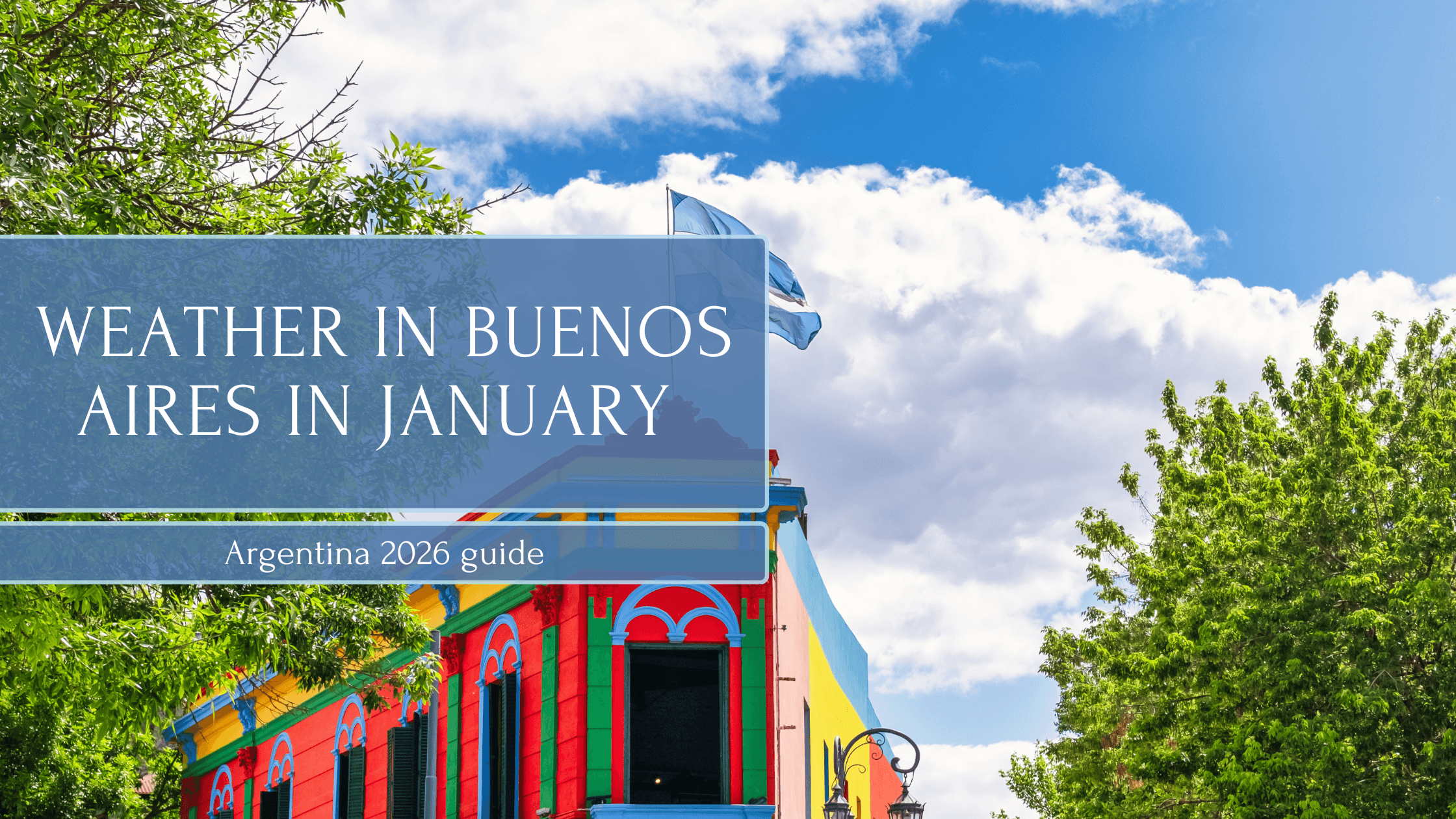
Weather in Buenos Aires, Argentina in January (2026 Guide)
Weather in Buenos Aires, Argentina in January (2026 Guide)
January in Buenos Aires is summer—hot, humid, and crowded. Daytime temperatures regularly exceed 30°C (86°F), and the city feels alive with local energy and international tourists. This guide walks you through exactly what the weather in Buenos Aires is like in January, and whether it’s the best time to visit Buenos Aires for your trip. As you explore the vibrant neighborhoods, you’ll quickly notice how the weather patterns in Buenos Aires influence daily life. Locals often adapt their routines to escape the midday heat, seeking shade in parks or enjoying a refreshing beverage at outdoor cafes. Understanding these weather patterns can help you plan activities that make the most of your visit to this dynamic city.
First-time visitors should know: January offers pure summer intensity. It’s peak tourist season, prices rise, and finding restaurant tables takes planning. But it’s also when the city pulses hardest, with open-air markets, nightlife that runs until dawn, and locals spilling onto the streets. If heat and crowds don’t bother you, January delivers authentic Buenos Aires energy in Argentina’s summer season.
Quick Weather Snapshot
- Average High: 29–30°C (84–86°F)
- Average Low: 17–18°C (63–64°F)
- Rainfall: Moderate (occasional afternoon thunderstorms)
- Humidity: 65–75% (sticky, especially afternoons)
- Season: Summer (peak)
- Crowd Level: Very high (school holidays, peak tourist season)
- Overall Comfort: Good for heat tolerance; challenging for humidity-sensitive travelers
What Buenos Aires Is Like in January
January hits differently than spring or fall in Argentina. Mornings start warm and clear, ideal for walking neighborhoods like San Telmo or La Boca before midday heat peaks. By afternoon, relative humidity climbs and the sun bears down—many locals retreat indoors for siesta-style breaks.
Evenings cool into the low teens, making nighttime strolls and outdoor activities pleasant again. Rain arrives as dramatic afternoon thunderstorms rather than persistent drizzle; storms pass quickly but bring heavy precipitation. Daylight extends well into the evening—sunrise occurs around 6:15 AM and sunset around 8:45 PM, giving you maximum hours to explore. Overall, it’s a humid summer month where timing your itinerary around heat matters.
Temperature in Buenos Aires in January
Buenos Aires in January sits solidly in the high 20s to low 30s Celsius during the day. The average temperature hovers around 29°C, with daytime temperatures occasionally touching 30°C or slightly higher. Nights cool to the mid-teens (around 17–18°C), so layering isn’t necessary, but a light cardigan for air-conditioned spaces and cool evenings is practical. Temperatures around 30°C feel warmer due to humidity—expect the heat index to make it feel 2–3°C hotter than the thermometer shows. The weather in Buenos Aires can lead to vibrant outdoor activities, with many locals and tourists alike taking to the parks and cafes to enjoy the summer sun. However, it’s wise to stay hydrated and seek shade during peak hours to avoid heat exhaustion. As the sun sets, the atmosphere shifts, making evening strolls delightful under the stars, with temperatures pleasantly cooling down.
Direct sun exposure is intense at midday. Midday UV index ranks high, making sunscreen and shade essential for any extended outdoor time. Compared to December, January’s average high remains consistent; February brings similar warmth but with increased rain.
Average Daily Temperatures & Humidity in Buenos Aires
The low temperature at night typically ranges from 17–18°C (63–64°F). High temperatures in January average 29–30°C (84–86°F), with temperatures ranging from the mid-20s on cooler days to the low 30s on warmest days. January with an average relative humidity of 65–75% creates a muggy feel, especially in afternoons when humidity peaks.
Relative humidity fluctuates throughout the day—mornings are drier (around 60%), afternoons become muggy (75%+), and evenings settle back down. This humidity matters: a 29°C day with 75% humidity feels substantially warmer than 29°C on a dry day. Those sensitive to humidity may find afternoon outdoor activities tiring. Shade, water, and frequent breaks help significantly.
Rainfall & Precipitation in Buenos Aires in January
January averages 80–100 mm of rainfall spread across 9 rainy days. Most precipitation falls as dramatic afternoon thunderstorms—brief, fierce downpours that arrive around 2–5 PM and clear within an hour or two. Light drizzle is rare; when it rains in Buenos Aires during January, it tends to be heavy and concentrated.
The amount of rainfall rarely disrupts full-day plans if you stay flexible. Morning outdoor activities work best; afternoon plans should shift toward indoor museums, galleries, or cafés when storms hit. Flash flooding occurs in low-lying areas after intense precipitation, but it’s not a serious travel concern for most central neighborhoods. Sunshine hours remain strong—even accounting for rainy days, you’ll get 7–8 hours of sunlight daily.
Sunshine, Daylight & Wind Speed in Buenos Aires
January offers abundant sunshine hours—roughly 7–8 hours per day on average, despite occasional overcast or mostly cloudy afternoons. Sunrise at 6:15 AM and sunset around 8:45 PM mean you can explore early and late, sidestepping midday heat.
Average wind speed in Buenos Aires during January is moderate (12–15 km/h), occasionally stronger. The windiest afternoon hours typically occur 2–4 PM. Calmest conditions usually arrive in early morning—ideal for exploring neighborhoods or visiting outdoor attractions.
Is Buenos Aires Busy in January? (Time to Visit Buenos Aires)
January is peak tourist season—the busiest month of the year to visit Buenos Aires. Local school holidays run through early February, and international tourists flood the city throughout this time. Hotel prices spike 20–40% higher than shoulder seasons. Popular restaurants need reservations weeks in advance; attractions have longer lines.
The peak tourist season brings nonstop energy. Shops stay open late, cultural events run nightly, and the city pulses with nightlife. If you prefer quieter time to visit Buenos Aires, this isn’t your month. If you want rich cultural experiences, energy, and authentic summer atmosphere, January delivers it full force.
Best Times to Visit Buenos Aires in January
- Outdoor neighborhood walks: San Telmo, La Boca, and Palermo are best early morning (7–10 AM) before peak heat
- Café culture & dining: Spend afternoons in shaded cafés with cold drinks—locals favor fernet and cola in summer
- Tango shows and live music: Evening performances happen nightly; indoor venues offer escape from heat
- Mercado de Domingo (Sunday antique market): Browse San Telmo’s weekly market in early morning for the best selection
- Open-air cinema and theater: Summer brings al fresco cultural events, especially in parks and plazas
- Day trips to Tigre Delta: Take ferries through green waterways north of the city for cooler air and coastal areas escape
- Late-night dining and nightlife: Dinner typically starts at 9 PM or later; outdoor patios fill after sunset when temperatures drop
- MALBA and other museums: Perfect afternoon refuge from heat while experiencing world-class Argentine art and rich cultural heritage
Events & Festivals in January
No major festivals overlap January specifically in Buenos Aires. However, the city hosts open-air cinema series, temporary art installations, and nightly tango and music performances throughout this time. Local event calendars vary yearly, so check programming once you’ve booked your accommodation.
What to Pack for Buenos Aires in January
- Lightweight cotton or linen clothing: Breathable fabrics essential for hot, humid days
- Short sleeves, shorts, dresses: Locals dress minimally in summer season
- One light cardigan or thin jacket: For air-conditioned spaces and cool evenings (around 18°C)
- Comfortable walking shoes: Good arch support for hours exploring Buenos Aires neighborhoods
- Sunhat or baseball cap: Midday sun is intense; essential for any daytime itinerary
- High-SPF sunscreen (SPF 30+): Apply generously and reapply after swimming or sweating
- Lightweight rain jacket or compact umbrella: For afternoon thunderstorms and unexpected precipitation
- Sunglasses: Protect against strong UV exposure
- Swimsuit: Hotels, some hostels, and nearby secluded beaches offer relief from warmth
Seasonal Travel Tips for January
- Walk early, rest midday: Start neighborhood exploration by 8 AM, take a break during peak heat (12–4 PM), resume after sunset
- Hydrate aggressively: Carry water; ice-cold sodas and fresh fruit smoothies are inexpensive and abundant everywhere
- Book dinners late: Dinner crowds in Buenos Aires peak 9 PM onward; earlier reservations mean less crowded experiences
- Use afternoon storms to your advantage: When heavy rain hits, duck into a museum, café, or gallery instead of fighting precipitation outdoors
- Expect air-conditioning everywhere: Buildings, transport, and shops are heavily cooled; prepare for temperature swings
- Siesta is real for locals: Expect some shops and offices to close 1–4 PM; plan your itinerary accordingly
- Watch for pickpockets in crowds: Peak tourist season means higher foot traffic and increased theft risk in busy areas—keep bags close
Weather Hazards in Buenos Aires in January
Afternoon thunderstorms bring the main weather concern. Heavy precipitation arrives suddenly, occasionally with hail or lightning. Flooding occurs in low-lying neighborhoods after intense rainfall but poses minimal risk in central Buenos Aires areas where most tourists stay.
Heat exhaustion is a realistic hazard for those doing extended daytime activities without breaks or adequate hydration. Sunburn is easy to acquire—many first-time visitors underestimate the UV intensity at this latitude.
Cold nights (low temperature around 17–18°C) are comfortable for sleeping but surprise those expecting perpetual warmth throughout the 24-hour day.
Key Takeaways
- January is the hottest month in Buenos Aires with intense heat and humidity—average high temperatures reach 29–30°C with afternoon humidity at 75%
- Afternoon thunderstorms occur frequently but pass quickly—plan your itinerary with indoor activities for 2–5 PM
- This is peak tourist season with highest accommodation prices—book well in advance to secure your preferred accommodation
- Early mornings (6–10 AM) are best for exploring Buenos Aires neighborhoods—heat peaks 12–4 PM
- This time to visit suits heat-tolerant travelers who thrive on energy and nightlife—avoid January if you prefer cool weather or quiet exploration
- Sun protection is non-negotiable—sunhat, sunglasses, and high-SPF sunscreen prevent discomfort
- Late-night culture defines Buenos Aires in January—dinner, nightlife, and rich cultural experiences peak after sunset when daytime temperatures drop
FAQ
Is January the best time to visit Buenos Aires?
January offers maximum energy in Argentina if you tolerate heat and crowds. It’s the warmest month with abundant sunshine hours and peak nightlife. Plan your accommodation and restaurant reservations well ahead, and schedule outdoor activities for early morning or evening when temperatures feel more comfortable.
What's the average temperature in Buenos Aires in January?
The average high temperature reaches 29–30°C (84–86°F), with average low temperatures around 17–18°C (63–64°F). Combined with humidity levels of 65–75%, the heat index often makes it feel 2–3°C warmer than the thermometer shows.
How much rainfall occurs in Buenos Aires in January?
January averages 80–100 mm of precipitation across 9 rainy days, mostly as afternoon thunderstorms lasting 1–2 hours. Heavy rain rarely disrupts full-day plans if you adjust your itinerary toward indoor attractions during peak rainfall hours.
Is humidity high in Buenos Aires during January?
Yes—relative humidity ranges from 65–75%, with afternoons becoming muggy (often hitting 75%+). Mornings are drier. Those sensitive to humidity may find afternoon outdoor activities in Buenos Aires tiring, though most travelers adapt within days.
What should I pack for traveling to Buenos Aires in January?
Pack lightweight cotton clothing, comfortable walking shoes, a sunhat, high-SPF sunscreen, and a light rain jacket. Bring one thin cardigan for air-conditioned spaces. Even at nice restaurants, locals dress casually, so formal clothing isn’t necessary for your time to visit Buenos Aires. If you’re planning to extend your travel itinerary, consider checking out the best surf spots in El Tunco after your time in Buenos Aires. The laid-back atmosphere and stunning waves make it an ideal destination for both novice and experienced surfers. Make sure to pack your surf gear and enjoy the vibrant beach culture that awaits you there. Exploring the best neighborhoods in Buenos Aires will give you a rich taste of the city’s diverse culture and vibrant lifestyle. From the colorful streets of La Boca to the elegant avenues of Recoleta, each area has its unique charm and attractions. Be sure to visit local cafes and markets to immerse yourself fully in the local scene.